
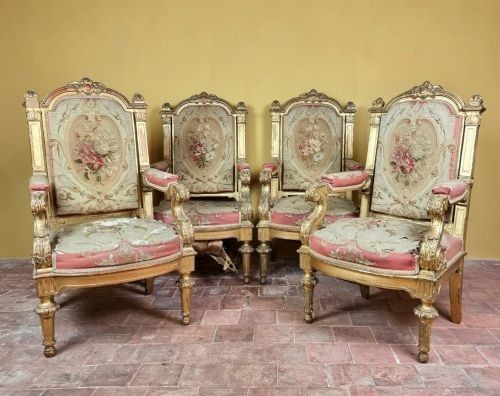


19th Century Gilt Armchairs
These 19th century gilt armchairs bring dramatic French and English seating into modern rooms with carved frames and bright metallic finishes.
19th Century Gilt Armchairs
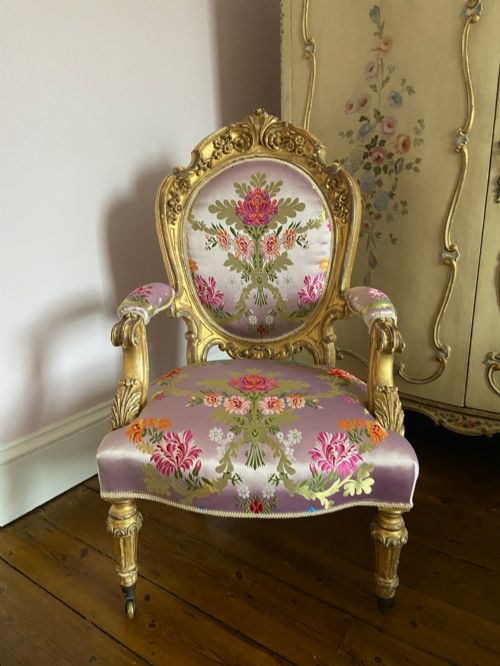
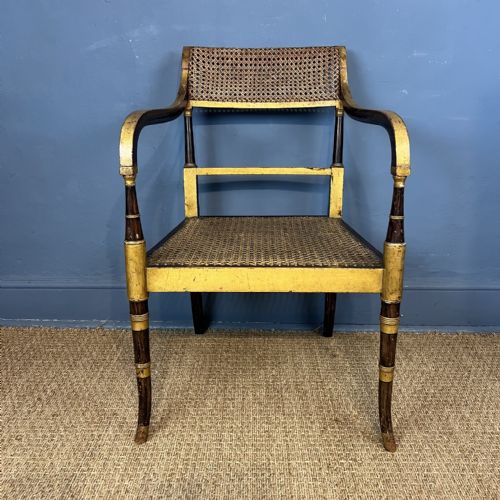
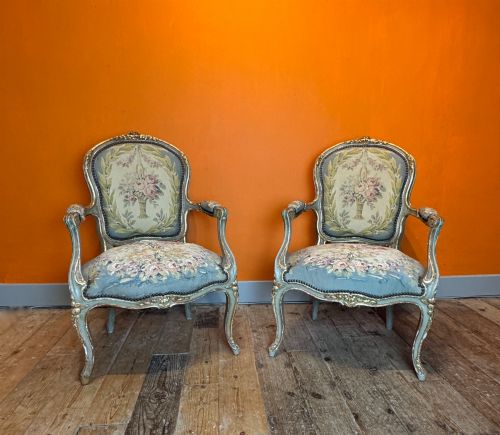
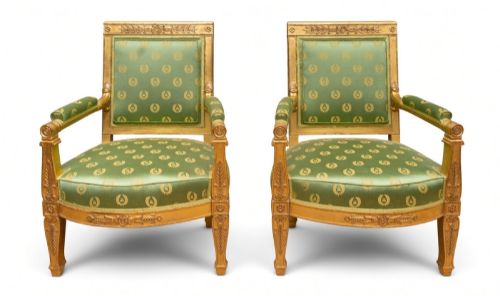
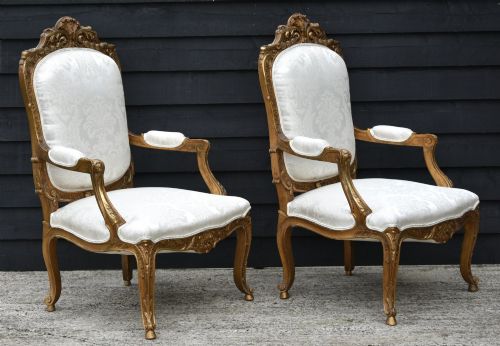
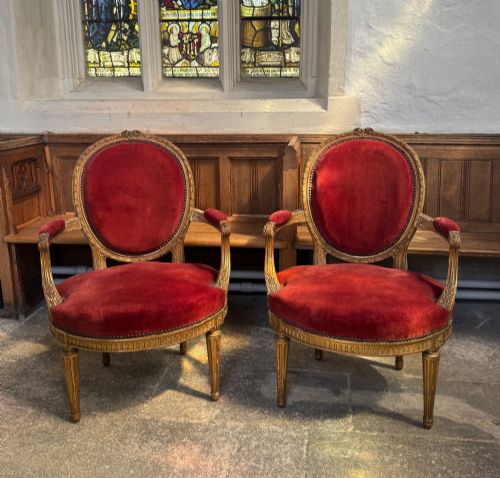
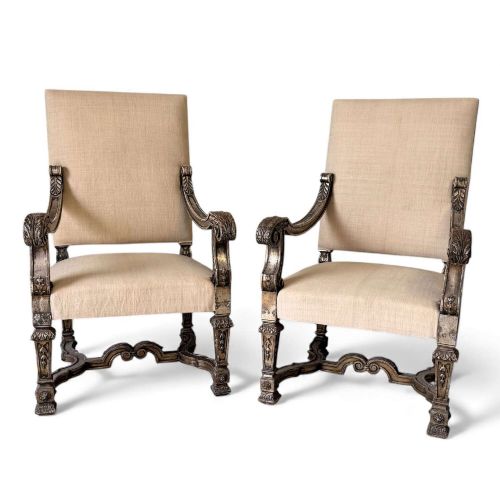
When searching for 19th century gilt armchairs, buyers encounter a range of formal seating from French Empire and Regency designs to later Victorian revivals. The versions met most often on this page are French salon chairs, fauteuils, and larger giltwood throne chairs originating from the nineteenth century.
Makers and workshops constructed these armchairs for formal reception rooms, drawing rooms, and libraries using heavily ornamented frameworks. Surviving examples often arrive as pairs or matching sets upholstered in silk, tapestry, or leather.
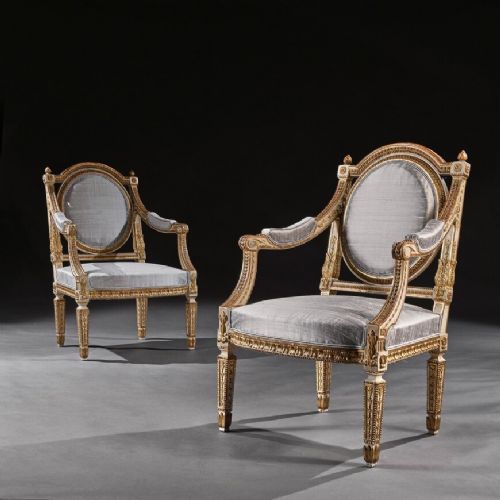
The selection encompasses diverse regional interpretations, spanning English walnut creations, Swedish gilt armchair designs, and Italian neo-classical painted items. These seats reflect the enduring popularity of historicist revivals, incorporating Rococo, Baroque, and Louis XVI stylistic elements into domestic interiors.
Materials and construction
Carvers shaped the foundational structures from timber substrates such as beech, mahogany, walnut, and rosewood before applying surface decoration. Artisans then used gold leaf or liquid gilding to cover the timber, sometimes combining this metallic finish with painted elements or parcel-gilt highlights.
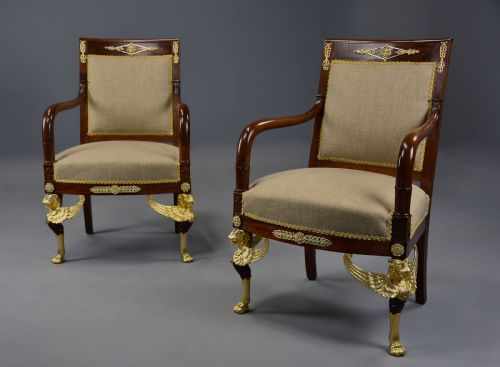
Upholsterers integrated traditional stuffing materials and covered the seats in durable fabrics including tapestry, patterned silk, and moroccan leather. Structural mounts of brass or ormolu frequently reinforced joints and decorated the prominent scroll arms and legs of Empire styles.
Children's salon chairs allowed Victorian youngsters to practice their best drawing room posture.
Assessing quality
The crispness of the wood carving separates standard production items from exceptional workshop output. Deeply undercut foliage and precise moulding indicate skilled hand-carving rather than mechanical shaping.
The integrity of the original gilding defines the visual impact of each chair. Examples retaining their untouched gold leaf over gesso display a warmer tone compared to later overpainting or poor re-gilding.
The structural stability of the frame and the quality of the textile upholstery determine daily usability. Chairs retaining period tapestry or heavy silk demonstrate careful preservation of both decorative surfaces and internal support.
Jacob Desmalter·Holland and Sons
The 19th Century Gilt Armchairs Glossary
- Giltwood
- Timber coated with a thin layer of gold leaf applied over a prepared gesso ground. This technique creates a bright metallic surface that catches light in formal reception spaces.
- Fauteuil
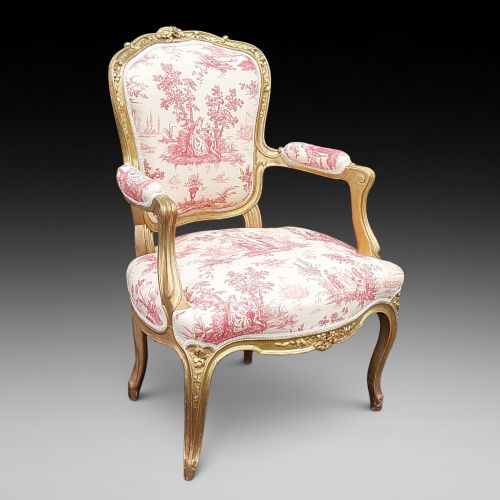
- An open-armed upholstered armchair originating in France. The wooden framework around the armrests remains exposed rather than covered in fabric.
- Bergere
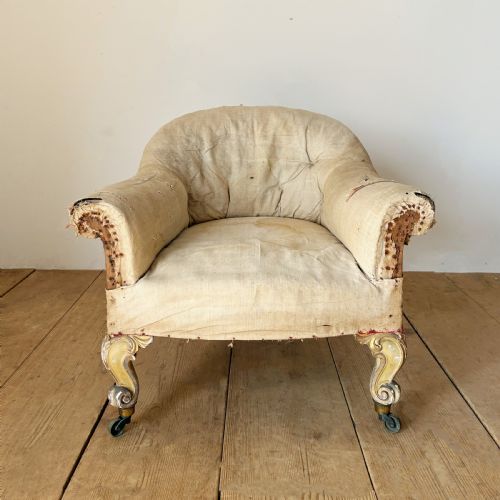
- An enclosed upholstered armchair featuring solid upholstered sides and a padded back. These seats typically incorporate a loose cushion above a webbed base.
- Parcel-gilt
- A decorative treatment where only specific carved details or raised ornaments are highlighted with gold leaf against a painted or polished wood background.
- Ormolu
- Gilded bronze mounts applied to furniture for decorative effect. Makers used these metallic ornaments to accent the corners and legs of Empire and revival pieces.
19th Century Gilt Armchairs: Frequently Asked Questions
How do I style a gilt armchair today?
These metallic seats work well as statement pieces in contemporary living rooms or bedrooms. Pair them with neutral walls to let the carved wooden frames stand out.
Keep surrounding furniture simple to avoid visual clutter. A single salon chair also functions effectively as a standalone reading seat in a study.
Are these chairs comfortable for daily use?
Many nineteenth-century forms were built for formal entertaining rather than relaxed lounging. Upright backs and firm padding encourage an upright posture.
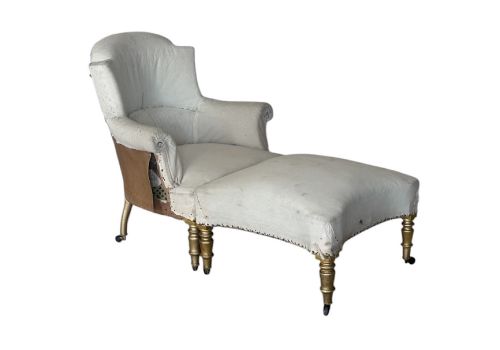
Deep bergere chairs or larger Victorian easy armchairs offer a softer sit compared to carved giltwood salon chairs or open arm fauteuils.
How can I tell French styles apart?
Empire pieces display heavy neoclassical symmetry with military motifs and ormolu mounts. Louis XV and XVI styles feature curved cabriole legs, carved floral garlands, and lighter proportions.
Revival pieces from the later nineteenth century often blend these elements with bolder Victorian upholstery and darker wood tones.
Why do some chairs come as pairs?
Drawing rooms and formal parlours required symmetrical furniture arrangements. Makers produced matching pairs and larger salon suites to flank fireplaces or windows.
Finding matching pairs remains common because these seating sets stayed together in domestic interiors over generations.