


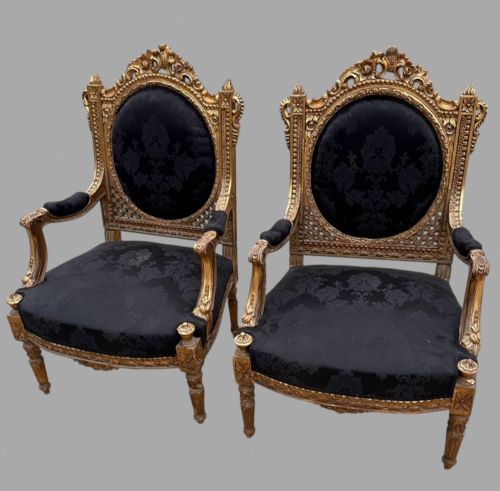

French Throne Chairs
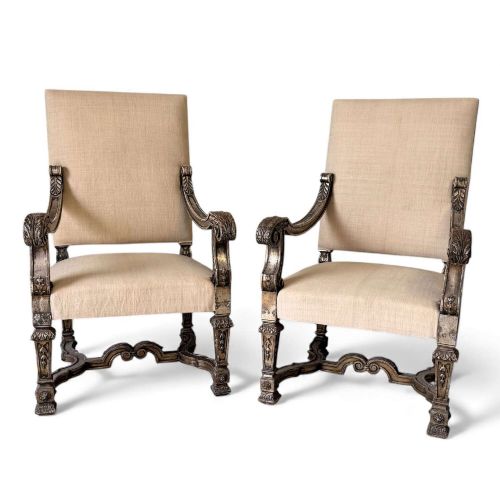
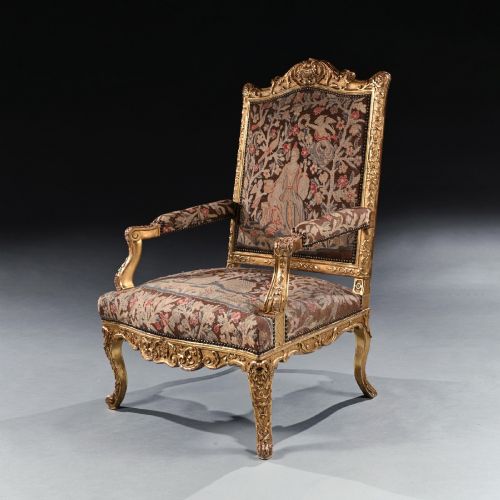
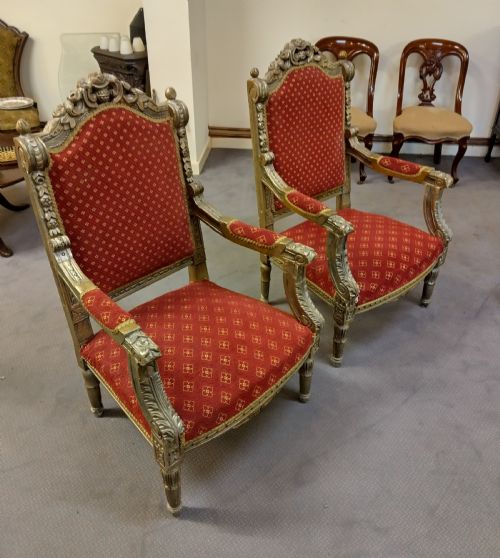
French throne chairs are substantial ceremonial armchairs designed to command a room through scale and carving.
French Throne Chairs
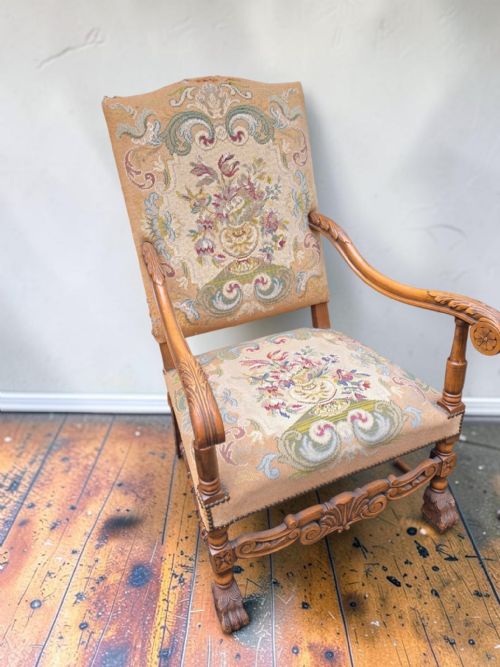
When searching for french throne chairs, a buyer encounters grand seating designed for presence and authority rather than casual repose. These pieces span centuries from the seventeenth through to the early twentieth century, drawing on historical revivals.
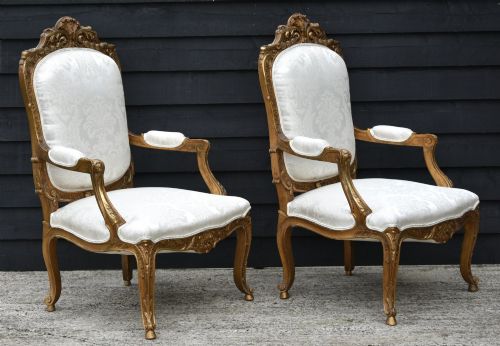
The nineteenth century yields the highest concentration of examples on this page, heavily favouring revival styles such as Baroque, Renaissance and Rococo. Walnut and giltwood frame constructions dominate alongside heavy upholstery.
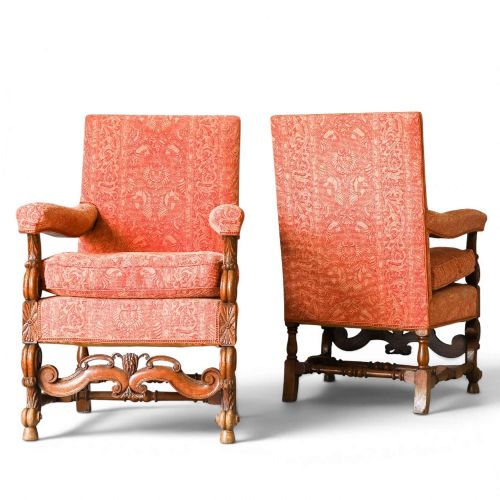
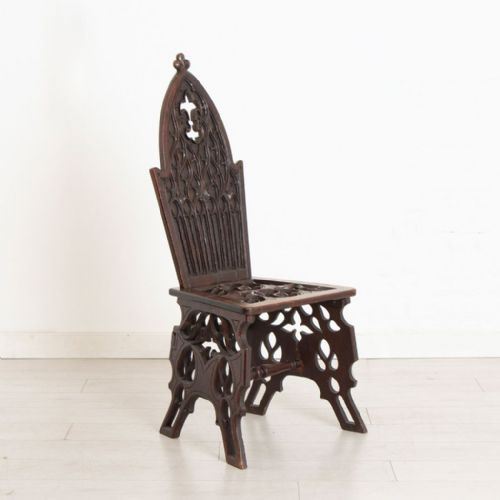
Formats vary from large armchairs and high wing backs to hall chairs and library thrones. Many surviving examples emerge as pairs, often featuring detailed carvings and substantial proportions.
How they were made
Makers constructed these frames from dense hardwoods including walnut, oak, fruitwood and giltwood. Woodworkers shaped the timber through intensive hand carving, creating deep relief ornament along the arms, rails and high backs.
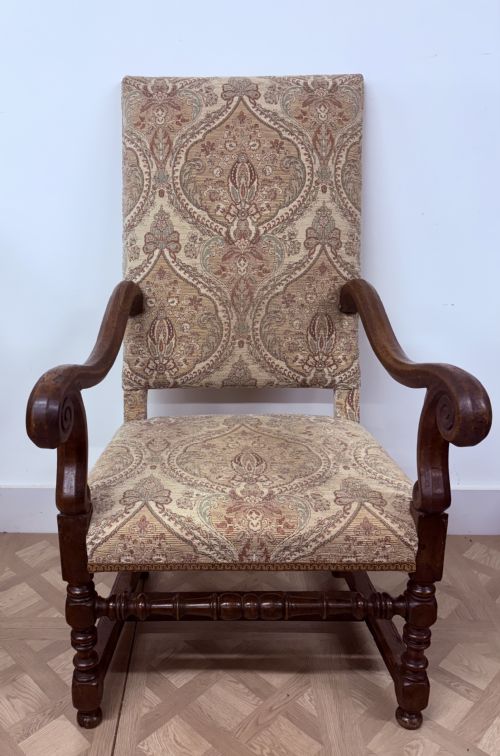
Upholstery completed the seating, utilising traditional textiles such as tapestry, damask fabric and leather fixed directly to the wooden frameworks. Brass detailing occasionally reinforced the structure or provided decorative accent.
Some oak hall chairs recorded in the archive served specifically as wedding thrones.
What varies in quality
The depth and crispness of the hand carving separate standard production from superior examples. Master carvers achieved remarkable definition in foliage, scrolls and figural motifs, whereas lesser work appears soft and shallow.
Materials also dictate tier, particularly the quality of the gilding and the grade of the original walnut or oak. Original period textiles and heavy tapestries elevate a piece far above simple later re-coverings.
The French Throne Chairs Glossary
- Giltwood
- Timber treated with gold leaf or gilt finish to create a brilliant decorative surface. This finish appears frequently on formal revival seating.
- Fauteuil
- An open-armed French armchair with upholstered back and seat exposed in wood. These chairs typify formal continental seating arrangements.
- Caquetoire
- A light sixteenth-century style conversational chair with a high narrow back and trapezoidal seat. Walnut examples survive from later revival periods.
- Tapestry
- A heavy hand-woven textile featuring pictorial designs used for upholstery. These covers provide durability alongside rich colour.
French Throne Chairs: Frequently Asked Questions
How do I spot a true revival piece?
Examine the timber shrinkage, tool marks on the underside and the method of joinery used in the frame. Nineteenth-century workshops often combined machine preparation with meticulous hand finishing.
Compare the carving depth and the patination of the wood against known period examples to confirm the date of manufacture.
Were these chairs used daily?
Most grand examples served ceremonial, reception or hall functions rather than everyday lounging. Their imposing scale and upright backs suited formal rooms and libraries.
Owners typically positioned them as pairs flanking a fireplace or at the head of a long table to project status.
How should I care for giltwood?
Keep gilded furniture away from direct sunlight and fluctuating humidity to prevent the delicate gold leaf from flaking. Dust gently with a dry, soft brush rather than using wet cloths.
Avoid commercial polishes entirely, as chemical agents strip the historic gilding over time.
What defines Renaissance Revival style?
This nineteenth-century movement revives sixteenth-century architectural motifs, featuring heavy turned legs, strapwork and prominent crest rails. Craftsmen utilised solid oak and walnut to achieve architectural gravity.
Such seating often incorporates high backs and formal upholstery suited to grand interiors.