

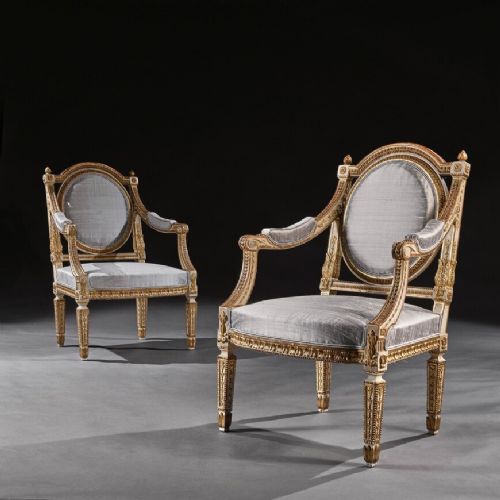
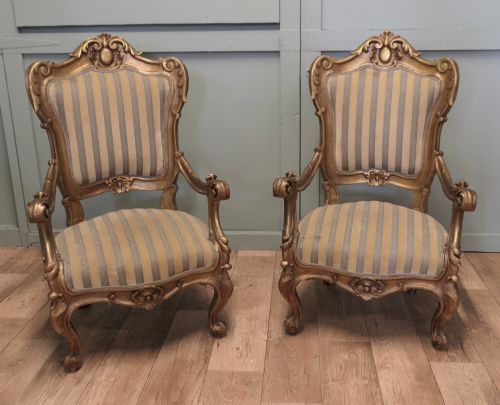
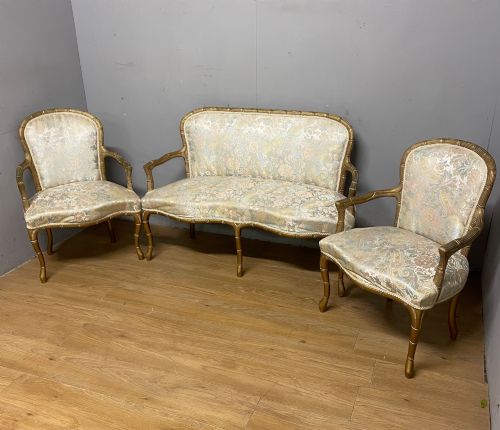
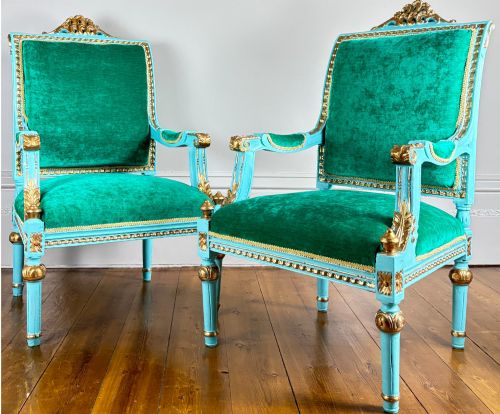
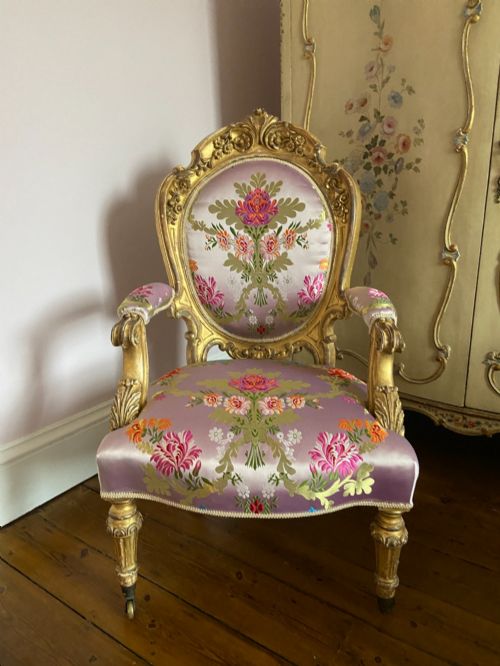
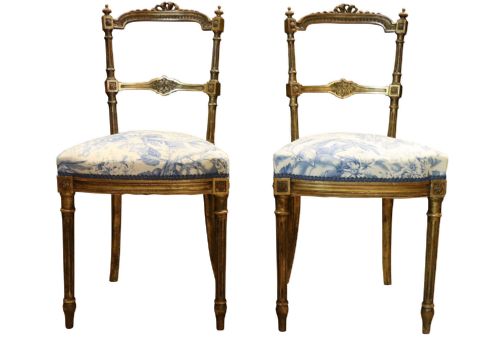
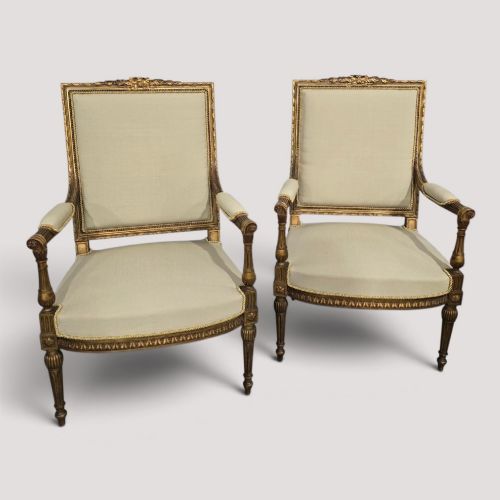
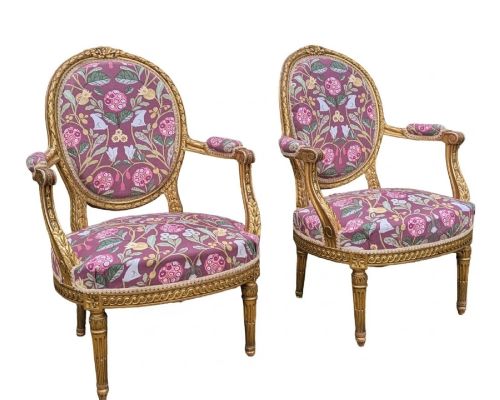

Giltwood Salon Chairs
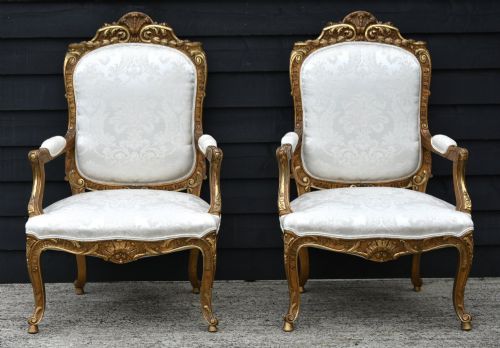
Giltwood salon chairs bring unmistakable gilded elegance to a room, offering refined seating designed to impress visitors in period interiors.
Giltwood Salon Chairs
When you search for giltwood salon chairs, you encounter ornate seating designed for formal reception rooms, spanning the eighteenth, nineteenth, and early twentieth centuries.
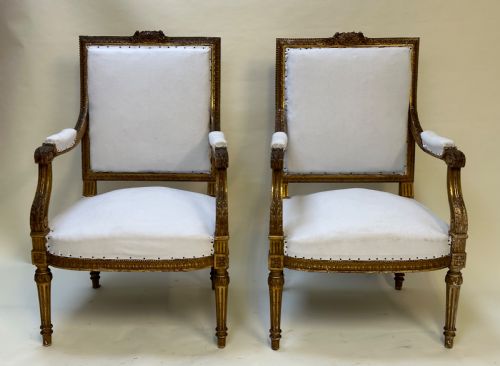
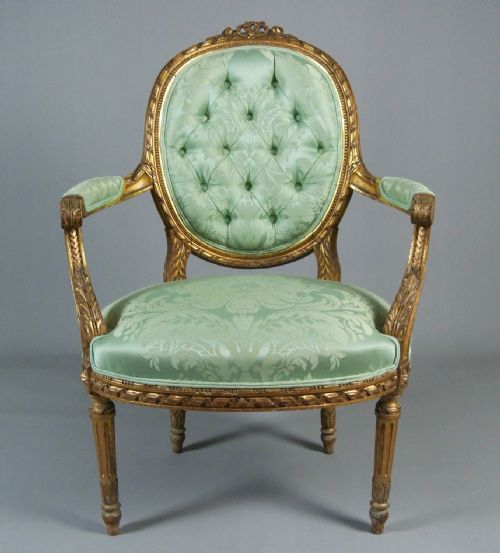
The selections on this page are predominantly French and English in origin, with nineteenth-century Louis XVI style revivals appearing most frequently alongside earlier Georgian and Regency pieces.
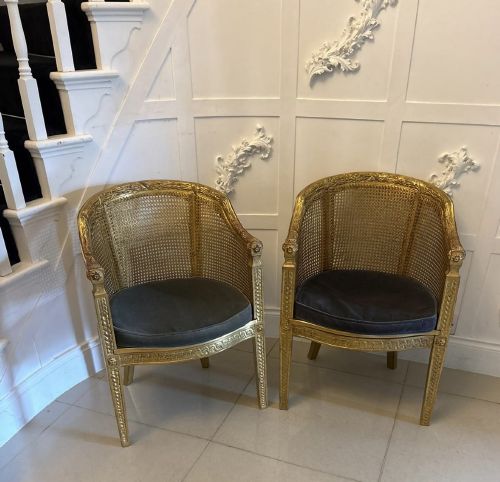
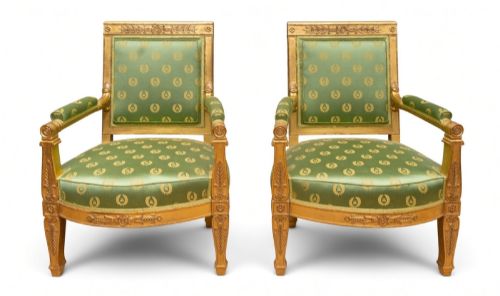
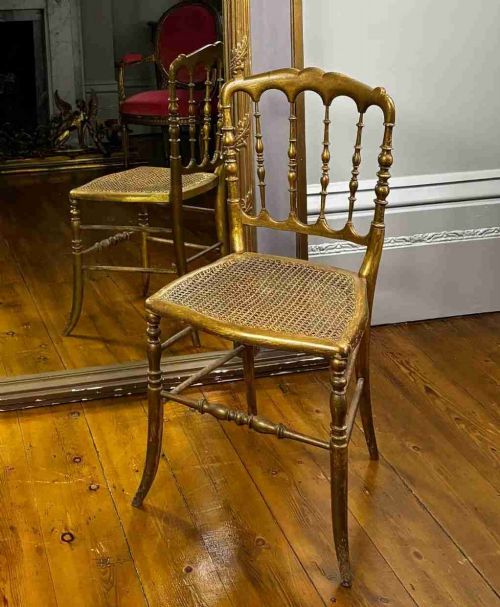
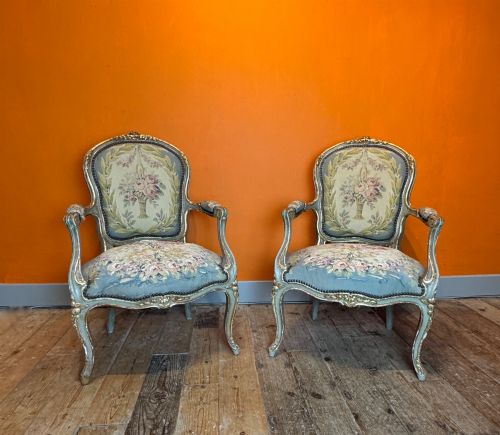
Forms range from open armchairs and fauteuils to bergères, side chairs, and complete salon suites upholstered in silk, velvet, tapestry, or fitted with caned seats.
Materials and construction
The foundational frames are shaped from timber such as beech and walnut, carved by hand with floral motifs, scrolls, and classical ornamentation before the gilding process takes place.
Giltwood surfaces are achieved by applying thin sheets of gold leaf over a prepared base, creating the characteristic metallic sheen that defines these decorative chairs.
Upholstery techniques involve traditional stuffing secured with textiles like silk, velvet, and patterned tapestry, or woven cane panels integrated into the wooden frames.
Giltwood Salon Chairs Retail Price Guide 2026
Typical asking prices for giltwood salon chairs among the pieces listed under this phrase on Sellingantiques today, from the lower quarter to the upper quarter. They describe what is for sale here now, not the wider market.
The inventory spans eighteenth-century Georgian designs through to early twentieth-century French revival pieces.
Judging quality
The distinction between ordinary and exceptional pieces rests upon the crispness and depth of the wood carving, where sharply defined ornamentation demonstrates superior craftsmanship.
The integrity and preservation of the original gold leaf application separate standard examples from those exhibiting refined surface patination and skilled historical execution.
Structural robustness, the retention of period-appropriate upholstery materials, and documented attributions to notable makers elevate the standing of individual pieces.
Jacob Desmalter·Thomas Chippendale·Blaise Maucuy·Holland and Sons
The Giltwood Salon Chairs Glossary
- Giltwood
- Timber decorated with a thin layer of gold leaf applied to its surface. This finish provides the bright metallic appearance characteristic of formal period seating.
- Fauteuil
- An open-framed upholstered armchair with wooden armrests left exposed. These French seats typically feature padded arm pads and carved frames.
- Bergère
- An enclosed upholstered armchair featuring solid sides filled with upholstery or cane work. A loose cushion usually rests upon the seat base.
- Caned
- Woven rattan material utilised for seat and back panels. This technique offers a lighter alternative to solid upholstery.
- Parcel gilt
- A decorative treatment where only specific portions of a wooden object are gilded, leaving other areas painted or exposed as natural timber.
Giltwood Salon Chairs: Frequently Asked Questions
Where were giltwood salon chairs used?
These decorative seats were traditionally positioned within formal reception rooms, drawing rooms, and parlours of grand houses and chateaux.
They served both as functional seating for guests and as visual statements demonstrating the owner's taste and wealth.
How do I clean giltwood furniture?
Maintenance requires gentle dusting with a soft, dry brush or cloth to prevent accumulation without disturbing the delicate gold leaf.
Moisture and chemical polishes must be strictly avoided to prevent permanent damage to the historical metallic surface.
Can I use these chairs daily?
While structurally sound, antique giltwood seating is generally suited for light usage rather than heavy everyday lounging.
Placing them in low-traffic areas helps preserve both the fragile gilded frames and the historical textile upholstery.
How do I identify Louis XVI style?
Louis XVI style pieces are characterised by straight tapered legs, geometric symmetry, and neoclassical motifs like fluting and ribbons.
This aesthetic contrasts sharply with the earlier curved lines and asymmetrical flourishes found in Rococo revival designs.