



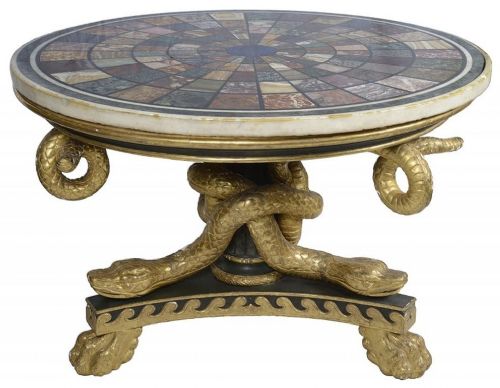
Giltwood Pedestal Table
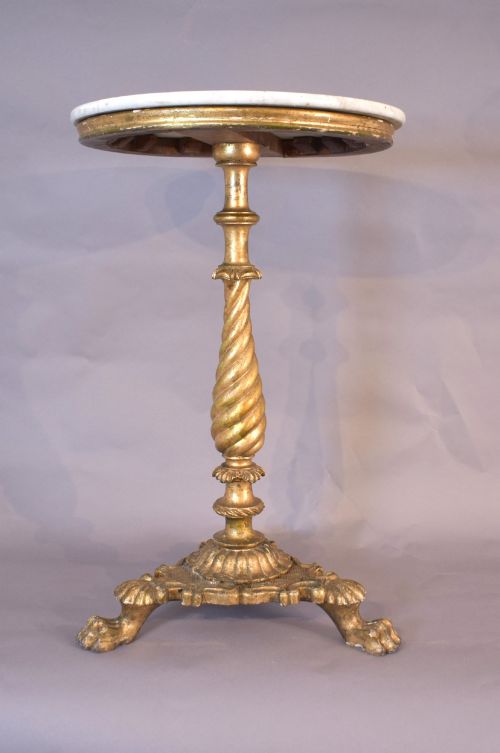
A giltwood pedestal table brings carved gilded surfaces and classical form together, offering a striking centrepiece for a formal room.
Giltwood Pedestal Table
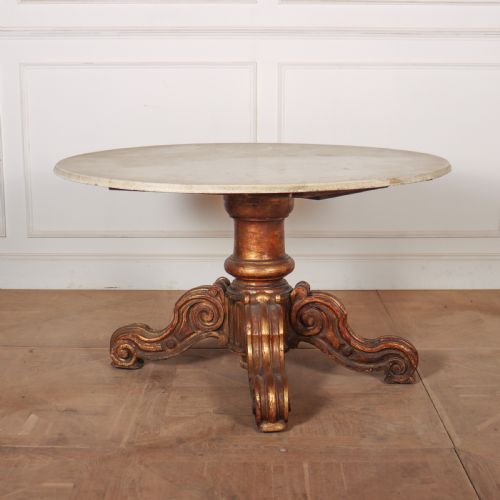
A giltwood pedestal table combines a central support with a gilded wooden frame, frequently topped with marble or fine timber. These pieces appear in forms such as centre tables, occasional tables, side tables, and urn stands.
The selections span distinct historical periods, including the eighteenth century, the Regency era, and later nineteenth-century revivals. Italian and French influences emerge strongly across the various designs.
Buyers most commonly encounter nineteenth-century examples alongside Regency and Louis XVI revival pieces. These take the shape of tripod tables, circular occasional tables, and sculptural stands supported by columns or carved motifs.
How they were made
Carvers shaped softwoods and hardwoods like limewood, rosewood, and amboyna into elaborate forms before applying gesso to prepare the surface for gilding. Artisans then laid gold leaf over the prepared wood to achieve a brilliant metallic finish.
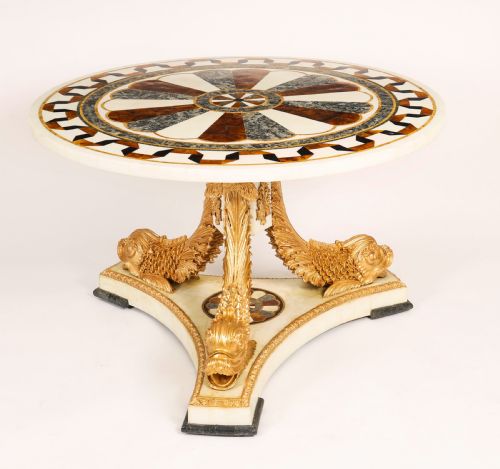
Tops frequently feature inset white or coloured marble, onyx, and specimen stone slabs rather than plain timber. Carved wooden elements incorporate complex details such as dolphins, swans, floral mouldings, and columns.
Carved wooden swans and dolphins occasionally hold up the corners, proving that past craftsmen took table supports very seriously indeed.
What varies in quality
Depth and crispness of the hand-carving separate standard items from superior works, particularly in figurative elements like dolphins and swans. The precision of the gesso application and the handling of the gold leaf dictate the richness of the surface reflection.
The selection of secondary woods and the quality of inset marble or specimen stone tops signal the ambition of the original commission. Proportional harmony between the central pedestal and the tabletop defines the architectural success of the piece.
The Giltwood Pedestal Table Glossary
- Giltwood
- Wood that has been coated with gold leaf or gold dust over a prepared ground layer. This technique creates a luminous, reflective surface that defines classical European furniture.
- Gesso
- A plaster-like mixture applied to wood surfaces as a smooth base for gilding and fine carving. Artisans use it to build up relief details before applying gold leaf.
- Guéridon
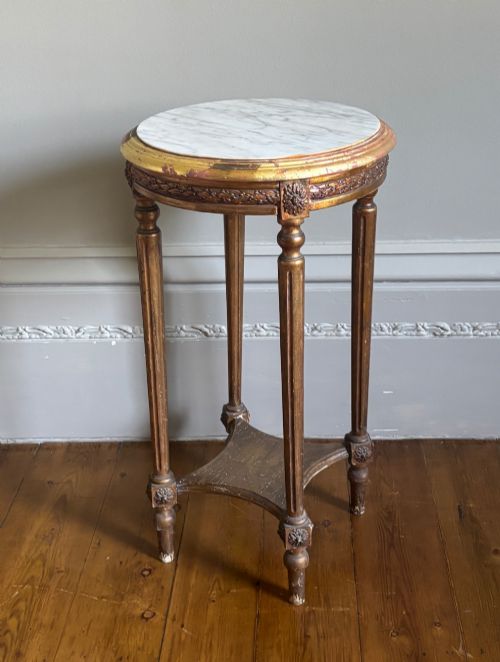
- A small French table supported by one or more columns or figures, popular from the seventeenth century onwards. These round tables often serve as plant stands or occasional tables.
- Specimen marble
- A tabletop composed of various coloured marbles arranged in geometric patterns or pictures. This technique showcases the collector's taste for geological variety.
- Tripod table
- A small freestanding table supported by three legs branching from a central pillar. They provide stable surfaces while maintaining a light visual footprint in a room.
Giltwood Pedestal Table: Frequently Asked Questions
Where should I place a giltwood pedestal table?
These pieces suit reception rooms, entrance halls, or drawing rooms where their reflective surfaces and carved details can be appreciated. A circular occasional or centre table works well positioned beneath a central chandelier or beside principal seating.
Smaller urn stands and plant stands fit neatly into corners or window alcoves to display decorative objects. Their finished appearance from all sides allows them to sit independently in the middle of a space rather than pushed against a wall.
What is the difference between Regency and Louis XVI styles?
Regency design draws heavily on classical Greek and Roman motifs, often incorporating dark rosewood paired with parcel gilding, bronze mounts, and bold architectural supports. The forms tend to feel robust and archaeological in their inspiration.
Louis XVI revival pieces lean towards neoclassical restraint with straight tapered legs, delicate floral mouldings, and lighter carved frames finished completely in bright gold leaf. These French-influenced works emphasise symmetry and refined decorative enrichment.
Can these tables hold heavy lamps and books?
Sturdier centre tables and breakfast tables with wide tripod bases provide stable support for everyday items like table lamps and heavy books. Their construction distributes weight evenly down through the central pedestal.
More delicate urn stands or slender occasional tables suit lighter decorative objects, porcelain, or small sculptures rather than heavy loads. Assessing the diameter of the top and the spread of the base helps determine the practical capacity of each specific piece.