





Giltwood Cream Sofa
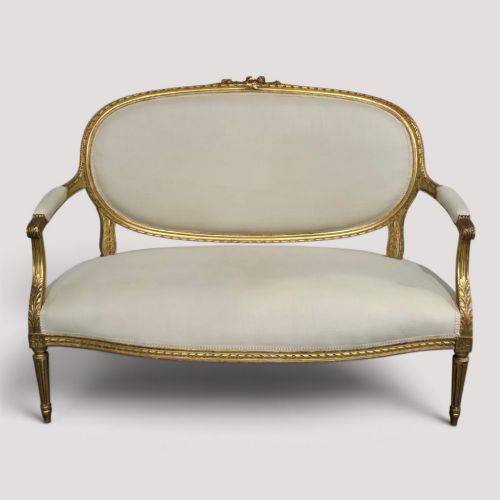
These giltwood cream sofa options bring grand European seating into modern rooms with carved frames and neutral upholstery.
Giltwood Cream Sofa
A giltwood cream sofa provides a distinct seating arrangement rooted in historical European design. When buyers search for a giltwood cream sofa, they encounter pieces originating from the eighteenth, nineteenth, and early twentieth centuries.
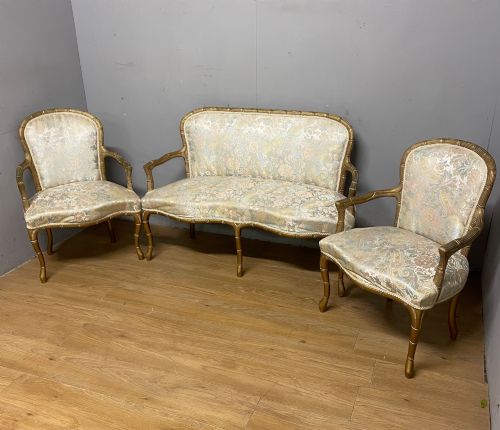
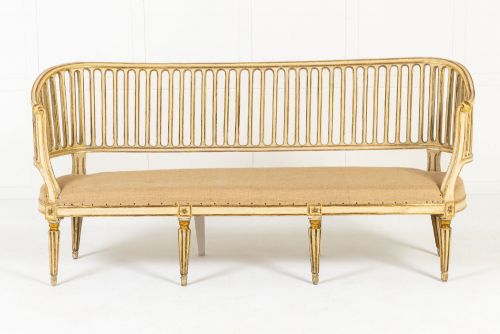
The selections available here predominantly feature French styles and Louis XVI revival influences. Pieces range from large settees and multi-piece salon suites to individual hall seats and occasional benches.
Craftsmanship spans both continental European workshops and English interpretations of classical forms. Buyers often discover items showcasing cream painted finishes alongside traditional carved woodwork.
Materials and construction methods
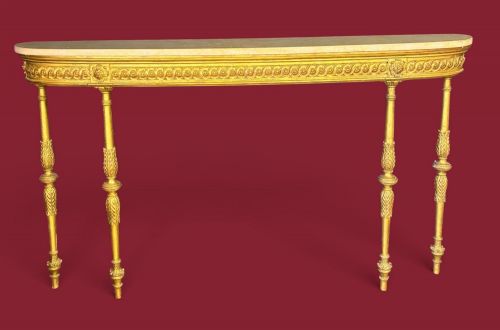
Construction relies primarily on carved wood frames finished with layers of gesso and gold leaf or paint. Artisans applied these metallic sheets by hand to accentuate intricate floral and neoclassical relief details.
Upholstery utilises traditional textile coverings including linen and woven fabrics secured directly to the wooden frameworks. These soft seating surfaces complement the rigid, gleaming structure of the gilded supports.
Giltwood Cream Sofa Retail Price Guide 2026
Typical asking prices for giltwood cream sofa among the pieces listed under this phrase on Sellingantiques today, from the lower quarter to the upper quarter. They describe what is for sale here now, not the wider market.
Some nineteenth century makers apparently believed no formal salon was complete without matching armrests for every visiting aristocrat.
Distinctions in craftsmanship
Quality differentiates itself through the depth and precision of the wood carving across the frame. Superior examples display crisp, hand-chased foliage and structural joinery that remains entirely rigid over centuries.
The integrity of the surface finish also dictates overall grade. Finishes that retain their original gold leaf and restrained cream paint without crude overpainting command higher regard among collectors.
The Giltwood Cream Sofa Glossary
- Giltwood
- Wood that has been decorated with thin sheets of gold leaf applied over a prepared surface. This finish creates a luminous metallic sheen characteristic of formal antique furniture.
- Louis XVI Style
- A neoclassical design movement originating in France characterised by straight tapering legs, rectangular backs, and classical ornamentation. It values symmetry and restrained geometric forms over curving baroque excesses.
- Salon Suite
- A matched set of seating furniture and occasionally matching tables designed for a formal drawing room. These ensembles typically include a central sofa accompanied by matching armchairs and smaller seats.
- Neoclassical
- An artistic revival drawing inspiration from the classical art and architecture of ancient Greece and Rome. This style manifests through symmetrical proportions, urn motifs, and fluted column supports.
Giltwood Cream Sofa: Frequently Asked Questions
Where should I place a giltwood sofa?
These seating pieces suit formal reception spaces, drawing rooms, or large entrance halls where their decorative frames can be admired from multiple angles.
They also function as statement seating in modern living areas when paired with neutral walls and minimalist surrounding decor.
How do I clean giltwood frames?
Dust the carved wooden surfaces gently using a soft, dry microfibre cloth to prevent accumulation in the intricate recesses.
Avoid applying water, chemical polishes, or abrasive cleaners directly onto the gold leaf or painted cream finishes.
Are these sofas comfortable for daily sitting?
Most historical pieces feature firm traditional padding supported by webbing or springs designed for upright posture rather than lounging.
Their primary purpose historically was formal entertaining, so daily use may require careful consideration of the vintage upholstery.
What defines the Louis XVI style?
The aesthetic is defined by straight lines, rectangular geometries, and classical motifs such as ribbons, fluting, and acanthus leaves.
Unlike earlier rococo forms, this style embraces architectural symmetry and structured restraint.