



Louis XVI Gilt Sofa
These pieces for louis xvi gilt sofa bring neoclassical symmetry and gilded grandeur straight into a modern interior.
Louis XVI Gilt Sofa
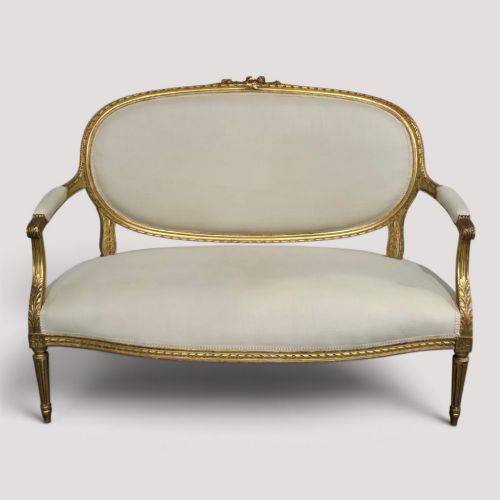
When you search for a louis xvi gilt sofa, you are looking at seating built in the neoclassical taste, which favours straight lines, classical proportions and restrained ornament over the curves of the preceding rococo period. The pieces found here span the nineteenth century and the early twentieth century, taking the form of revival settees, salon suites and two-seat or three-seat frames.
You are most likely to meet a revival piece dating from the late nineteenth century or around nineteen hundred, often executed in France or under strong French influence. These frames borrow the rectilinear backrests, fluted legs and carved rosette details of the original eighteenth-century repertoire without necessarily claiming that exact age.
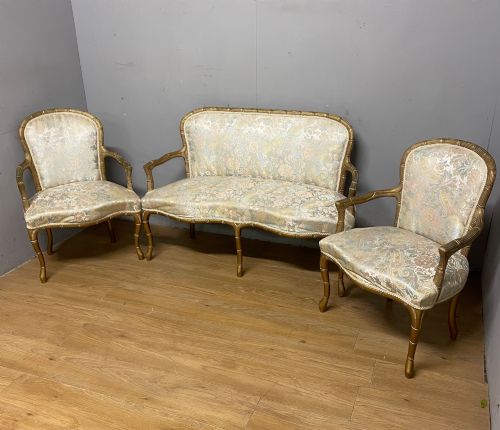
Alongside dedicated sofas, the selections frequently include larger salon suites or upholstered hall seats that share the same gilded woodwork and fabric upholstery. Whether you encounter a compact two-seat settee or an expansive three-piece suite, the common thread is a formal architectural silhouette finished in gold.
How they were made
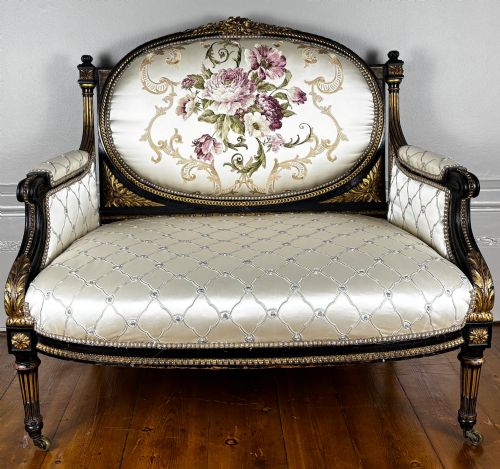
The foundation of these settees is timber, typically carved wood, walnut, mahogany, or ebonised wood for the structural frame. Master joiners shaped the timber to exhibit classical motifs such as fluted columns, ribbon twists and acanthus leaves before applying the surface finishes.
Gilding was then applied using gold leaf or giltwood techniques to create a brilliant metallic sheen across the carved surfaces. Some variants introduce parcel gilt accents against ebonised or painted backdrops to highlight specific architectural details.
Upholstery completed the piece, utilising fabric or silk upholstery secured over padded interiors to ensure comfort. Caning also appears on specific bergère sofas, providing a lighter texture alongside the dense carved woodwork.
Louis XVI Gilt Sofa Retail Price Guide 2026
Typical asking prices for louis xvi gilt sofa among the pieces listed under this phrase on Sellingantiques today, from the lower quarter to the upper quarter. They describe what is for sale here now, not the wider market.
Even the most formal gilded settee occasionally needs a velvet cushion to forgive a long afternoon of reading.
What varies in quality
The standard of carving defines the upper tier of these frames, separating crisp, hand-chiselled acanthus leaves and sharp fluting from soft, mechanical moulding. A superior frame shows depth and undercut detail in the wood rather than a flat, superficial pattern.
The integrity of the gilding further distinguishes finer examples, where gold leaf was laid down with skill to catch the light evenly across complex mouldings. Lesser pieces may display heavy, uniform paint or flaking metallic washes that obscure the underlying woodwork.
Structural heft and timber selection also play a part, as denser woods provide greater rigidity to slender neoclassical legs and arm supports. Well-balanced proportions ensure the settee looks architectural and solid rather than fragile or over-ornamented.
The Louis XVI Gilt Sofa Glossary
- Giltwood
- Wood that has been coated with a thin layer of gold leaf or gilt. This finish gives the carved frame its characteristic metallic lustre.
- Neoclassical
- A style originating in the mid-eighteenth century that draws inspiration from classical antiquity. It is characterised by straight lines, symmetry and ancient architectural motifs.
- Bergère
- An enclosed armchair or sofa with upholstered sides integrated into the backrest. It offers a formal yet comfortable seating arrangement.
- Ormolu
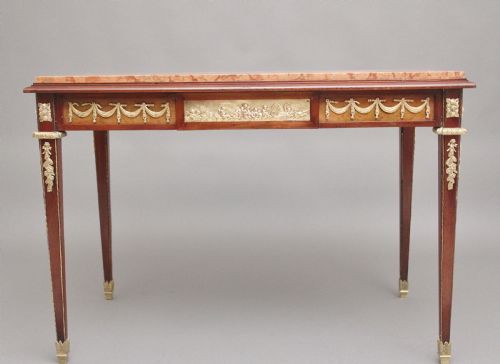
- Gilded bronze used for decorative mounts and furniture embellishments. It adds crisp metallic detailing to high-status cabinet work and seating.
- Caning
- Woven rattan or cane panels utilised for backrests or seats. This technique introduces a lighter, breathable texture to heavy wooden frames.
Louis XVI Gilt Sofa: Frequently Asked Questions
How do I identify a revival piece?
Revival pieces from the nineteenth or early twentieth century can be identified through machine-cut joinery methods, newer secondary timbers, and slightly heavier carving styles compared to eighteenth-century originals. Examining the construction underneath the upholstery often reveals the technological markers of a later workshop.
Makers working in the revival periods adopted the vocabulary of the neoclassical era while utilising contemporary tools and assembly techniques. The presence of nineteenth-century hardware or standardised screws helps confirm a later date of manufacture.
Where should I place a gilt settee?
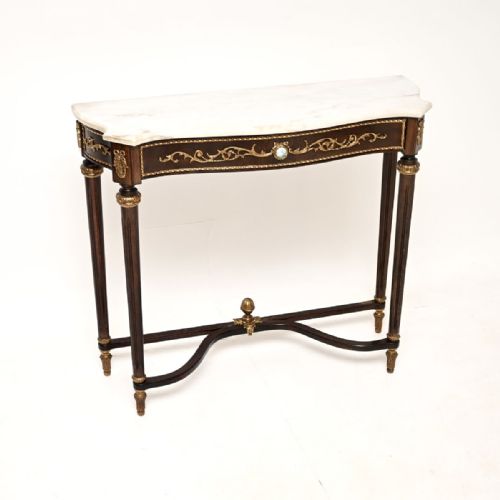
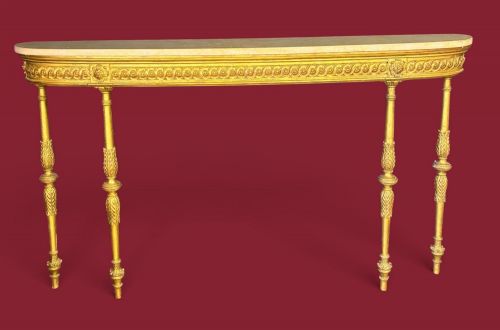
These seating pieces suit formal reception rooms, drawing rooms, or spacious hallways where their architectural lines can be appreciated from multiple angles. Pairing them with complementary centre tables creates a balanced neoclassical arrangement.
Because the gilded finish catches the light, positioning the piece opposite a window or under warm accent lighting enhances its metallic sheen. Ensure the surrounding decor allows the rectilinear frame to stand clear without feeling crowded by heavier furniture.
How do I care for giltwood?
Giltwood requires gentle maintenance to protect the delicate gold leaf surface from abrasion and moisture. Dust the carved wooden areas regularly with a soft, dry ostrich feather duster rather than using chemical polishes.
Keep the settee away from direct sunlight and dramatic temperature shifts to prevent the underlying wood from expanding and cracking the gesso and gold layer. Professional conservation is recommended if any flaking of the metallic leaf occurs.
What is a salon suite?
A salon suite consists of matching seating furniture, typically comprising a central settee accompanied by a matching set of armchairs or side chairs. These coordinated sets were designed to furnish formal entertaining spaces with a unified aesthetic.
Pieces within a suite share identical carving motifs, timber finishes, and fabric upholstery schemes. Finding an intact suite offers a complete historical interior arrangement rather than a single isolated seating piece.