


Giltwood Arm Chair
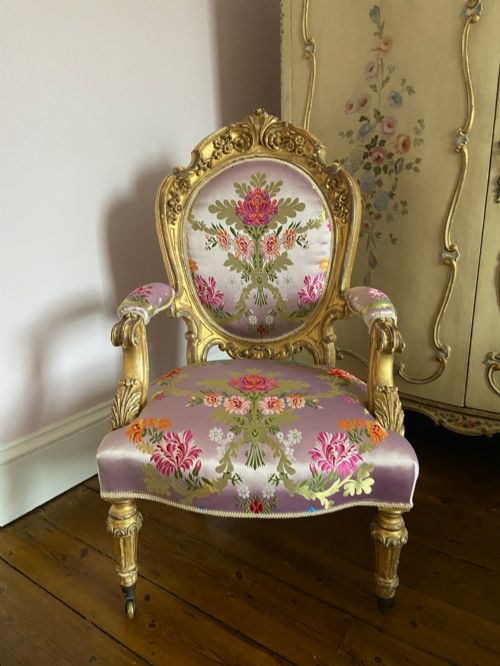
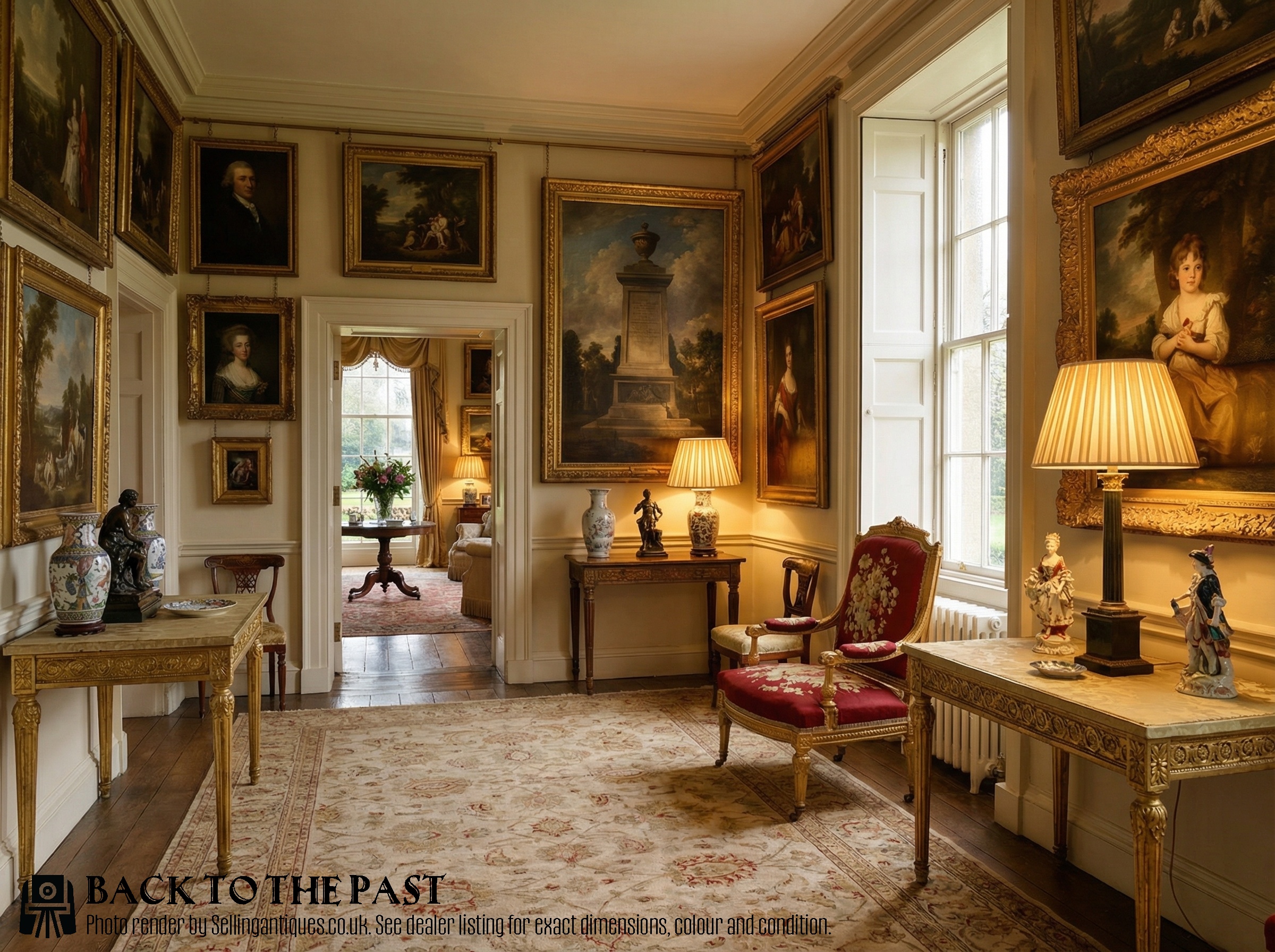
A giltwood arm chair brings gilded architectural presence and rich upholstery into a room, drawing the eye with carved timber frames finished in gold leaf.
Giltwood Arm Chair
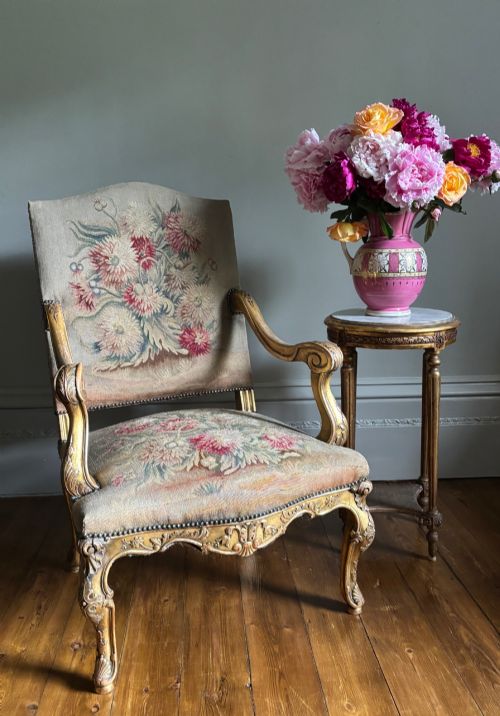
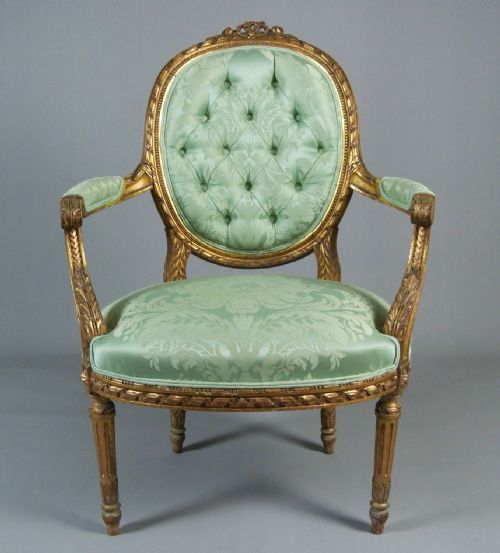
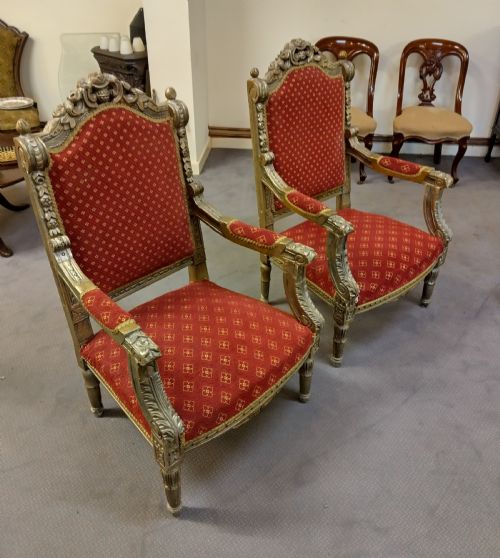
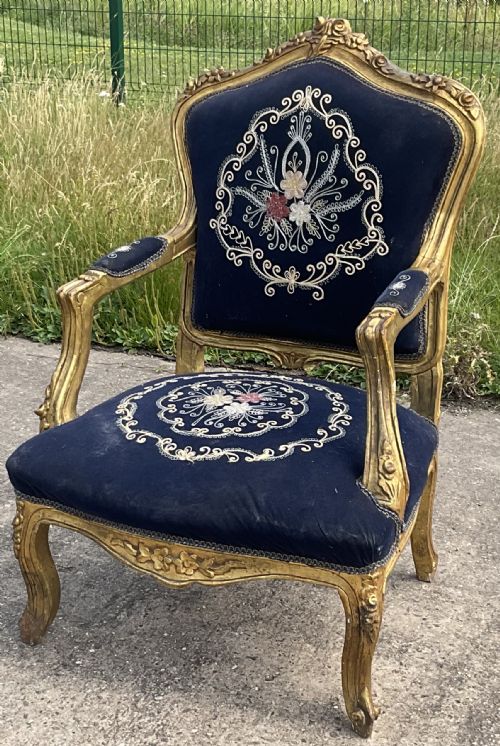
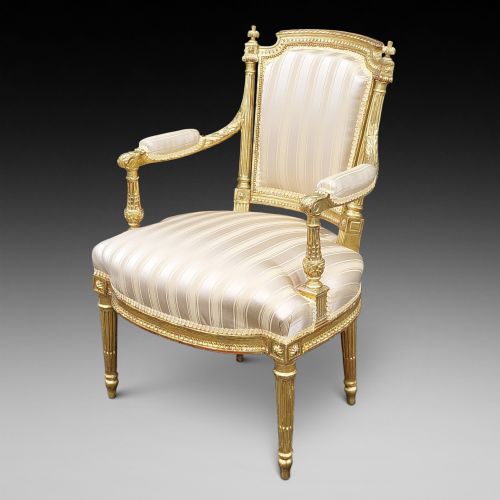
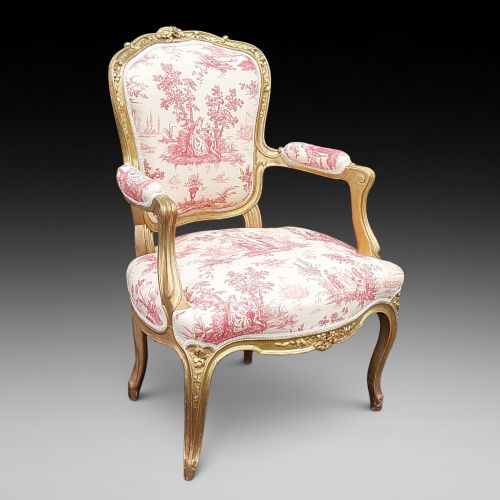
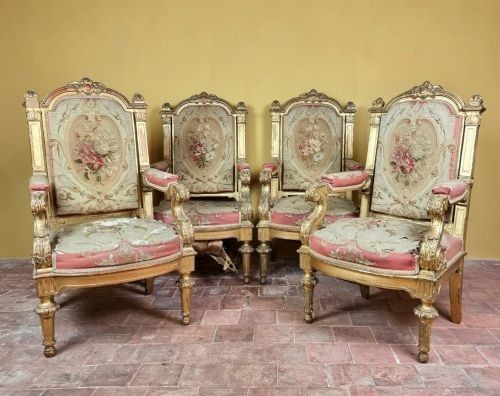
A giltwood arm chair is a formal seating piece defined by a wooden structural frame coated in gold leaf or gilt finish, upholstered in textiles such as silk damask, tapestry or fabric. Buyers searching this phrase meet an array of revival styles and period designs, with nineteenth-century French and English interpretations appearing most frequently.
The form spans open armchairs, fauteuils, and bergères designed for salons, drawing rooms, and formal parlours. Eighteenth-century examples draw on George III neoclassical or regency vocabulary, while later pieces adopt Louis XVI, Baroque, and Rococo revival idioms executed in beech, walnut, and other timbers.
Makers often drew inspiration from continental palace aesthetics, resulting in ornate frames featuring scroll arms, detailed carvings, and exposed gilded surfaces. These seats functioned as statement pieces within elite interiors rather than casual everyday furniture.
How they were made
Craftsmen built the structural frame from timber such as beech, walnut, or general wood, shaping the components through joinery and deep carving. Artisans applied gesso over the timber base to create a smooth, prepared surface for subsequent gilding.
Gold leaf was laid meticulously onto the prepared bole and burnished to achieve a brilliant reflective sheen, or finished with alternate gilt preparations. Upholsterers then layered internal stuffing, webbing, and springs before securing the final textile cover, including tapestry or silk damask.
Listings feature periods spanning from the eighteenth century through the early twentieth century, utilising beech, walnut, and silk damask.
What varies in quality
The crispness and depth of the hand-carved ornamentation separate exceptional frames from standard production, as skilled carvers achieve greater definition in acanthus leaves, scrolls, and floral motifs. The quality of the gilding process itself determines the longevity and warmth of the golden surface, distinguishing master application from flat or overworked finishes.
Structural integrity relies on the tightness of the original joinery and the selection of dense timbers like beech or walnut for the primary frame. Furthermore, the retention of period-appropriate upholstery materials, such as original tapestries or hand-woven silks, elevates the historical integrity of the piece.
Thomas Chippendale·Holland & Sons·Henry Holland·Bertram & Son
The Giltwood Arm Chair Glossary
- Giltwood
- Timber coated with gold leaf or a gold-coloured finish applied over a prepared gesso ground. This surface treatment provides the characteristic metallic brilliance seen on formal period seating.
- Fauteuil
- An open-arm armchair with upholstered back and seat, featuring exposed wooden arms and frame. This French form typically has padded armrests supported by curved uprights.
- Bergère
- An enclosed armchair with upholstered sides and a solid, padded back. The design often incorporates a loose seat cushion resting on a shaped rail.
- Gesso
- A plaster-like mixture applied to timber frames to provide a smooth base for gilding. It allows carvers to refine details before the gold leaf is laid.
- Tapestry
- A heavy, hand-woven textile featuring pictorial or decorative designs used historically for upholstery. These covers add significant texture and narrative detail to period chairs.
Giltwood Arm Chair: Frequently Asked Questions
Where were these chairs placed?
These chairs stood in formal reception spaces, drawing rooms, and salons where hosts entertained guests. Their decorative carved frames and gilded finishes were designed to display status and complement grand architectural interiors.
They functioned primarily as accent seating rather than daily lounging furniture. Placed against walls or arranged in conversation groups, they contributed to the cohesive aesthetic of a period room.
How do I identify a revival piece?
Revival pieces draw heavily on earlier design vocabularies like Louis XVI or Baroque styles but date to the nineteenth or early twentieth century. Examining the timber seasoning, tool marks, and construction techniques helps reveal the true manufacturing era.
Makers of the nineteenth century utilised mechanised advancements alongside traditional hand carving, resulting in distinct structural signatures compared to eighteenth-century originals.
Are these chairs comfortable for daily use?
These seats were built for formal posture rather than relaxed lounging, featuring upright backs and supportive armrests. The original internal stuffing often relied on traditional materials like horsehair, which provides a firmer sit than modern foam.
Living with them involves appreciating their sculptural presence while accommodating their upright ergonomic design. Many owners place them in low-traffic areas or use them as reading seats.
What is the difference between open and closed arms?
Open armchairs expose the carved and gilded wooden supports between the backrest and the armrest, offering a lighter visual silhouette. Closed armchairs, such as bergères, feature upholstered panels that enclose the sides for added insulation and enclosure.
This structural choice alters both the visual weight of the chair within a room and its functional style. Open frames emphasise the carved giltwood frame, while closed versions highlight textile upholstery.