




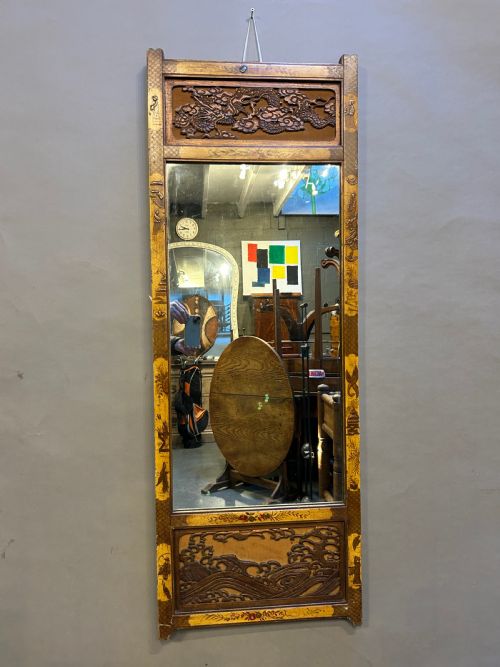
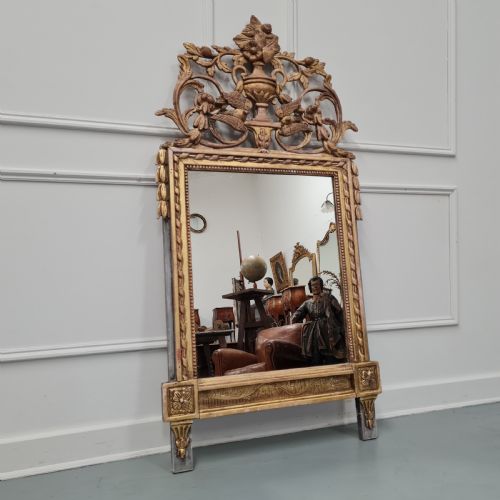
Gilt Wood Trumeau Mirror
A gilt wood trumeau mirror combines architectural panelling with reflective glass and painted or carved decoration for an interior.
Gilt Wood Trumeau Mirror
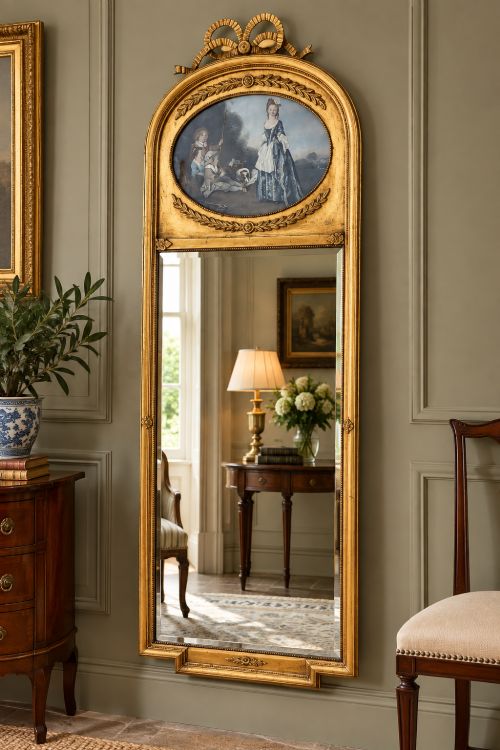
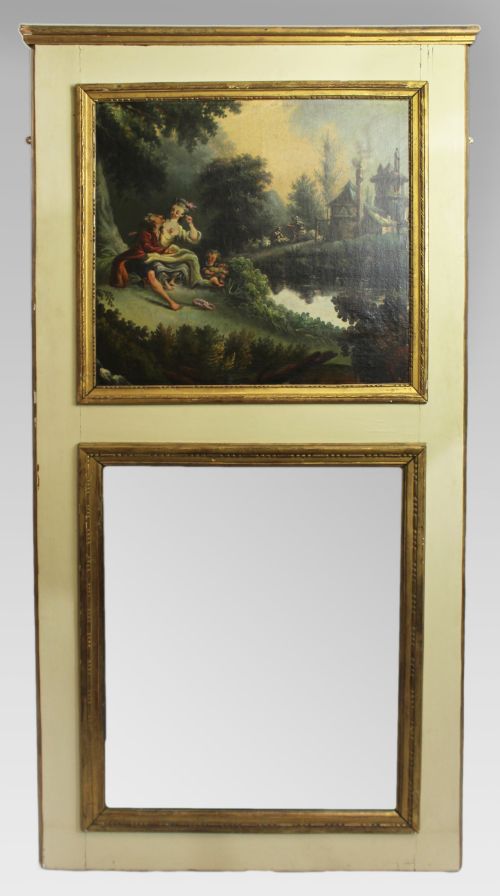
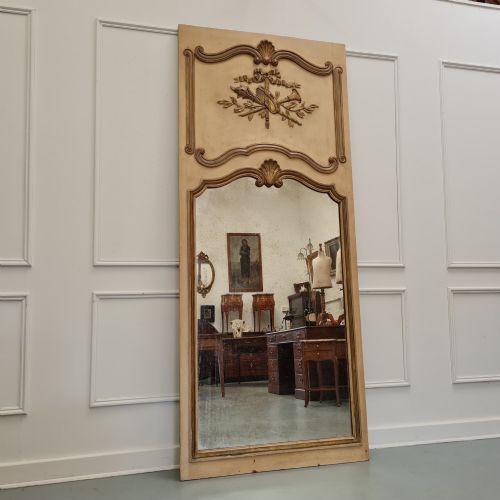
A gilt wood trumeau mirror is a distinct wall hanging originating in French interiors, combining a vertical glass plate with an upper section typically holding an oil painting, a decorative panel, or carved foliage. These pieces range from grand eighteenth-century examples to later nineteenth-century interpretations associated with French chateau and neoclassical aesthetics.
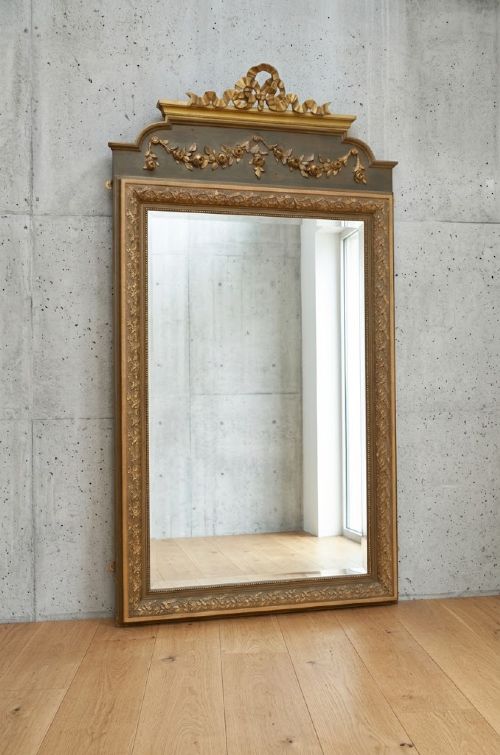
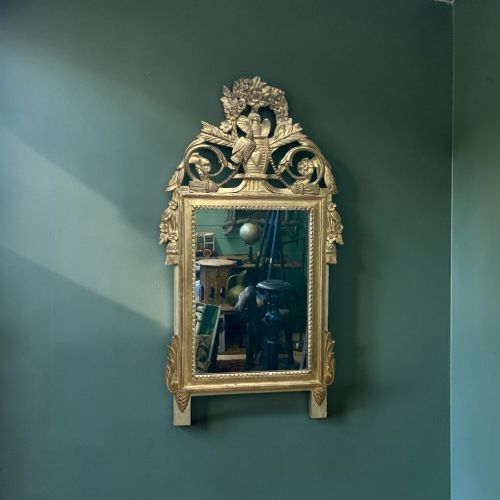
The version most frequently met on this page is the nineteenth-century French trumeau or pier mirror, often displaying carved wood and gesso finished in gold leaf alongside painted surfaces. Many incorporate pastoral scenes or ribbon crests above the glass, reflecting traditional placement between windows or above mantelpieces.
How They Were Made
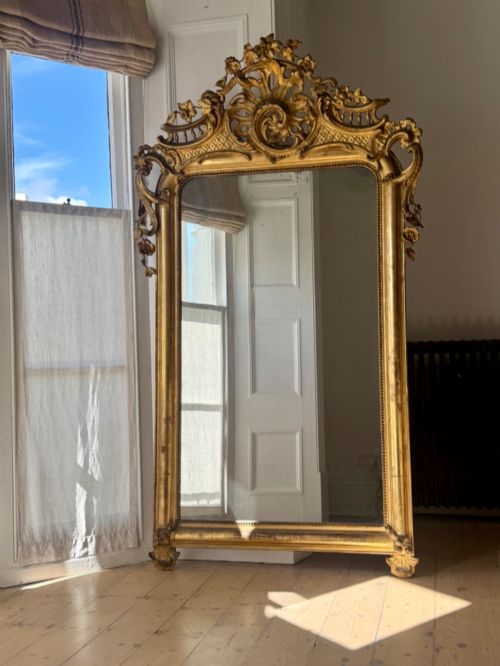
Makers constructed the structural frames of these mirrors using timber such as pine or hardwood, applying layers of gesso to build up crisp relief detail before finishing the surface with gold leaf, metal leaf, or paint. Carved wooden elements and moulded composition enrich the crests and borders of eighteenth and nineteenth-century examples.
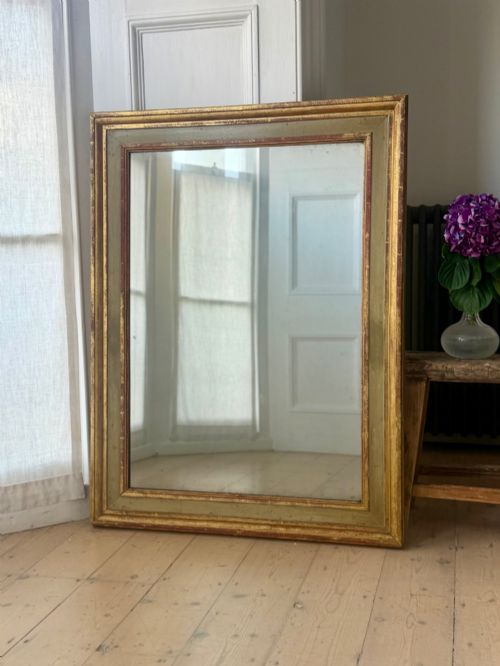
The reflective elements rely on historic mirror glass, including mercury glass variants characterised by characteristic foxing and mottling across the silvered plate. Integrated upper panels often feature hand-painted pastoral oils or decorative foliate designs executed directly on wood or canvas.
Listings span the eighteenth century through the early twentieth century, featuring French neoclassical, Regency, and Victorian revival styles.
What Varies in Quality
The distinction between tiers of quality rests upon the depth and execution of the carved wood and gesso ornamentation, where hand-carved detailing surpasses mass-produced composition ornament. Original gilding and untouched historic painted surfaces hold greater integrity than later repainting or re-gilding interventions.
The presence of original mercury glass plates and integrated seventeenth or eighteenth-century style pastoral paintings elevates an example above those fitted with modern replacement mirror glass or plain replacement panels. Structural crispness in the neoclassical or Louis XVI motifs further separates standard decorative mirrors from superior pieces.
The Gilt Wood Trumeau Mirror Glossary
- Trumeau
- A decorative architectural wall panel or pier glass featuring an integrated mirror plate paired with an upper painted or carved panel. These items originated in eighteenth-century French interior design.
- Gesso
- A plaster-like mixture applied to wooden frames to create a smooth or built-up surface for subsequent carving and gilding. Historic pieces rely on traditional chalk and animal glue binders.
- Pier Mirror
- A tall mirror designed specifically to hang on the wall space between two windows. They frequently coordinate with console tables placed underneath.
- Mercury Glass
- Early silvered mirror glass produced using a mercury amalgamation technique before nineteenth-century chemical silvering processes became standard. It exhibits characteristic dark spots and uneven reflection.
- Giltwood
- Timber frames coated in gold leaf applied over a prepared gesso and bole ground. This technique creates a warm metallic lustre across carved ornaments.
Gilt Wood Trumeau Mirror: Frequently Asked Questions
Where should a trumeau mirror be hung?
These mirrors traditionally occupy the wall space between two windows, known as a pier, or position themselves directly above a fireplace mantelpiece.
Their vertical proportions suit high ceilings and spacious rooms, reflecting ambient light across the interior.
What is the difference between a pier mirror and a trumeau mirror?
A pier mirror specifically designates a tall glass designed to hang on the wall pier between windows, while a trumeau mirror incorporates an architectural painted or carved panel alongside the glass plate.
Many trumeau mirrors also function as pier mirrors depending on their proportions and original architectural placement.
How do you identify nineteenth-century French mirrors?
Nineteenth-century French examples typically display carved wood and gesso construction finished in gold leaf and painted schemes, drawing on neoclassical, Louis XVI, or Belle Epoque styles.
Evidence of age appears in the construction techniques, the weight of the timber frame, and the condition of the glass plate.
Can original mercury glass be cleaned?
Original mercury glass requires gentle cleaning using a soft dry cloth, avoiding abrasive modern chemical glass cleaners that might damage the fragile silvering behind the plate.
The mottled dark spots and foxing are stable characteristics of historic manufacturing methods rather than dirt.