



Grey Gilt Wall Mirror
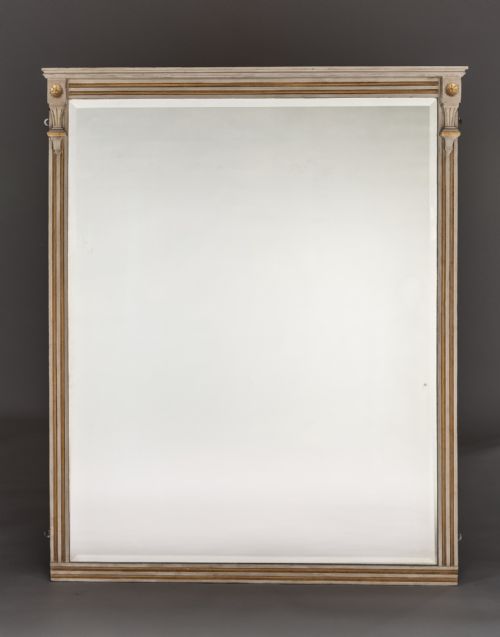
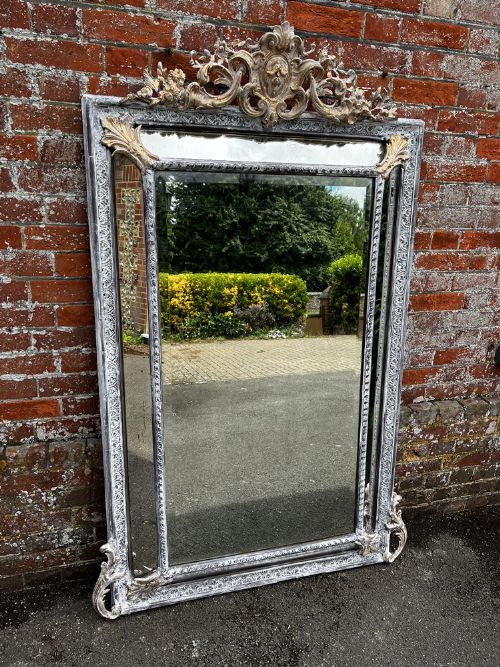
A grey gilt wall mirror brings architectural presence and softened reflection to a room, combining painted neutral surfaces with bright metallic highlights.
Grey Gilt Wall Mirror
A grey gilt wall mirror is defined by its painted grey ground paired with parcel-gilt or gilded highlights, offering a refined balance between understated paintwork and reflective metallic brilliance. These pieces serve as commanding focal points, frequently hung above fireplaces or along principal salon walls to bounce natural light around the interior.
The selections available here predominantly span the nineteenth century, encompassing French trumeau panels and English overmantel mirrors alongside cushion and pier formats. Stylistic influences stretch from Louis XV rococo and Louis XVI neoclassicisms to Victorian classical revivals and French provincial interpretations.
Buyers will most frequently encounter large overmantel mirrors alongside tall trumeau panels, often retaining original painted surfaces in light grey, French grey, or cream tones alongside carved gilt details. These objects bridge the gap between robust architectural joinery and decorative furnishing.
Materials and Construction
Makers built the foundational frames of these mirrors using timber such as wood, applying layered gesso to create smooth or moulded decorative surfaces before applying carved relief elements. Artisans then laid gold leaf or gilt composition onto specific raised details, leaving the recessed portions painted.
Surface decoration relied on traditional paint finishes applied over wood and gesso, often building up pale or grey pigments that were subsequently distressed or parcel-gilt. Glazing typically involved heavy plate glass, occasionally retaining older mercury glass properties with characteristic clouding and dark speckling.
Listings span the nineteenth century, featuring materials such as wood, gesso, gold leaf, and painted surfaces across Victorian and French provincial styles.
Evaluating Quality and Craftsmanship
Distinction across these pieces lies in the depth and precision of the carved wood and gesso relief work, where crisp acanthus scrolls and moulded architectural details separate superior work from simpler joinery. The harmonious balance between the painted grey ground and the gilded highlights dictates the visual success of the piece.
Originality of surface and mirror plate heavily influence desirability, with untouched nineteenth-century paintwork and period glass carrying greater integrity than later repainting or modern silvered glass replacements. The integration of decorative panels, such as carved reliefs or painted scenes within trumeau frames, also determines the overall standard.
The Grey Gilt Wall Mirror Glossary
- Parcel-gilt
- Partially gilded, where gold leaf is applied only to specific raised carved details while the remainder of the object is painted. This technique highlights the architectural moulding of the frame.
- Trumeau
- A decorative wall mirror or panel featuring a painted or carved pictorial scene above the glass plate. These French pieces originated as permanent wall decorations.
- Overmantel mirror
- A large horizontal mirror designed specifically to be hung on the wall directly above a fireplace mantelpiece. They often reflect the length of the hearth below.
- Gesso
- A plaster-like mixture applied to wood frames to create a smooth surface for subsequent carving, painting, or gilding. It allows for intricate relief ornamentation.
- Cushion mirror
- A frame profile where the outer moulding slopes inward towards the glass like a pillow. This style creates a pronounced three-dimensional depth.
Grey Gilt Wall Mirror: Frequently Asked Questions
Where should I hang a large overmantel mirror?
These pieces sit most naturally above a fireplace mantel, anchoring the vertical space of a chimney breast. They also function effectively on principal reception room walls to reflect opposing windows.
Ensure the wall construction supports substantial weight, as nineteenth-century wooden frames combined with thick glass plates carry considerable mass.
How do I distinguish French trumeau mirrors from English ones?
French trumeau mirrors often incorporate integrated decorative panels above the glass plate, featuring painted scenes or low-relief plaster work in provincial or neoclassical styles. They lean towards vertical proportions designed to fill specific architectural wall spaces.
English equivalents frequently appear as wide overmantels intended for chimney breasts, showing heavier Victorian classical revival or Georgian architectural formatting.
Are the mirror plates original?
Many nineteenth-century examples retain their original glass, which often exhibits gentle foxing, dark speckling, or the distinct heavy silvering characteristic of older production methods. Some pieces have received replacement glass over their long lifespan to maintain a clearer reflection.
Examine the edges and silver backing under angled light to assess whether the glass matches the age of the wooden frame.
How do I care for antique painted and gilded frames?
Dust the carved gesso and painted wooden surfaces regularly using a soft, dry brush to prevent particulate buildup in the recessed details. Avoid liquid cleaning solutions, as moisture can damage fragile gold leaf and historical paint.
Keep the mirrors away from direct sunlight and damp environments to protect both the wooden substrate and the integrity of the antique surface.