

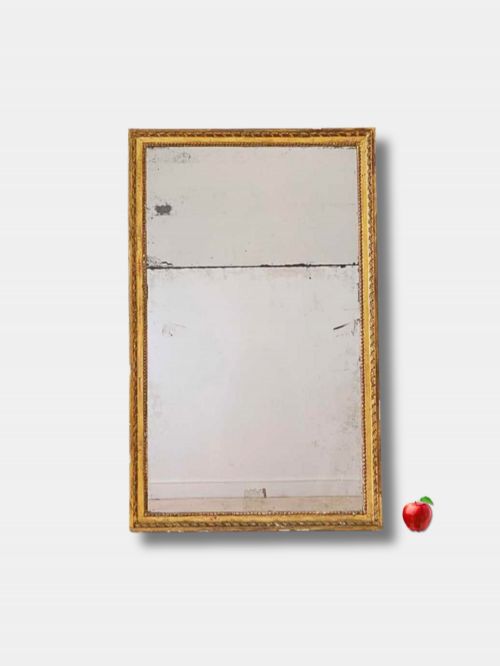


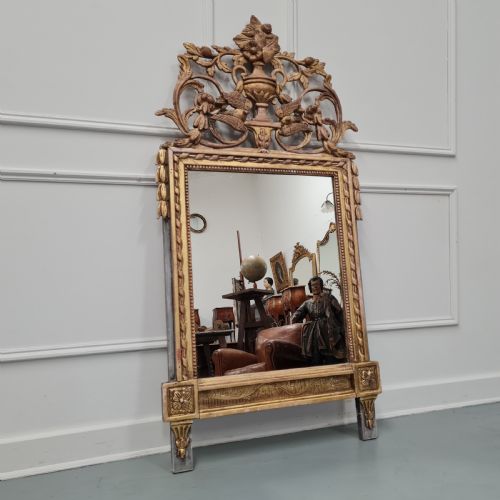

Large Gilded Trumeau Mirror
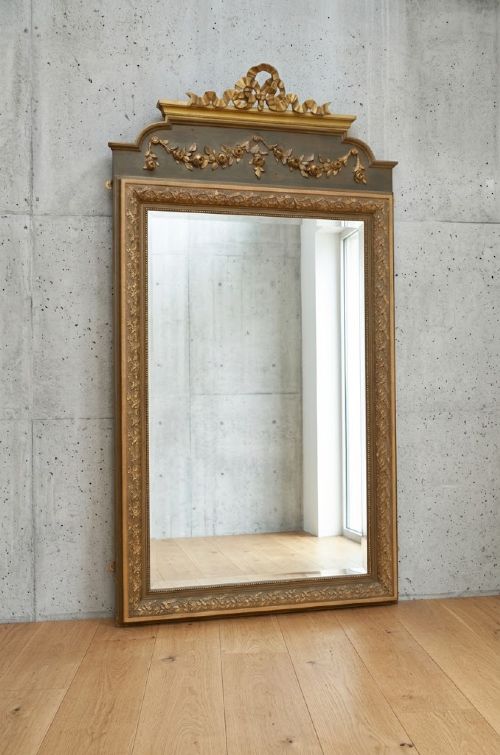
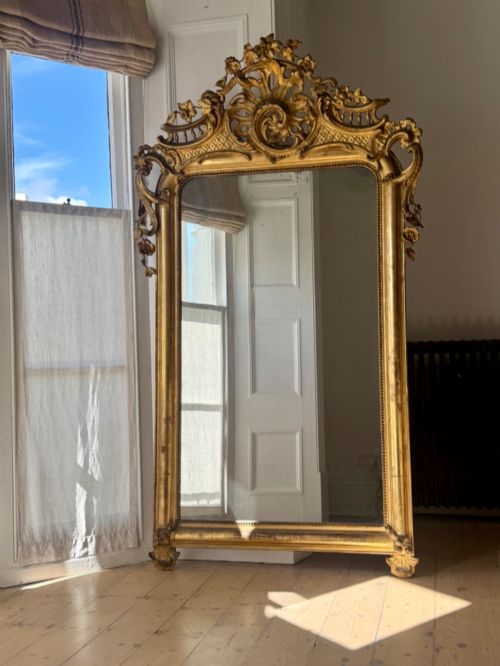
A large gilded trumeau mirror brings architectural scale and neoclassical or French provincial character to a high-ceilinged room.
Large Gilded Trumeau Mirror
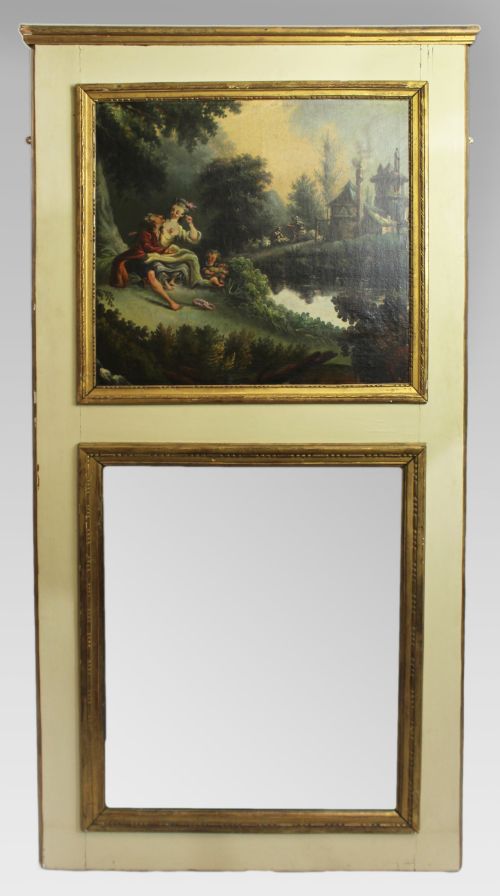
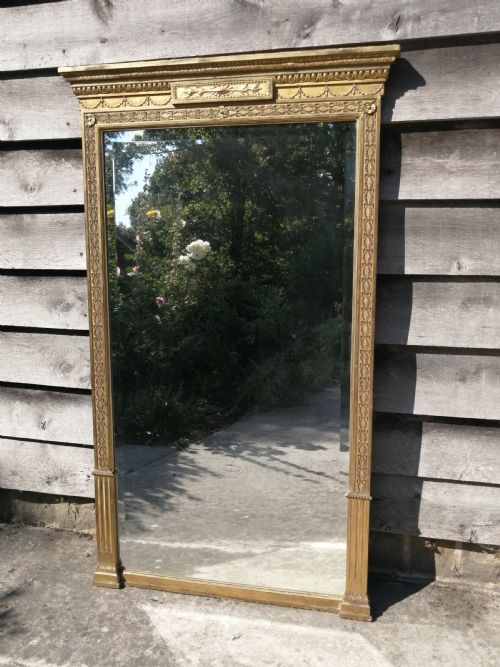
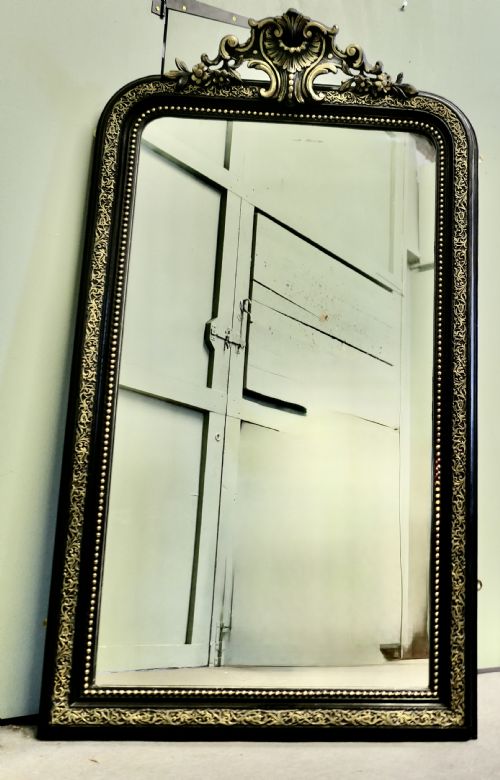
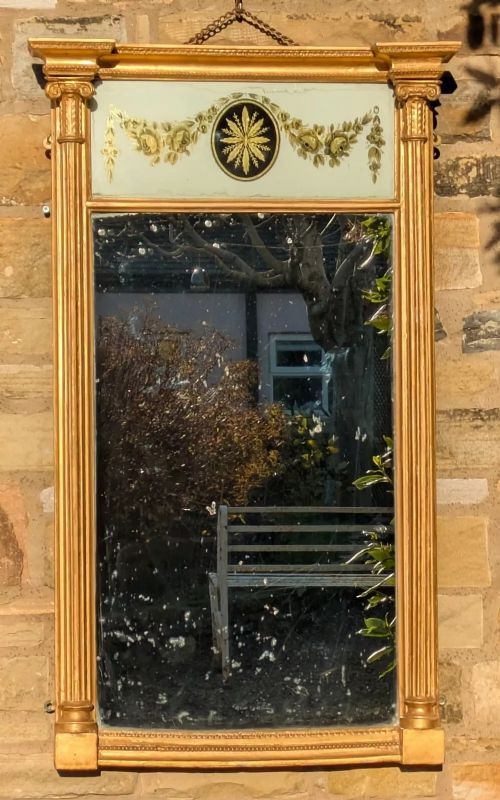
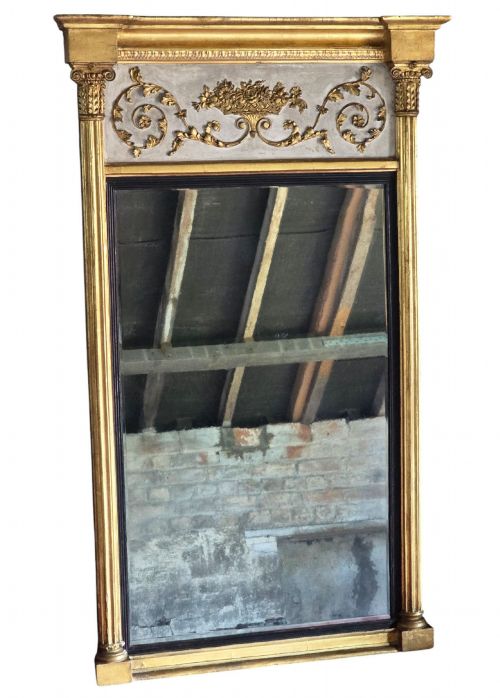
A large gilded trumeau mirror combines a vertical looking glass with an upper oil painting, carved relief panel, or verre eglomise insert within a single integrated frame. These tall wall fixtures frequently appear in 18th century, 19th century, Regency, and Louis XVI styles, originating primarily from French chateau, provincial, and classical traditions.
Buyers encounter grand scale pieces designed to mount above mantelpieces or between tall windows as pier mirrors. The format ranges from 18th century mercury glass examples with carved giltwood to late Victorian and Belle Epoque interpretations featuring painted wood, olive green accents, and ribbon crests.
Materials and Construction Methods
Frames rely on carved wood and gesso, finished with heavy gilding or original paint and parcel-gilt details. Artisans applied thin layers of gold leaf or giltwood over carved wooden bases, frequently combining this with painted surfaces in white, black, or olive green.
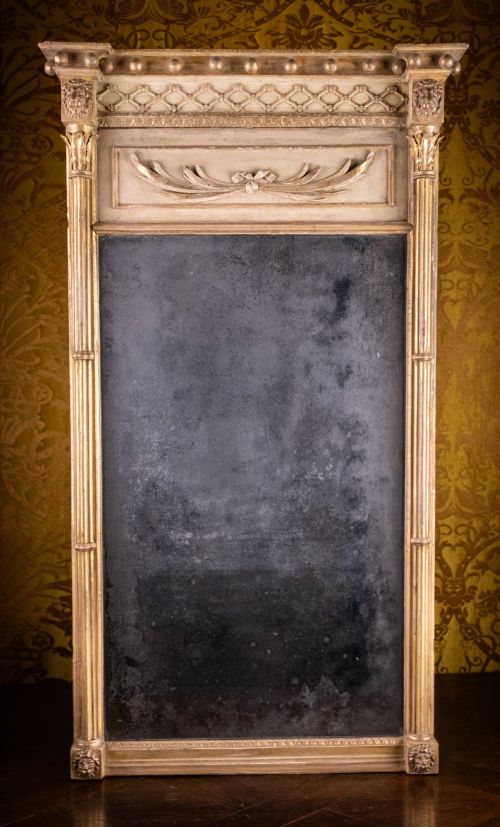
The glazing consists of mirror glass, including original plates and mercury glass that display characteristic age spots and soft reflection. Upper sections incorporate specialised decorative panels such as pastoral oil paintings, relief carvings depicting Bacchus and cherubs, or reverse-painted verre eglomise panels.
Listings feature periods spanning from the 18th century through the Georgian, Regency, Victorian, and Belle Epoque eras.
Distinctions in Execution and Preservation
The distinction between standard decorative pieces and exceptional examples rests in the depth and crispness of the wood carving, particularly on crests, lion masks, and classical relief panels. Finishes that retain their original painted and gilt surfaces without heavy modern intervention hold greater visual integrity.
The survival of original glass plates, whether mercury silvering or early standard mirror plates, alters the character of the reflection. Cohesion between the lower mirror plate and the upper trumeau artwork defines the visual balance of the piece.
The Large Gilded Trumeau Mirror Glossary
- Trumeau
- An architectural term for the wall space between windows, which evolved to describe wall mirrors featuring an integrated painting or carved panel above the glass plate.
- Verre eglomise
- A cold decoration technique where designs are painted and gilded on the reverse side of glass panels, often seen in upper trumeau sections.
- Mercury glass
- An early mirror-making method using a tin and mercury amalgam poured behind the glass plate, producing a dark, mottled reflective quality.
- Giltwood
- Timber carved and coated with gold leaf or gold powder applied over a prepared gesso ground.
- Pier glass
- A tall mirror specifically proportioned to hang on the narrow wall space between two windows, frequently positioned above a matching pier table.
Large Gilded Trumeau Mirror: Frequently Asked Questions
How do I hang a heavy trumeau mirror?
These grand scale frames require professional wall anchoring directly into structural studs or masonry to support substantial weight.
Position the base at the correct height relative to mantelpieces or console tables to maintain balanced proportions in the room.
Are mercury glass plates original?
Mercury glass appears frequently in 18th century and early 19th century French mirrors, identifiable by uneven dark speckling and a softer reflection than modern silvered glass.
Original plates remain fixed within the original rebates of the wood and gesso frame structure.
What is the difference between an overmantel and a pier mirror?
Overmantel mirrors sit horizontally or vertically specifically designed to anchor the space directly above a fireplace mantel.
Pier mirrors are typically taller and narrower, originally scaled to fit the wall space between windows.
How do I clean original giltwood and painted frames?
Dust surfaces gently with a soft dry brush, avoiding all commercial liquid cleaners, abrasive cloths, and moisture.
Preserving fragile giltwood and original paintwork requires minimal intervention to protect the historical surface.