
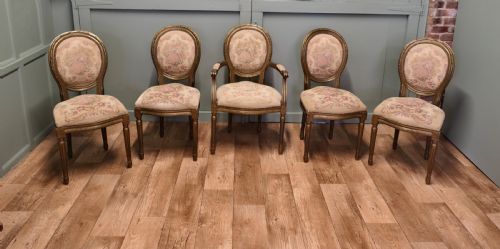
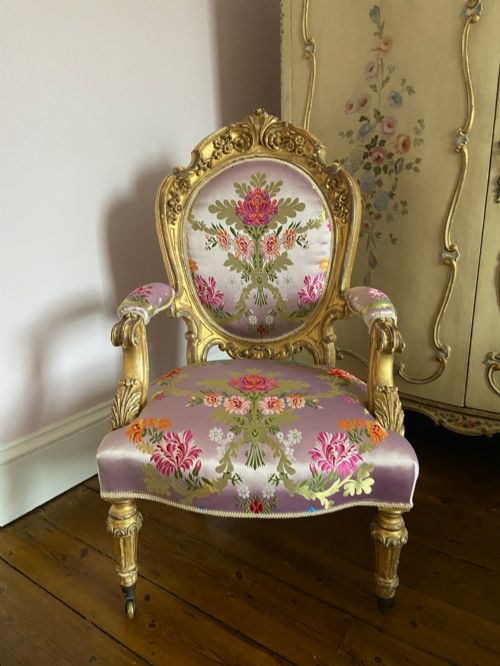
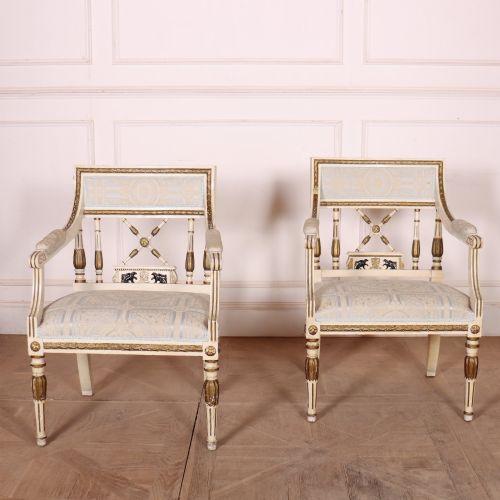
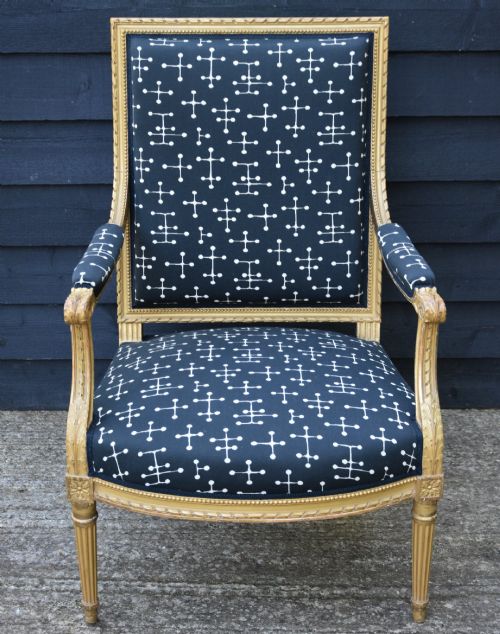

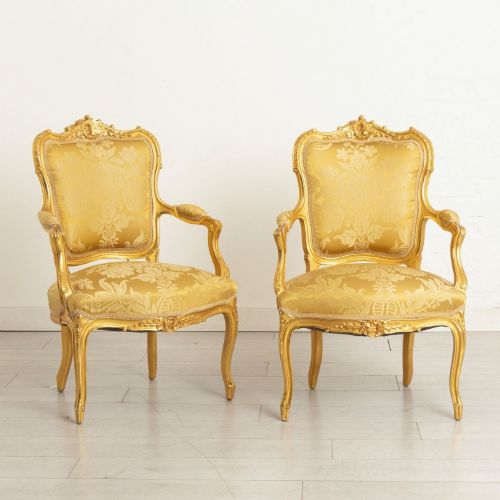


Gilt Wood Armchair
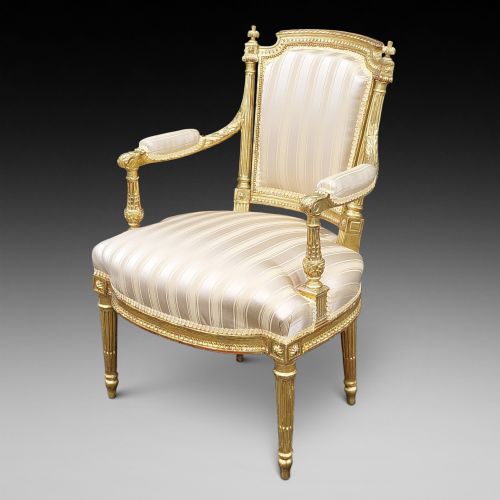
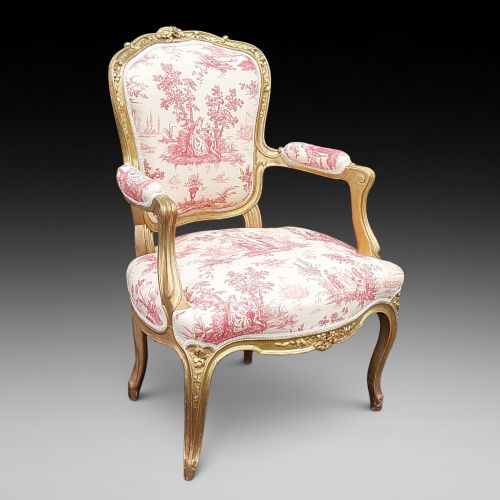
A gilt wood armchair brings eighteenth-century French elegance and gilded splendour straight into a modern interior.
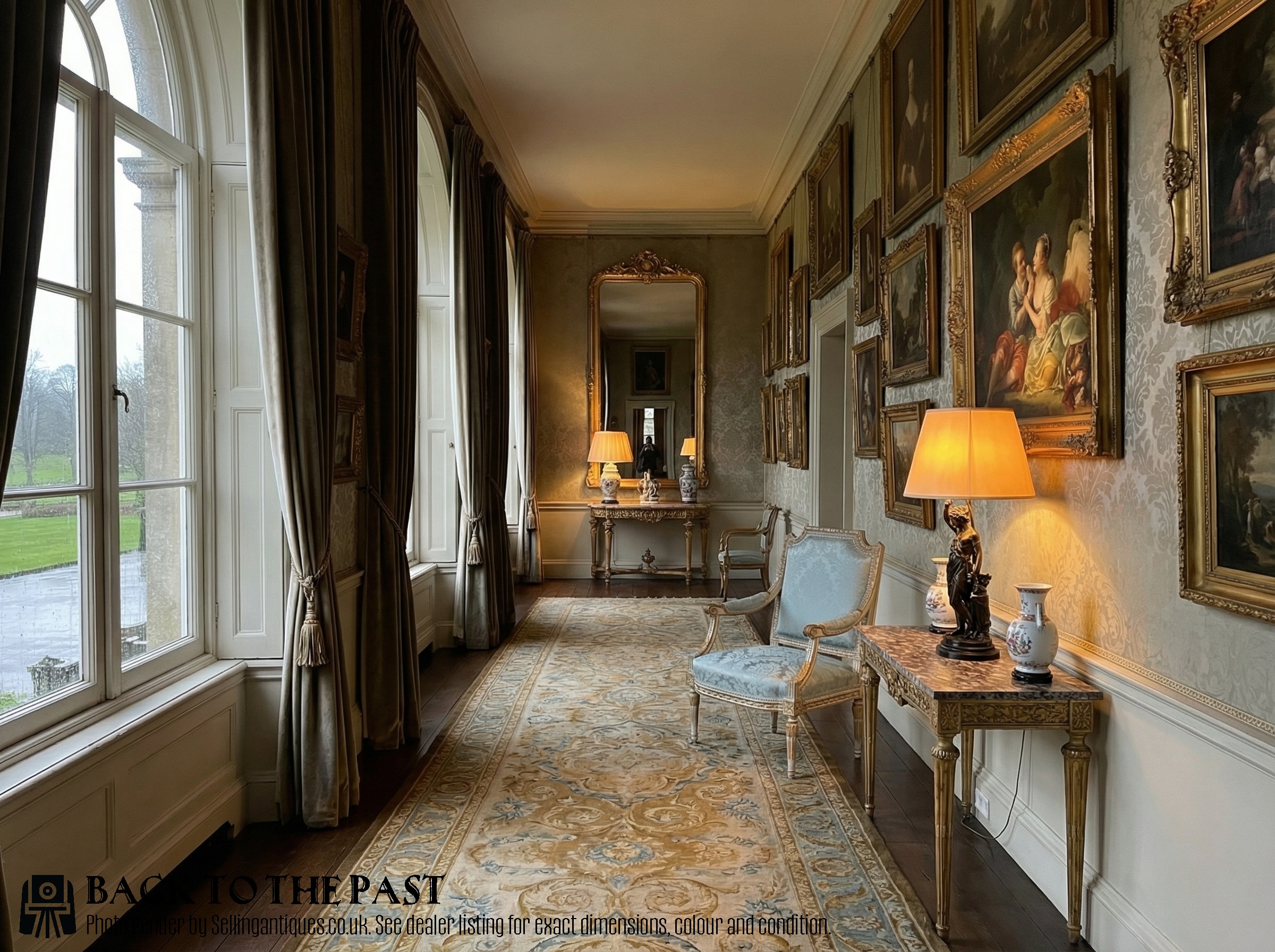
Gilt Wood Armchair
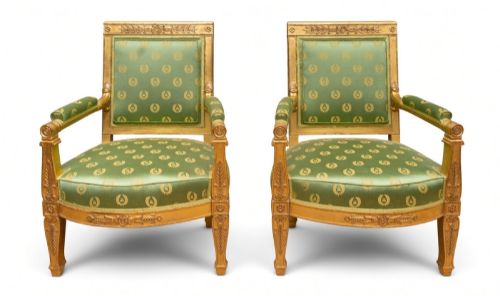
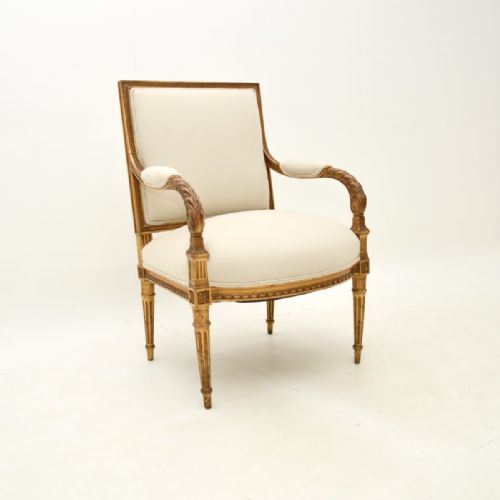
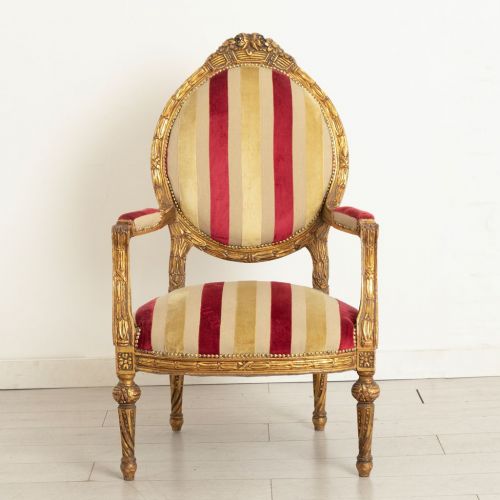
A gilt wood armchair serves as a primary seat for salons, drawing rooms and formal chambers, defined by an exposed wooden frame covered in gold leaf or gilt paint. When exploring this selection, buyers encounter various historical iterations predominantly rooted in nineteenth-century interpretations of earlier French monarchy styles.
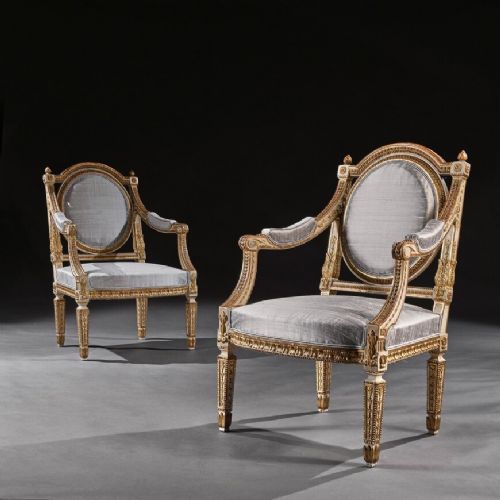
The prevalent forms on this page include Louis XVI style fauteuils, bergères with upholstered sides, and open armchairs drawing on Rococo and Neoclassical vocabularies. Makers across the eighteenth, nineteenth and early twentieth centuries reproduced these luxurious seating arrangements using local beech, walnut and mahogany beneath the gilded surface.
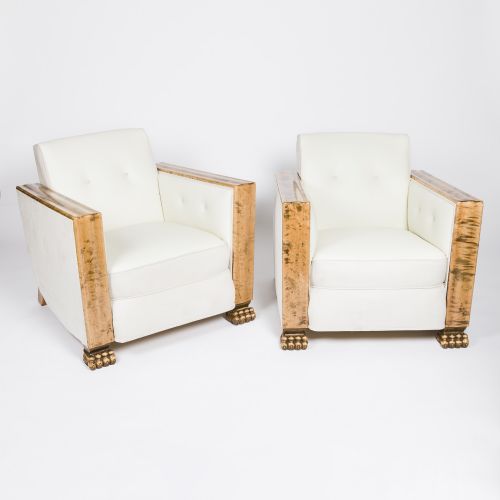
Beyond single chairs, the listings incorporate matched pairs, larger salon suites and occasional bedroom chairs reflecting English, French, Italian and Swedish craftsmanship. Each piece demonstrates the enduring appeal of gilt decoration applied to carved wooden seating frames.
Materials and Construction
Frame construction relies principally on solid timber such as beech, walnut or mahogany, shaped by hand using traditional joinery methods before any surface ornamentation begins. Carvers then work directly onto the wood to produce scroll arms, floral motifs and fluted legs characteristic of the period.
The application of gold leaf or parcel-gilt paint follows meticulous preparation of the wooden substrate with layers of gesso and bole. Upholstery techniques match the aesthetic ambition of the frame, utilising traditional stuffing secured beneath silk damask, velvet, tapestry or contemporary fabric coverings.
The inventory records salon suites, dining chairs, chaise longues and bedroom chairs spanning French, English, Italian and Swedish designs.
Assessing Quality and Execution
Quality reveals itself primarily in the crispness and depth of the wood carving, where superior examples exhibit hand-carved details with sharp relief rather than soft, moulded contours. The integrity of the underlying joinery and the retention of the original gilded surface further distinguish high-grade pieces from later reproductions.
The handling of the gold leaf application creates visual distinction, with burnished areas contrasting against matte grounds to catch the light naturally. Upholstery choices that respect the historical period using silk, velvet or tapestry also elevate the overall standing of the chair.
Jacob-Desmalter·Bertram and Son
The Gilt Wood Armchair Glossary
- Bergère
- An enclosed upholstered armchair featuring solid upholstered sides filled with a padded panel or cane work. It provides a deeper, more enclosed seat than an open fauteuil.
- Giltwood
- Timber that has been decorated with a very thin application of gold leaf over a prepared ground. It differs from painted gold finishes through its metallic brilliance.
- Parcel-gilt
- Woodwork where only specific carved details or raised ornaments are highlighted in gold while the remaining surface is painted or polished. This technique creates a restrained two-tone effect.
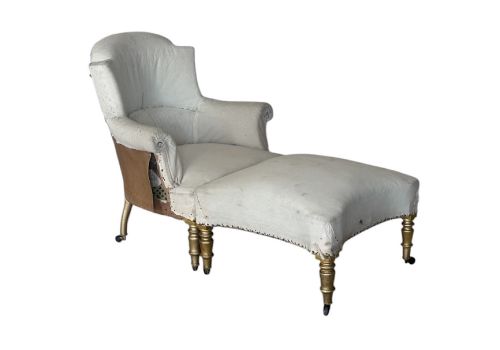
- Duchesse brisée
- A day bed or chaise longue formed by an armchair paired with a matching stool or a two-part lounge chair. It allows the occupant to recline fully with leg support.
Gilt Wood Armchair: Frequently Asked Questions
How do I identify a true period piece?
Examination of the timber construction, tool marks left by carvers, and the composition of the gesso beneath the gold leaf helps establish age. Older chairs display appropriate wear patterns and traditional joinery methods consistent with their stated century.
Comparing stylistic details against known historical design books also aids verification. Regional variations in carving style separate English interpretations from French or Italian origins.
Can I use these armchairs in daily living rooms?
These seating options suit formal reception spaces, studies and quiet corners where usage remains moderate. Placing them away from direct sunlight protects both the delicate silk or velvet fabrics and the gilded surfaces.
Professional upholstery care ensures the internal stuffing maintains its structural integrity over time. Regular dusting with a soft cloth preserves the fragile gold leaf finish.
How should I care for antique giltwood frames?
Gilded surfaces require gentle handling using dry microfibre cloths to remove dust without disturbing the gold leaf. Moisture and modern cleaning chemicals damage the historical gesso layers beneath the metallic leaf.
Maintaining stable indoor humidity prevents the underlying timber from expanding or contracting. This precaution stops the carved wood from shifting and cracking the delicate surface decoration.