
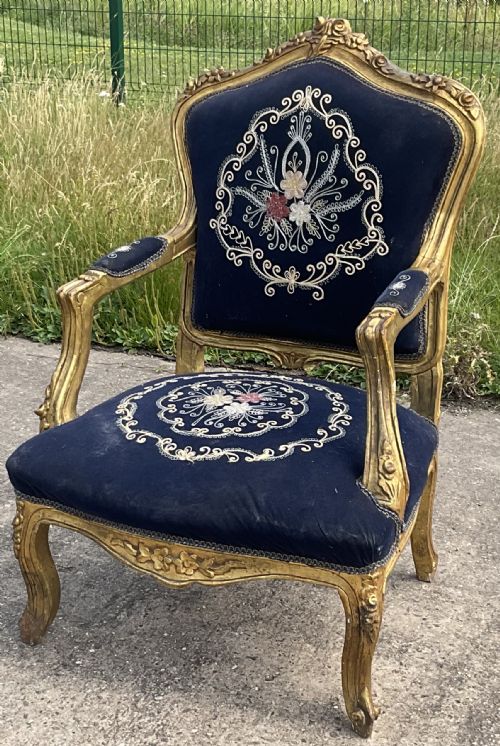


Blue French Armchair
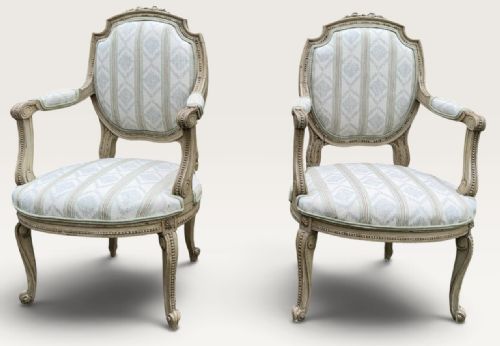
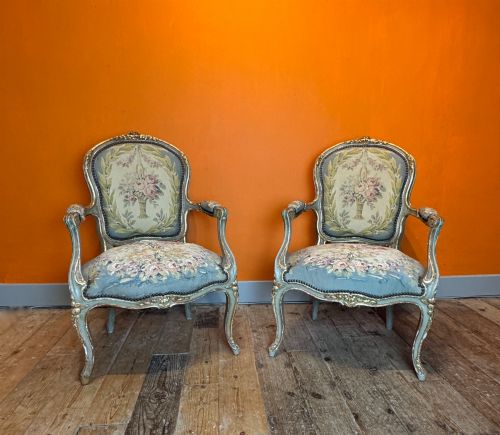
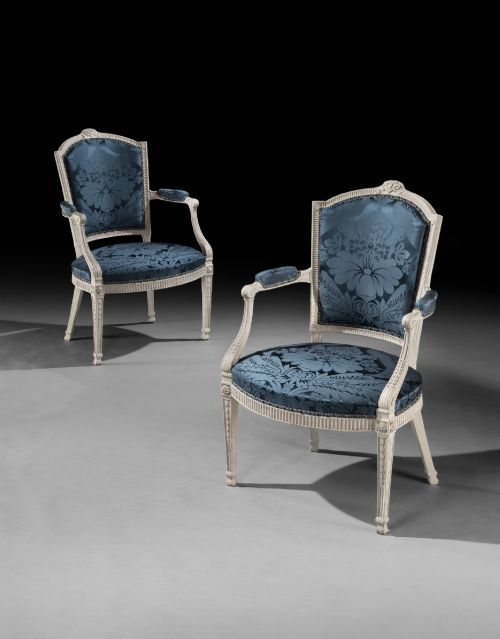
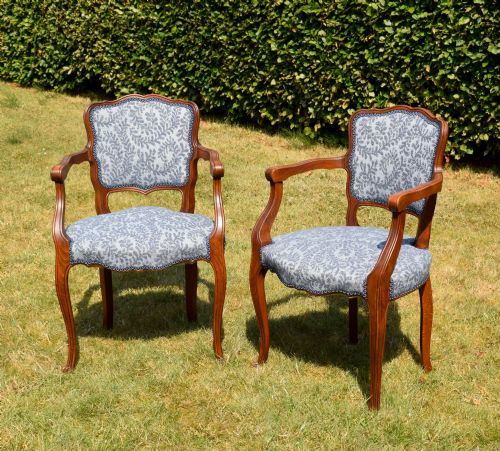
A blue french armchair brings unmistakable continental elegance into a room through carved timber frames and rich textile upholstery.
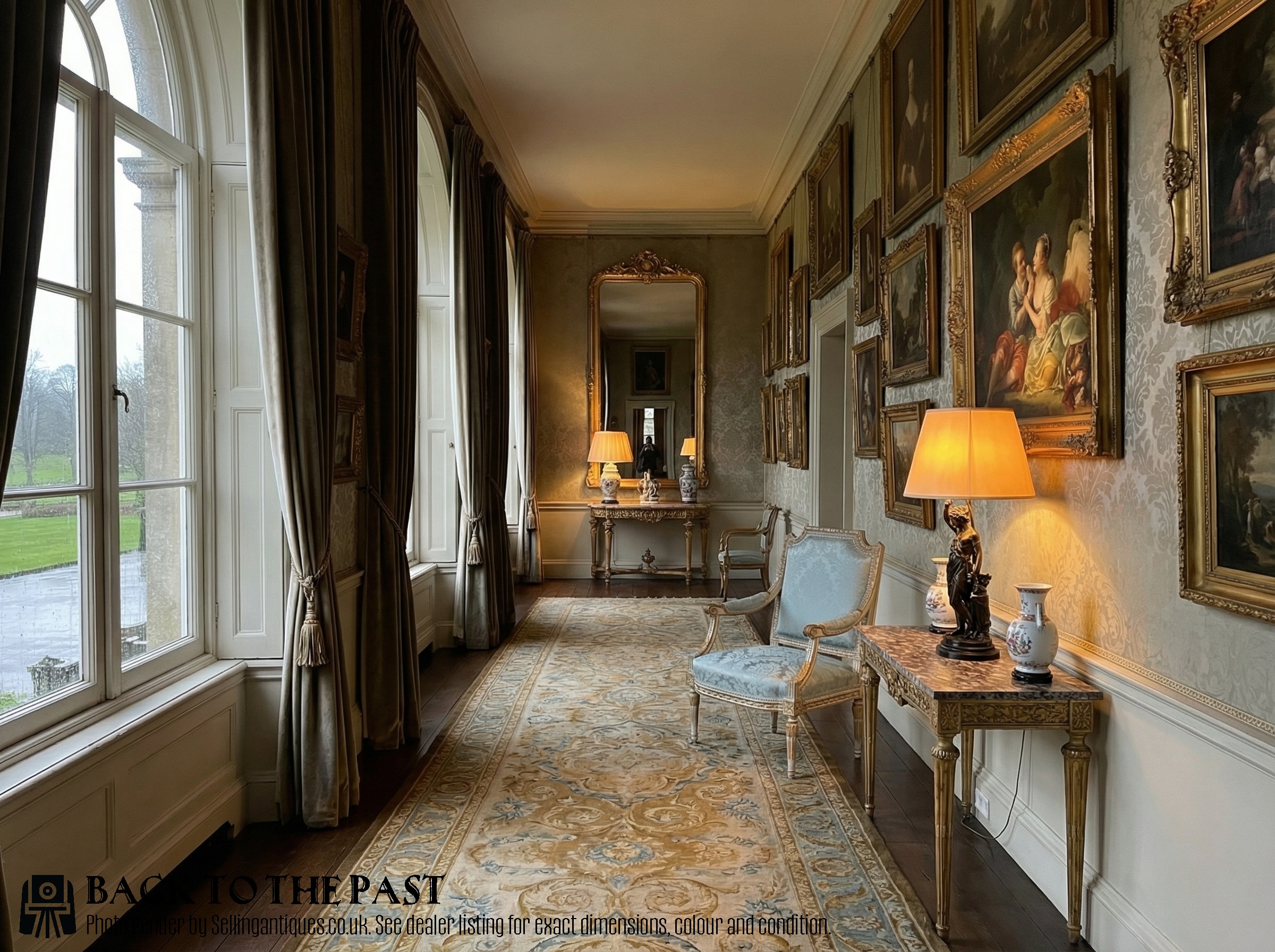
Blue French Armchair
A blue french armchair encompasses upholstered seating shaped by continental aesthetics, predominantly found in 18th century, 19th century, and early 20th century iterations. These pieces span provincial models in original paint to gilded revival forms finished in velvet, silk, or ticking.
The selection frequently includes matched pairs alongside individual salon chairs and occasional seating. Frames range from walnut and beech to parcel giltwood, carrying stylistic influences from Louis XV, Louis XVI, and neoclassical traditions.
Buyers encountering this selection discover open armchairs, fauteuils, and bergere variants. The blue textiles dressing these frames vary from deep velvet tones to lighter silk and woven tapestry.
Materials and construction
Frames are constructed from hardwoods such as beech, walnut, and mahogany, shaped through traditional joinery and carved ornamentation. Giltwood examples receive fine layers of gold leaf applied over gesso preparations.
Surface treatments include original paint finishes, parcel gilt detailing, and polished wood grains. Upholstery utilises traditional stuffing methods enclosed in textiles like velvet, silk, tapestry, and cotton ticking.
Listings feature beech, walnut, and giltwood frames upholstered in blue velvet, silk, and ticking across the 18th, 19th, and early 20th centuries.
Factors of quality
The refinement of the timber carving dictates the distinction between standard workshop production and master craftsmanship. Crisp acanthus leaves, balanced scroll arms, and fluid cabriole legs demonstrate superior hand skill.
Integrity of the structural frame and the preservation of original paint or gilding influence the standing of each piece. Surviving examples retaining early textiles or authentic surface patination hold greater distinction.
The Blue French Armchair Glossary
- Bergere
- An enclosed upholstered armchair featuring solid sides filled with cane or upholstery. These comfortable seats often include a loose down cushion.
- Giltwood
- Timber coated with a thin layer of gold leaf or metallic powder. It defines grander decorative seating from revival periods.
- Parcel gilt
- Woodwork decorated with partial gilding that highlights specific carved details against a painted or polished ground. This technique adds depth to neoclassical and baroque frames.
- Ticking
- A tightly woven heavy cotton or linen fabric traditionally used for mattress covers and durable upholstery. Period examples often utilise blue and white striped patterns.
Blue French Armchair: Frequently Asked Questions
How do I style a blue french armchair?
Pair the seating with neutral walls to let the carved timber frame and blue textile stand out as a focal point. Combine with complementary occasional furniture from similar decorative periods.
Position the chair in a drawing room or bedroom where its silhouette can be appreciated from multiple angles.
Are these armchairs comfortable for daily use?
Many period examples offer deep seats and supportive upholstered backs designed for restful lounging. Ergonomics vary depending on whether the design leans towards upright formal salon use or relaxed bergere seating.
Testing the seat height and angle helps determine suitability for everyday reading or relaxing.
How do I identify a Louis XV style chair?
Look for characteristic asymmetrical curved lines, cabriole legs, and naturalistic floral carvings. The overall aesthetic prioritizes flowing organic shapes over rigid symmetry.
Scroll arms and cartouche-shaped backrests further distinguish this decorative tradition.
What is the difference between painted and gilt finishes?
Painted finishes offer a softer provincial character suited to relaxed interiors, utilising pigments applied directly to beech or pine. Giltwood provides a more formal, reflective appearance through the application of gold leaf.
Both treatments reflect the specific interior fashion of their original period.