


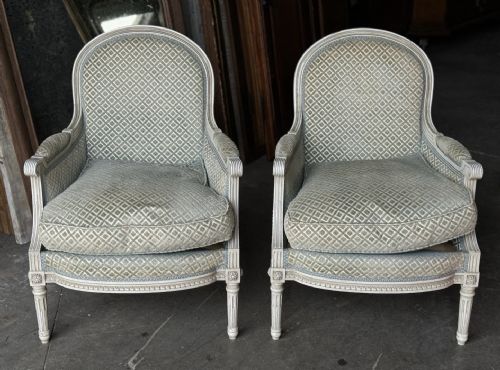

Painted Wood Bergere Pair
A painted wood bergere pair brings classic French and Scandinavian seating into a room with curved wooden frames and woven cane panels.
Painted Wood Bergere Pair
A painted wood bergere pair consists of upholstered armchairs designed with enclosed sides, offering both formality and comfort for a salon or drawing room. When searching for a painted wood bergere pair, buyers encounter pieces originating from different periods including Regency, 1880, 1900, 1920, and 1960. These armchairs often reflect specific design influences such as Louis XV, Louis XVI, and Gustavian styles.
The selections available range from French salon armchairs to Scandinavian painted armchairs and Swedish armchairs. Most examples date from around 1900, maintaining traditional forms with painted finishes and cane detailing. Buyers find matched pairs that suit both historic interiors and modern spaces requiring classic seating.
Construction and materials
These armchairs rely on sturdy wood frames, specifically beech, shaped into curved profiles that define Louis XV and Louis XVI styles. Artisans applied paint directly to the wooden structure to achieve the desired decorative finish, often using pale or neutral tones characteristic of Swedish Gustavian pieces.
Cane panels form the characteristic enclosed sides and backs of the bergere design, providing a light yet supportive structure. Upholstered elements incorporate linen, fabric, and velvet to add softness and comfort to the seat and backrest.
Painted Wood Bergere Pair Retail Price Guide 2026
Typical asking prices for painted wood bergere pair among the pieces listed under this phrase on Sellingantiques today, from the lower quarter to the upper quarter. They describe what is for sale here now, not the wider market.
Pairs of armchairs from 1900 continue to provide comfortable seating after more than a century of daily use.
Assessing quality and craftsmanship
Quality in these armchairs rests upon the precision of the wood carving and the integrity of the painted finish. Finer examples display crisp detail in the frame mouldings and harmonious proportions true to their period style.
The condition and tightness of the cane work distinguish higher grades of manufacture, alongside the durability and weight of the underlying beech frame. Original painted surfaces that show honest patination hold greater appeal than later repainting.
The Painted Wood Bergere Pair Glossary
- Bergere
- An enclosed upholstered armchair with a wooden frame and cane or upholstered sides. This French seating form dates back to the eighteenth century.
- Cane
- Woven material made from rattan used for the back and side panels of chairs. It offers a lightweight and flexible backing.
- Gustavian
- The Swedish interpretation of French neoclassical styles, characterised by restraint and pale painted finishes. This style emerged during the late eighteenth century.
- Beech
- A dense hardwood commonly utilised for furniture frames due to its strength and ability to hold fine carved details. It forms the structural basis of many traditional armchairs.
Painted Wood Bergere Pair: Frequently Asked Questions
What is a bergere chair?
A bergere is a traditional French armchair featuring an enclosed upholstered back and sides with a built-in seat cushion. The design prioritises comfort while maintaining a formal aesthetic suitable for a salon.
These chairs typically incorporate cane panels on the sides, distinguishing them from standard open armchairs.
How do I identify French and Swedish styles?
French styles like Louis XV and Louis XVI display ornate carved details, cabriole legs, or straight fluted legs. Swedish Gustavian pieces feature simpler neoclassical lines and pale painted surfaces.
Examining the carved woodwork and overall silhouette helps determine the regional origin and design period.
Where should I place these armchairs?
A pair of bergere armchairs works well in a living room, drawing room, or bedroom as a matching seating arrangement. Their decorative painted frames allow them to function as statement pieces.
Positioning them around a fireplace or in a reading corner highlights their classic proportions.
How do I care for painted wood and cane?
Painted wood surfaces require gentle dusting with a soft cloth to avoid scratching the finish. Direct sunlight and excessive moisture should be avoided to protect the paint and wood.
Cane panels benefit from occasional light cleaning and should be kept away from extreme heat sources to prevent drying out.