

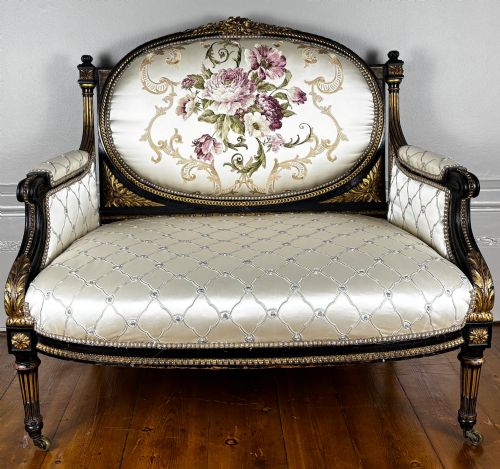
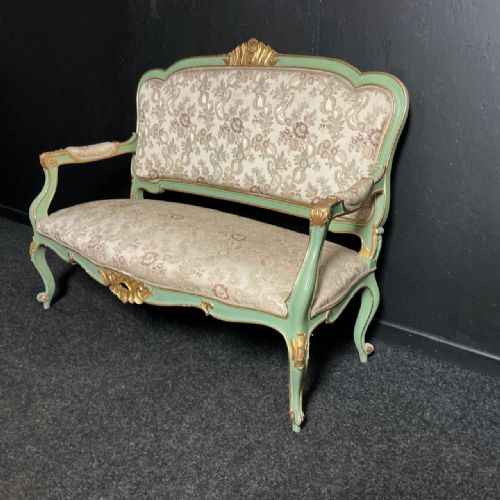


Gilt Two Seater Sofa
A gilt two seater sofa brings gilded French flair and compact seating to a room, offering both decorative presence and practical comfort.
Gilt Two Seater Sofa
When you search for a gilt two seater sofa, you encounter a selection of French and continental settees, sofas, and window seats originating from the nineteenth and twentieth centuries. These pieces span revivals of Louis XV and Louis XVI styles, alongside Napoleon III, Edwardian neoclassical revival, and Swedish Empire designs.
You are most likely to meet French frames finished in giltwood, paint, or ebonised wood, often upholstered in silk, fabric, or fitted with cane work. Forms range from boudoir settees and love seats to compact window sofas and canapés designed for intimate seating.
How they were made
Carved wooden frames, predominantly fashioned from beech or other timber, form the structural core of these settees. These frames receive applications of gold leaf to create giltwood finishes, or layers of paint and ebonisation.
Upholstery and seating surfaces utilise silk, woven fabrics, and natural cane work. Brass accents occasionally appear as decorative mounts or structural details on the frames.
Gilt Two Seater Sofa Retail Price Guide 2026
Typical asking prices for gilt two seater sofa among the pieces listed under this phrase on Sellingantiques today, from the lower quarter to the upper quarter. They describe what is for sale here now, not the wider market.
Listings for a gilt two seater sofa feature pieces spanning from the nineteenth century through to the mid-twentieth century.
What varies in quality
The refinement of the wood carving dictates the initial distinction between standard production and superior examples. Crisp detailing on the giltwood frames separates workshop pieces from simpler regional furniture.
The choice of covering materials, from original silk to later fabric renewals, influences the overall presentation of the settee. Intricacy in the painted or ebonised surfaces further separates basic decorative items from finely finished pieces.
The Gilt Two Seater Sofa Glossary
- Giltwood
- Wood that has been decorated with gold leaf or powder. This finish creates a bright metallic surface across the carved wooden frame.
- Canapé
- A traditional French term for an upholstered sofa or settee. These pieces typically feature open arms and exposed wooden frames.
- Ebonised
- Wood treated to resemble ebony through staining or painting. This dark finish provides a stark contrast against gilt highlights.
- Canework
- Woven cane or rattan material used for seat bases or back panels. This technique offers a light and flexible surface.
- Louis XV Style
- A decorative aesthetic characterised by asymmetrical curves and floral motifs. This style heavily influences many nineteenth-century French seating designs.
Gilt Two Seater Sofa: Frequently Asked Questions
Where should I place a gilt two seater sofa?
These compact settees suit smaller reception rooms, bedrooms, or entrance halls where full-scale sofas overwhelm the floor plan.
Position them against a panelled wall or beneath a mirror to reflect the gilded frame and brighten the space.
How do I care for giltwood frames?
Dust the carved surfaces gently with a soft, dry brush to prevent accumulation without disturbing the delicate gold leaf.
Keep the furniture away from direct sunlight and damp conditions to preserve the integrity of the wood and finish.
What is the difference between a settee and a love seat?
A settee generally provides bench-style seating for two people with a defined back and armrests. A love seat often refers to a more intimate, deeply upholstered version designed specifically for two.
Both terms appear interchangeably across continental and French seating from the nineteenth century.
Can I reupholster an antique settee?
Upholstery on these pieces often requires replacement to match modern interiors or repair existing wear. Traditional methods using appropriate webbing and stuffing maintain the correct profile of the seat.
Consult a specialist upholsterer who understands antique French frame construction before undertaking changes.