
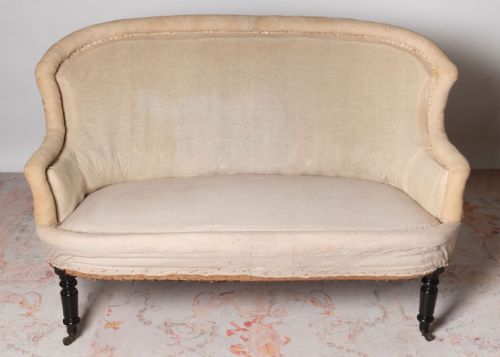


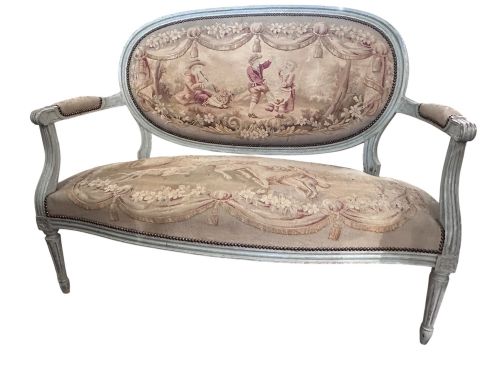
19th Century French Canape
A 19th century french canape brings generous seating and grand proportions to a reception room, combining carved woodwork with traditional upholstery.
19th Century French Canape
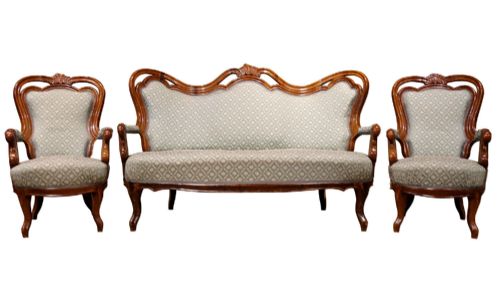
A 19th century french canape is a wide upholstered seat designed for formal salons and drawing rooms, appearing in various revival styles such as Louis XV, Louis XVI, and Rococo. These pieces function as statement seating, often accompanied by matching armchairs in larger salon suites.
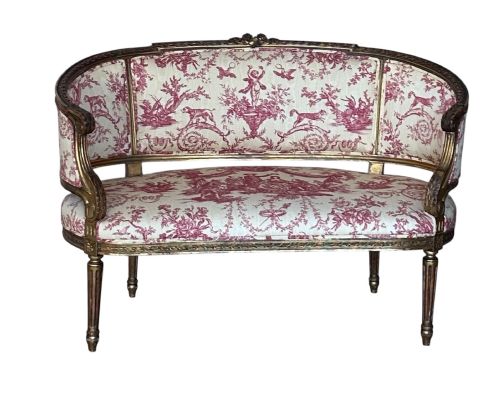
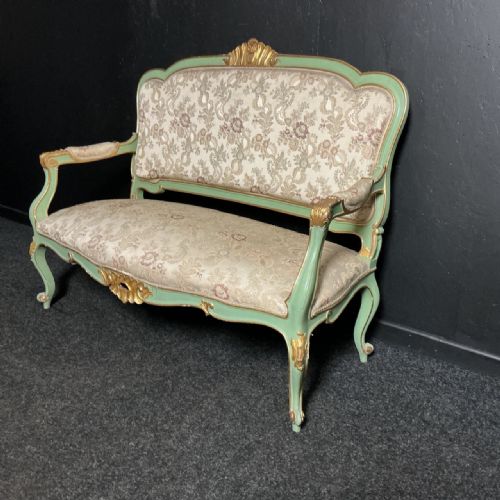
The versions most commonly met on this page date from the nineteenth century, ranging from mid-century giltwood examples to late-period painted frames. They frequently feature carved wooden frames with exposed rails, curved backrests, and open arms.
Settees and sofas under this heading incorporate diverse regional interpretations, spanning classic French chateau aesthetics alongside related continental and English iterations. Makers utilised various woods and decorative treatments to achieve formal elegance.
How they were made
Carpenters shaped the structural frames using hardwoods like walnut, beech, fruitwood, and mahogany, often applying a layer of gesso before gilding or painting the timber. Giltwood surfaces reflect intense manual labour through gold leaf application over carved ornamentation.
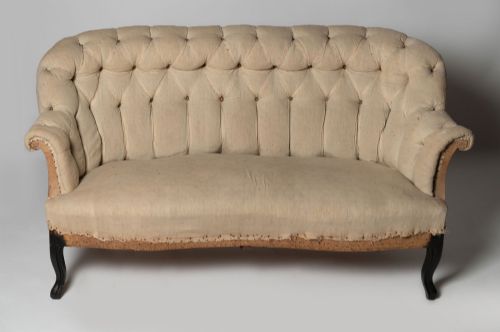
Upholstery techniques relied on traditional stuffing materials secured to webbing, with top layers finished in silk velvet, linen, damask, or needlepoint tapestries such as Aubusson. Button-backed padding and caned panels also appear across select nineteenth-century seating.
Listings demonstrate materials ranging from walnut and giltwood to brass, along with textile choices including linen, velvet, and Aubusson tapestry.
What varies in quality
The crispness and depth of the hand-carving define the upper tiers of production, where floral motifs and scrollwork display sharp articulation rather than soft, moulded edges. Frames constructed from solid walnut or heavily gilded beech typically demonstrate superior foundational joinery compared to simpler painted pine or fruitwood variants.
Integrity of the original finish and the preservation of period gilding separate exceptional seating from heavily restored examples. Pieces retaining their early or original upholstery textiles hold distinct archival interest for collectors.
The 19th Century French Canape Glossary
- Canapé
- An upholstered sofa or settee featuring an exposed wooden frame, typical of French seating design.
- Giltwood
- Timber coated with gold leaf or powder over a prepared gesso ground, creating a bright metallic finish.
- Bergère
- An enclosed armchair or settee with upholstered sides set into a wooden frame.
- Aubusson
- A style of tapestry woven in France, frequently utilised for period upholstery on seat backs and cushions.
- Louis XVI Style
- A neoclassical design vocabulary characterised by straight tapered legs, fluting, and geometric symmetry.
19th Century French Canape: Frequently Asked Questions
Where did people place a canape?
These large seats belonged in formal reception rooms, grand salons, and withdrawing spaces where hosts entertained guests.
They stood against panelled walls or formed conversation groups alongside matching armchairs from the same suite.
How do I identify a Louis XV style frame?
Louis XV revival frames display asymmetric curves, cabriole legs, and naturalistic floral carvings without straight lines.
Craftsmen emphasised flowing serpentine contours across the crest rail and apron.
Can I use a historic settee daily?
Nineteenth-century wooden frames remain sturdy, but interior webbing and padding often require careful professional restoration for regular seating.
Gentle use preserves fragile textiles like silk velvet and antique tapestry covers.
What is the difference between a sofa and a canape?
While both terms describe multi-seat furniture, a canape specifically denotes the French stylistic tradition with exposed carved woodwork.
English variants from the same era often prioritise different upholstery padding styles and foot designs.