


Cream French Settee
A cream french settee brings lightness and continental character to a room, offering elegant seating rooted in centuries of European design traditions.
Cream French Settee
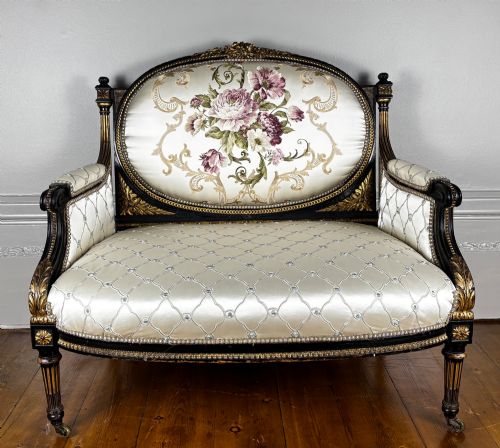
When you search for a cream french settee, you are looking at upholstered seating designed for the drawing room, salon, or bedroom, drawing on continental traditions. These pieces combine exposed timber frames with padded seats and backs, often following classical French design vocabularies.
The selections on this page span the nineteenth and twentieth centuries, taking forms such as the traditional two-seat sofa, the banquette, the bergere settee, and the canape. You will encounter styles ranging from the curvaceous lines of Louis XV and Louis XV Revival to the straighter geometry of Louis XVI and Empire revivals.
Makers and workshops across different eras produced these settees in various regional interpretations, including French country models, grand giltwood salon pieces, and Edwardian or later adaptations. The cream painted finish frequently seen on these frames provides a softer, lighter alternative to dark polished woods.
Materials and Construction
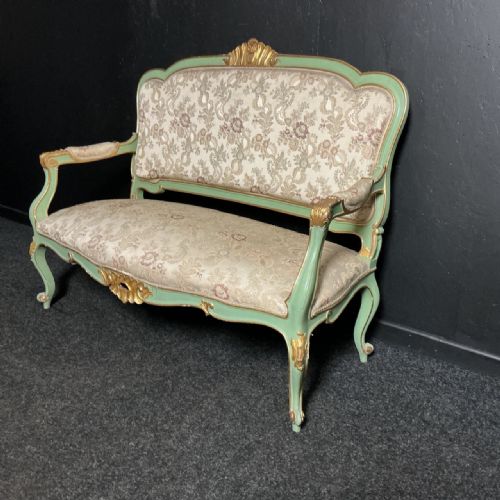
The structural frames of these settees rely on hardwoods such as walnut, oak, mahogany, and timber, often shaped by hand with carved ornamentation or finished with paint, ebonising, or parcel gilt. Gilding techniques applied gold leaf over a prepared base to highlight the carved details of the woodwork.
Upholstery materials recorded in the evidence include linen, leather, and various fabrics, secured over traditional stuffing and springing systems. Brass or ormolu mounts occasionally accent the woodwork, particularly on Empire and neoclassical pieces.
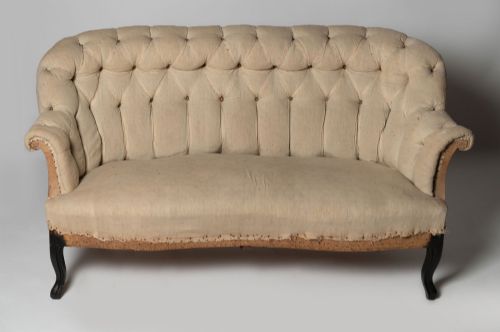
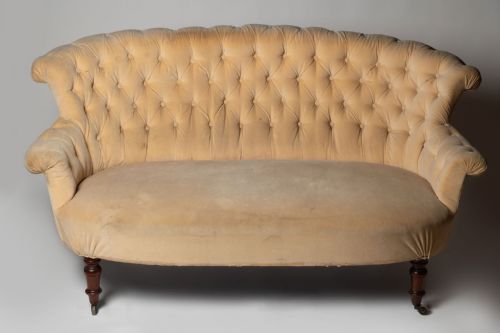
Several pieces feature buttoned upholstery that invites you to imagine nineteenth-century novels read by the warmth of a drawing-room fire.
Determinants of Quality
The distinction between ordinary and exceptional pieces lies in the crispness of the wood carving, the integrity of the frame construction, and the harmony of the proportions. Finer examples display deeply undercut floral or scroll carving rather than shallow, mechanical shaping.
The quality of the finish, whether original painted surfaces, layered gesso and gilding, or polished timber, dictates the visual presence of the settee. Authenticity of the period materials and the retention of original structural joinery elevate the standing of any piece.
The Cream French Settee Glossary
- Giltwood
- Timber that has been coated with gold leaf or powder. This finish was widely used on formal nineteenth-century salon furniture to reflect candlelight.
- Ormolu
- Gilded bronze mounts applied to furniture for decoration. It is commonly found on Empire and neoclassical pieces.
- Bergere
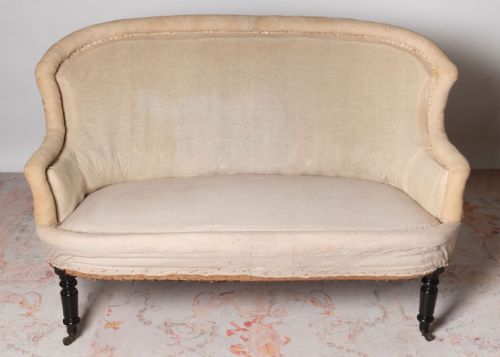
- An enclosed upholstered armchair or settee with closed sides padded with upholstery. The style originated in France during the eighteenth century.
- Banquette
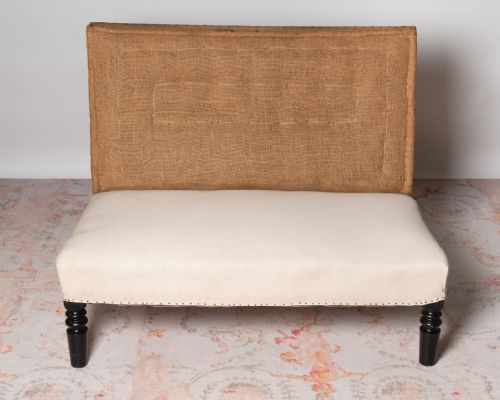
- A long upholstered bench without a back or with a low back, used for seating in hallways or parlours.
Cream French Settee: Frequently Asked Questions
How do I identify a Louis XV style settee?
A Louis XV style settee is characterised by asymmetric curves, cabriole legs, and organic scrollwork ornamentation. The frames often feature carved floral motifs and flowing lines without straight edges.
These pieces were designed for comfortable relaxation in eighteenth-century French interiors and later revived during the nineteenth century with similar decorative grace.
What is the difference between a settee and a sofa?
In historical furniture terms, the words are often used interchangeably to describe upholstered seating for more than one person. A settee traditionally implies a lighter, more decorative wooden-framed seat for a salon or hallway.
Sofas frequently denote larger, more heavily upholstered forms designed for general comfort and lounging in living spaces.
Can I use a antique settee every day?
Most antique settees are structurally robust enough for daily use provided the internal webbing, springs, and upholstery have been properly maintained or restored. Sitting gently and avoiding heavy impacts will preserve the antique timber joinery.
Placing the settee away from direct sunlight protects both the painted cream finishes and the delicate fabrics from fading.
How do I clean a painted wooden frame?
Dust the painted wooden frame regularly with a soft, dry microfibre cloth to prevent dirt accumulation. Avoid harsh chemical cleaners or excessive moisture that could lift or discolour the cream paint.
For stubborn marks, a damp cloth with mild soap can be used sparingly before drying the surface immediately.