



Gilt Porcelain Classical Urn
These gilt porcelain classical urn examples bring stately Neoclassical proportion and brilliant metallic decoration to interior spaces.
Gilt Porcelain Classical Urn
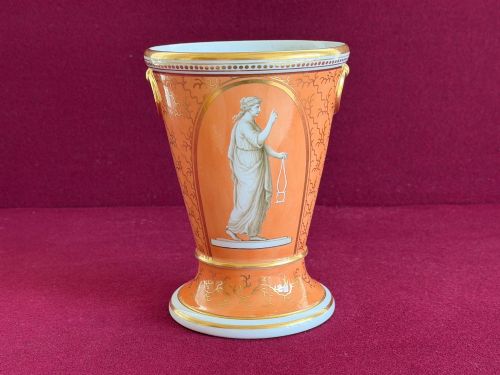
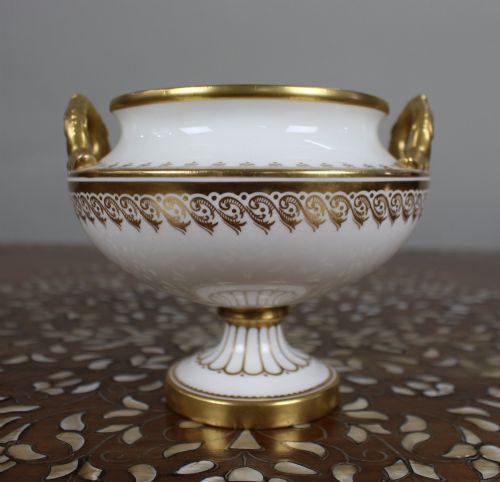
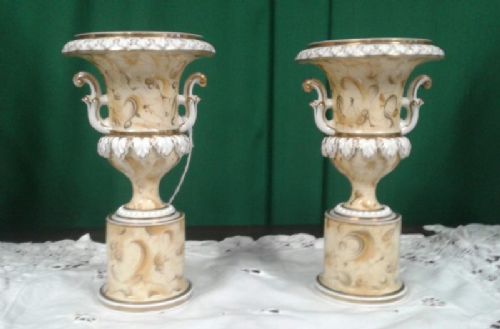
A gilt porcelain classical urn combines refined ceramic bodies with formal architectural shapes drawn from antiquity. Buyers encounter these pieces in various manifestations, including lidded vases, campana shapes, and garniture sets originating from English and continental workshops.
The selection spans from Georgian and Victorian periods into the twentieth century, reflecting enduring taste for classical antiquity. Neoclassical, Regency, and French revival styles dominate the inventory, often featuring hand-painted panels alongside gilded highlights.
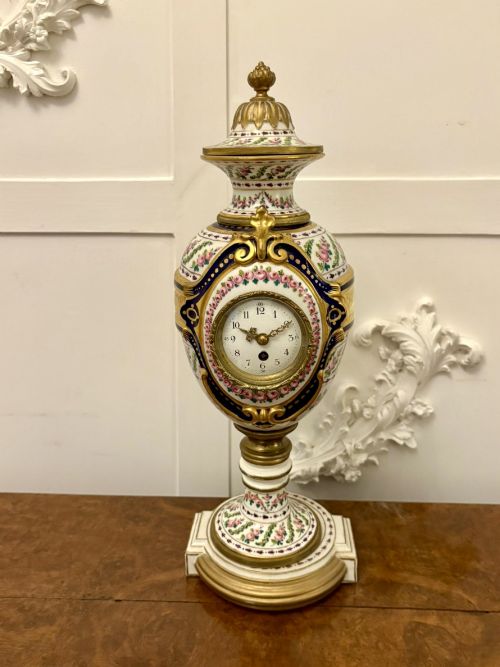
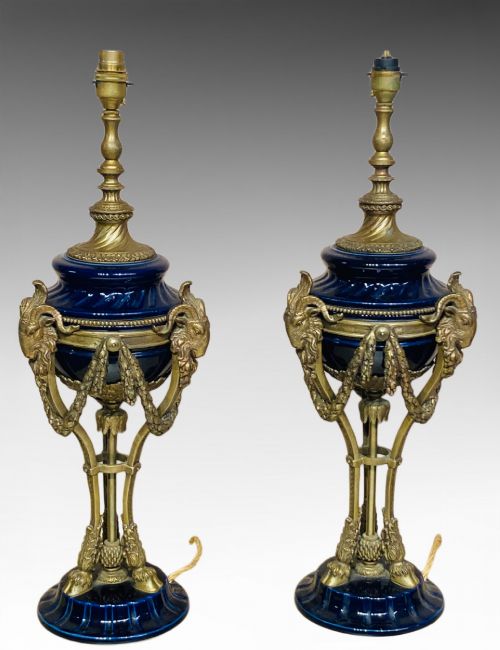
Common functional adaptations also appear among the offerings, such as table lamps and mantel clock garnitures incorporating ceramic urn bodies. These pieces serve as focal points in period interiors, bringing decorative presence and historical weight to mantelpieces and side tables.
Materials and Construction
Makers shaped high-fired porcelain bodies on the potter's wheel or cast them in moulds to achieve classical vessel profiles. Artisans then applied enamel colours and detailed hand-paintings, frequently depicting figurative scenes or botanical motifs.
Gilding was applied using gold leaf or liquid gold preparations, which were then burnished to a high shine against glazed porcelain surfaces. Metal mounts, ormolu, and bronze details were cast and chased separately before being secured to the ceramic forms.
A nineteenth-century maker once hid secret hand-painted love notes inside the removable base of a lidded urn.
Distinctions in Quality
Superior examples display crispness in the hand-painting, where facial expressions and botanical details remain sharp and precisely articulated. The weight and chasing of the ormolu or gilt bronze mounts also distinguish finer work, showing deep relief and clean edges rather than soft casting.
The application and burnishing of the gilding separate standard production from master-level execution. Rich, multi-layered gold leaf that retains its brilliance after cleaning indicates superior original craftsmanship compared to flat, painted-on metallic paint.
Flight And Barr Worcester·Meissen·Minton·Ridgeways
The Gilt Porcelain Classical Urn Glossary
- Campana urn
- A bell-shaped vessel with an everted rim and footed base, frequently utilised in classical garden and interior design. This form derives from ancient Roman marble prototypes.
- Ormolu
- Finely ground high-karat gold-mercury amalgam applied to a bronze base, creating a rich golden surface finish. Makers used this technique extensively for decorative mounts on nineteenth-century porcelain.
- Garniture
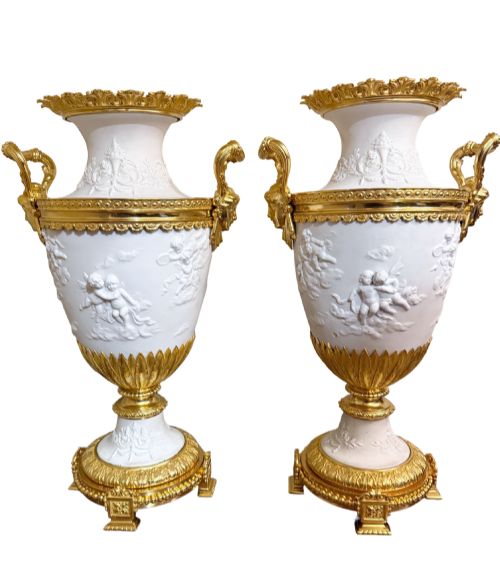
- A matching set of ornamental vases or jars, typically numbering three or five pieces designed to display together on a mantelpiece. These sets balance interior proportions by creating symmetry.
- Ewer
- A large pitcher or jug with a wide spout and sculpted handle, adapted in porcelain for purely decorative display. Many examples feature classical mythological scenes painted on the body.
Gilt Porcelain Classical Urn: Frequently Asked Questions
How should I clean gilt porcelain safely?
Dust surfaces gently with a soft, dry brush to avoid disturbing fragile gold leaf or enamel details. Moisture can damage old gilding and unglazed ceramic areas, so avoid liquid cleaners.
Professional restoration advice should be sought for pieces with tarnished ormolu mounts. Gentle care preserves the historical finish and prevents accidental loss of hand-painted decoration.
Where do I place a garniture set?
Garniture sets traditionally anchor the centre of a mantelpiece or a large sideboard, arranged with the tallest urn in the middle. This symmetrical placement enhances formal interior schemes.
Smaller pairs suit console tables or pedestals where their decorative profiles can be viewed from multiple angles. Ensure the display location protects the pieces from accidental knocks.
How do I identify Vienna porcelain?
Vienna pieces often feature classical figures, rich cobalt blue grounds, and dense gilding executed by skilled painters. Look for historical beehive factory marks under the glaze, though these vary by period.
Stylistic cues include neoclassical motifs, portrait medallions, and finely rendered borders. Comparing the weight and painting clarity helps distinguish authentic factory work from later revival styles.
Are these urns waterproof for flowers?
Most antique porcelain urns are decorative rather than functional vessels, and many feature internal structures unsuited for water. Placing water inside risks damaging old adhesives, liners, and painted interiors.
Utilise dry floral arrangements or display the vessels empty to preserve their condition. The primary purpose of these objects is sculptural ornament rather than utility.