
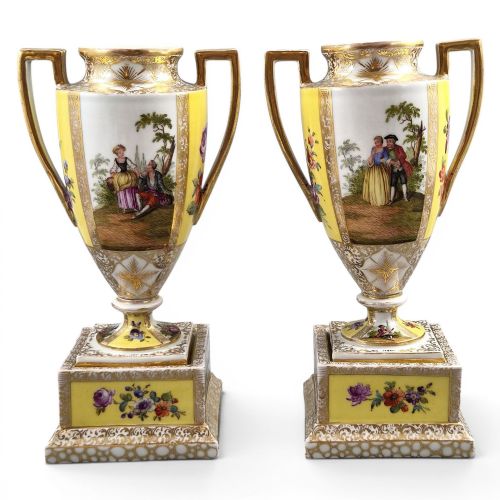
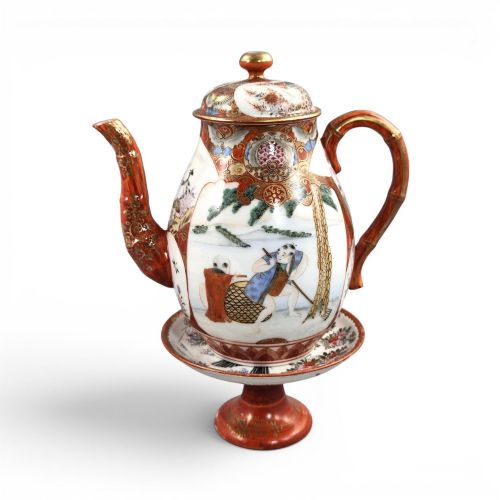
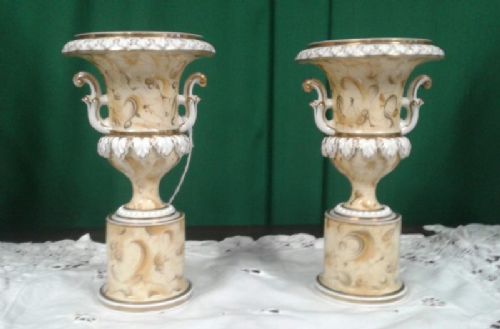


Gilded Ceramic Vase Pedestal
These gilded ceramic vase pedestal pieces bring classical presence to a room through decorative porcelain and gold leaf work.
Gilded Ceramic Vase Pedestal
A gilded ceramic vase pedestal brings together ceramic bodies and raised display forms, spanning campana urns, ewers, and beaker-form vases. Buyers searching for a gilded ceramic vase pedestal encounter items originating from nineteenth century factories and later periods.
The selection here includes pieces produced during the Victorian, Edwardian, and Meiji periods alongside Neoclassical and Rococo Revival styles. Makers such as Royal Worcester, Vienna, and Meissen dominate the forms, frequently pairing hand-painted surfaces with gilt mounts.
Vases and urns appear most often, alongside associated stands and garniture pieces. These objects serve as focal points on furniture tops, combining ceramic manufacturing traditions with elaborate gilding.
Distinctions in craftsmanship
Quality rests in the precision of the hand-painted decoration and the crispness of the porcelain modelling. Pieces featuring signed artist work or detailed hand-applied gilding sit at the upper end of the range.
The integrity of the ormolu mounts and the evenness of the glaze application determine the standard of the finished object. Finer items display careful control in the firing process and sharper definition in moulded relief elements.
Several pieces feature hand-painted pheasants and storks strutting across gilded ceramic surfaces.
Helena Wolfsohn Dresden·Ridgeways·Meissen·Doulton Burslem·Hadley's Worcester·Royal Worcester
The Gilded Ceramic Vase Pedestal Glossary
- Campana urn
- A bell-shaped vessel with a flaring rim, often mounted on a pedestal base. This classical form became popular in European porcelain production during the nineteenth century.
- Ormolu
- Gilt bronze mounted onto or incorporated into decorative objects. The technique involves applying finely ground gold to a bronze base.
- Hard-paste porcelain
- A durable ceramic material fired at high temperatures, composed of kaolin and petuntse. European factories adopted this formula to match imported Asian wares.
- Ewer
- A large jug with a wide spout and scroll handle, often produced as a decorative display piece rather than for utility. These vessels frequently form part of garniture sets.
- Gilding
- The application of gold leaf or gold powder to a surface. In ceramic production, this decorative layer undergoes firing to bond with the glaze.
Gilded Ceramic Vase Pedestal: Frequently Asked Questions
How do I identify a nineteenth century porcelain urn?
Nineteenth century porcelain urns display specific factory marks, painted motifs, and manufacturing characteristics associated with periods like the Victorian era or Meiji period.
Examination of the base often reveals manufacturer stamps, while the painting style reflects contemporary Neoclassical or Revival tastes.
Where should I place a pedestal vase?
These decorative vessels suit placement on sturdy sideboards, mantelpieces, or dedicated stands where their height and gilding remain visible.
Ensure the placement area offers adequate stability to support heavy porcelain and ormolu structures.
What is blush ivory porcelain?
Blush ivory refers to a soft, matte cream-coloured ceramic ground developed by factories such as Royal Worcester during the late nineteenth century.
This finish provides a muted background for floral paintings and gilded highlights.
How do I care for gilded ceramics?
Maintain gilded ceramic surfaces by dusting gently with a soft, dry cloth to protect the delicate gold leaf and enamel decoration.
Avoid liquid cleaners and abrasive materials that might damage the surface glaze or wear away the gilding over time.