
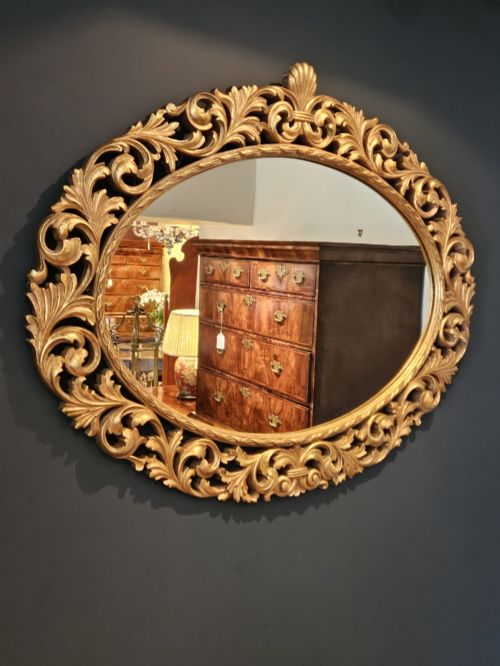
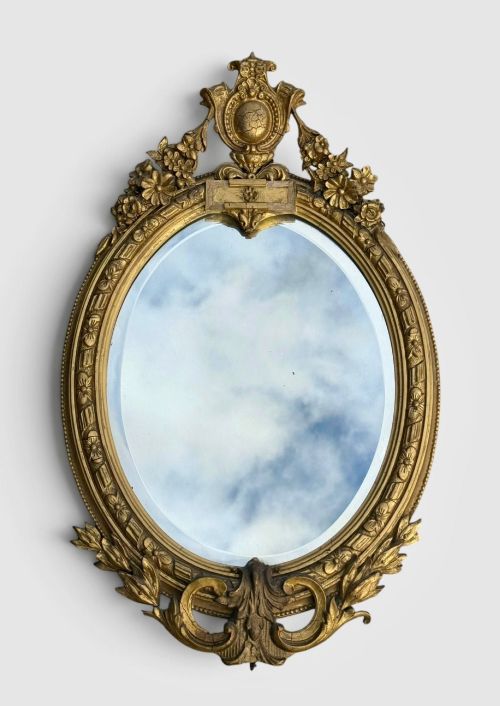
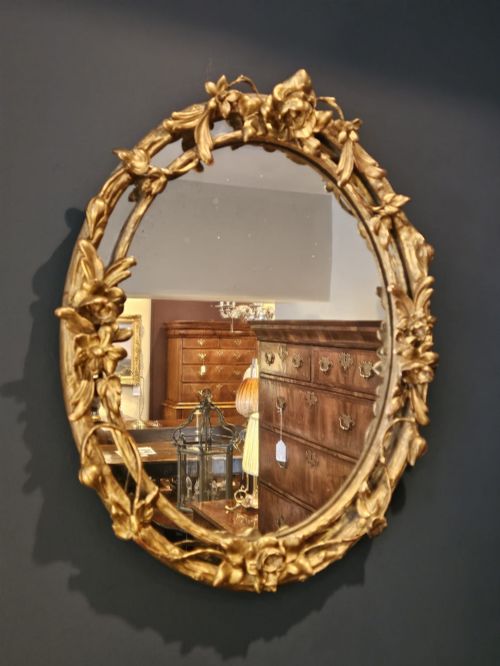
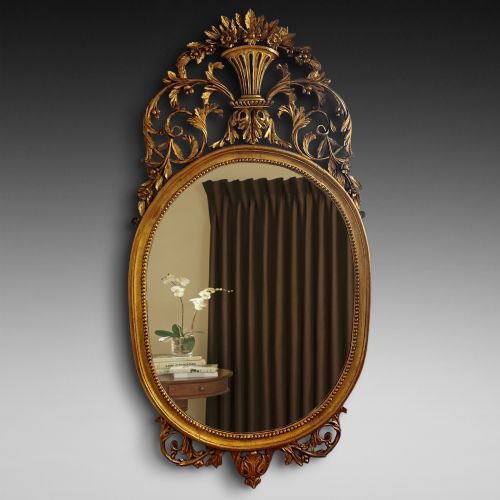
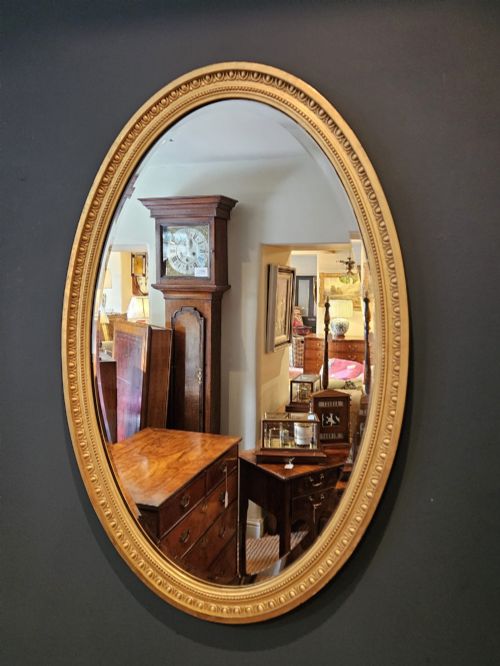
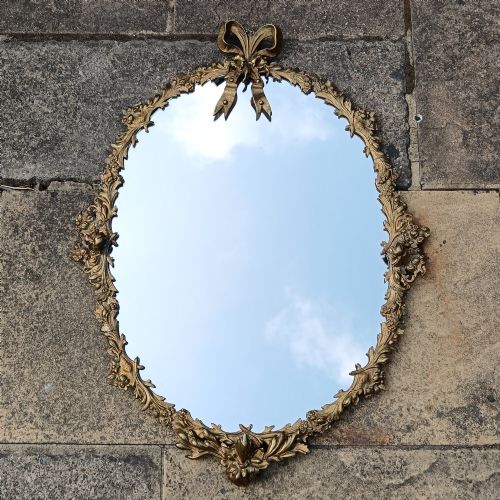
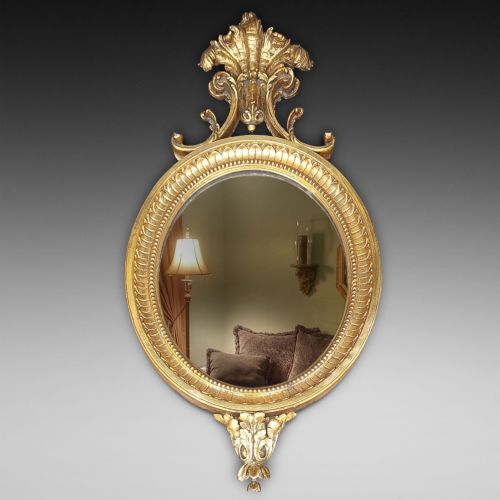
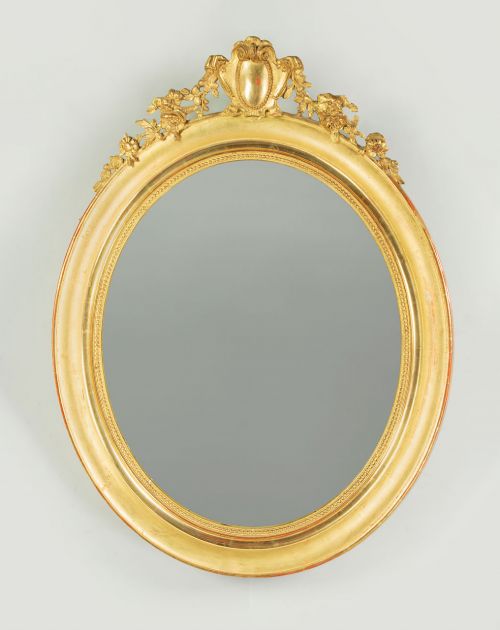
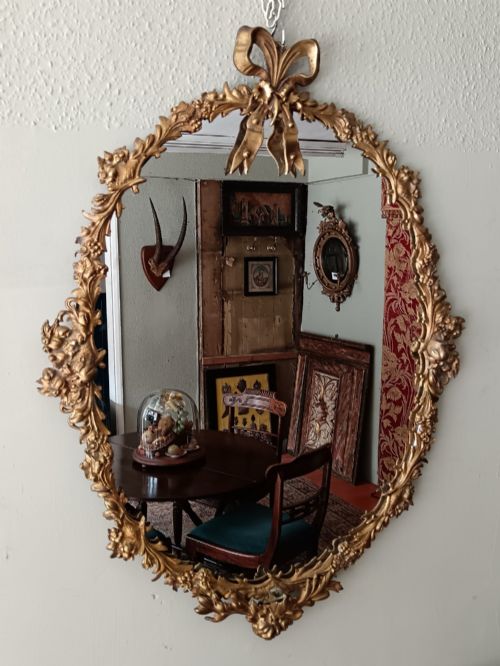
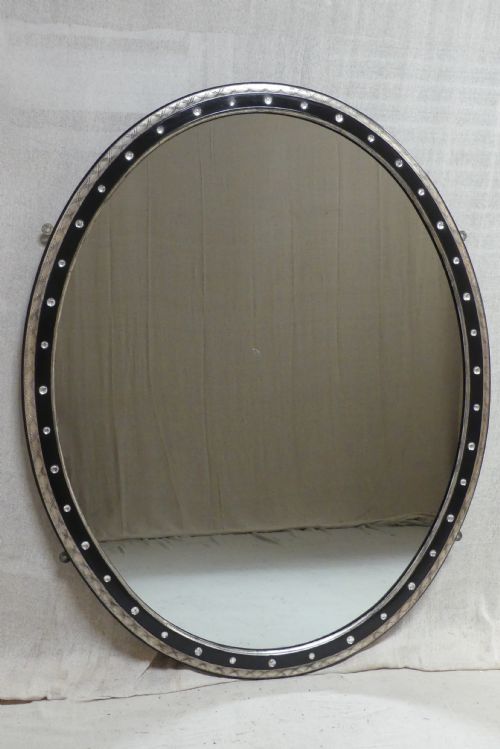
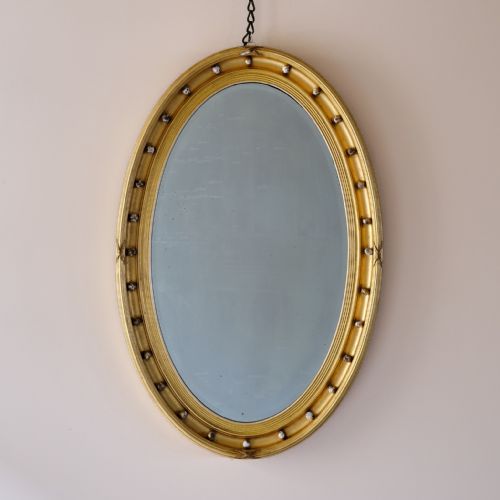
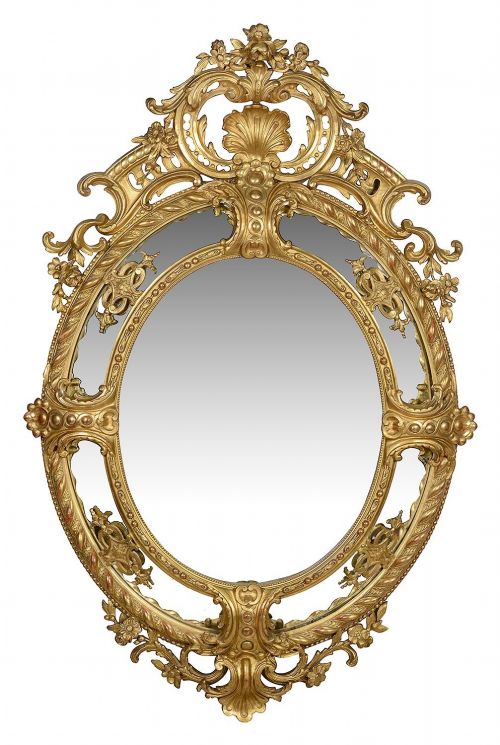


Gilt Oval Hanging Mirror
A gilt oval hanging mirror brings warmth and reflective light to a room, drawing the eye with its curved frame.
Gilt Oval Hanging Mirror
A gilt oval hanging mirror combines a curved vertical frame with a gilded surface designed for wall mounting. When searching for a gilt oval hanging mirror, you encounter pieces spanning from the eighteenth century through the Edwardian period, with Victorian and nineteenth-century examples appearing most frequently.
The selection ranges from restrained Regency designs to ornate Victorian and Edwardian interpretations in Adam, Rococo, and Louis XVI revival styles. These mirrors function primarily as decorative wall pieces that balance proportions in hallways, bedrooms, and reception rooms.
How they were made
Frames are constructed from timber, carved giltwood, or moulded gesso and composition over a wooden base. Artisans applied gold leaf or gilt bronze finishes to these surfaces, sometimes incorporating decorative elements like carved rose vines or ribbons.
Earlier pieces often feature mercury plates, while nineteenth and twentieth-century examples utilise standard glass plates, occasionally with bevelled edges. The interplay between carved wood and applied gesso dictated the crispness of the frame's ornamentation.
The listings show periods ranging from the eighteenth century through the Edwardian era, with Victorian and nineteenth-century pieces forming the majority.
What varies in quality
The depth and precision of the carving distinguish finer examples from simpler moulded pieces, particularly in revival styles where leaf and scroll work can appear soft or sharp. Hand-carved giltwood demonstrates superior craftsmanship compared to mass-produced composition ornament.
The preservation of the original gilding and the condition of the mirror plate itself determine the integrity of the piece. Subtle details in the joinery of the wooden frame and the quality of the original hanging fixings reflect the care taken during manufacture.
The Gilt Oval Hanging Mirror Glossary
- Giltwood
- Wood that has been coated with gold leaf or powder. This finish provides a luminous metallic surface across the carved frame.
- Gesso
- A plaster-like mixture applied to wooden frames as a base for gilding. It allowed carvers to achieve smooth contours and intricate relief details before applying gold leaf.
- Mercury plate
- An early type of mirror glass made by applying a tin and mercury amalgam to the back of the glass. These plates produce a characteristic mottled reflection.
- Composition
- A moulded material made from Whiting, resin, and glue. Makers pressed this mixture into moulds to create decorative ornaments quickly on Victorian and Edwardian frames.
Gilt Oval Hanging Mirror: Frequently Asked Questions
Where should I hang a gilt oval hanging mirror?
These mirrors suit spaces where a vertical curve softens architectural lines, such as above a mantelpiece or in a narrow hallway.
Their reflective surface bounces light into darker corners while the decorative frame acts as a focal point on plain walls.
How do I date a gilt oval hanging mirror?
Dating relies on identifying stylistic revival markers, construction materials, and the backing of the frame.
Victorian and Edwardian pieces often employ moulded composition alongside timber, whereas eighteenth-century examples display hand-carved giltwood and older mirror plates.
What is an Adam style gilt mirror?
Adam style frames draw on neoclassical motifs, featuring symmetrical details like ribbons, swags, and urns.
These mirrors date from the eighteenth century originally, though revival versions appeared frequently during the Victorian and Edwardian eras.
Are these mirrors heavy to hang?
Weight varies depending on whether the core material is solid timber, carved giltwood, or plaster composition over wood.
Larger nineteenth-century examples require secure wall fixings distributed across sturdy anchor points to support the substantial frame.