



Gilt Neoclassical Stand
A gilt neoclassical stand brings classical proportion and golden warmth into a room through tables, columns, and lighting supports.
Gilt Neoclassical Stand
A gilt neoclassical stand encompasses a range of furnishings designed to elevate objects or illuminate spaces, drawing directly on classical antiquity. Buyers searching this phrase commonly encounter floor lamps, standard lamps, candlesticks, and candelabra alongside occasional side tables, pedestals, and columns.
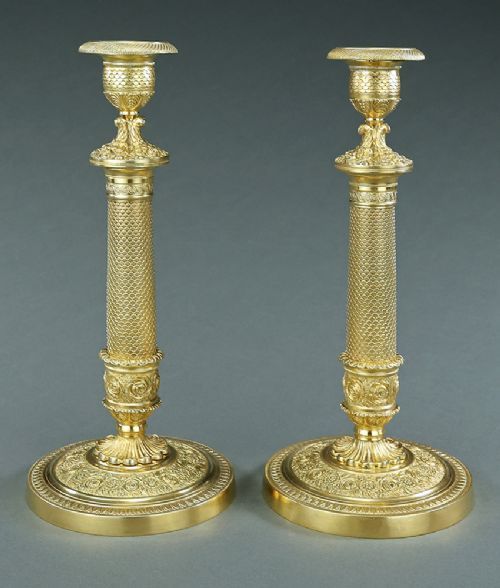
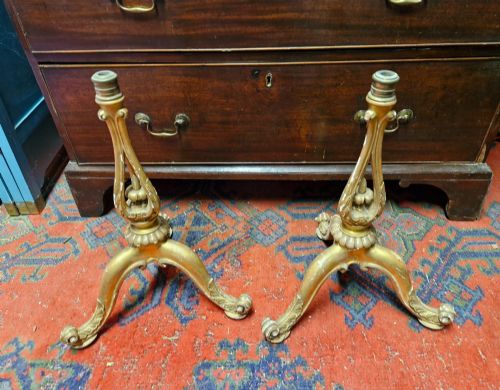
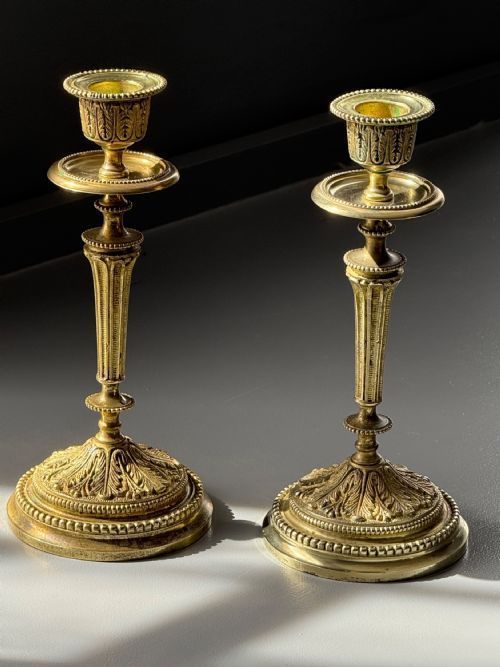
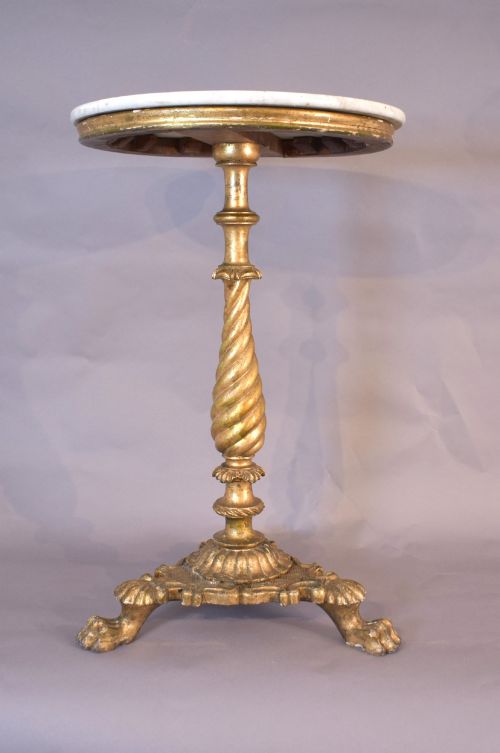
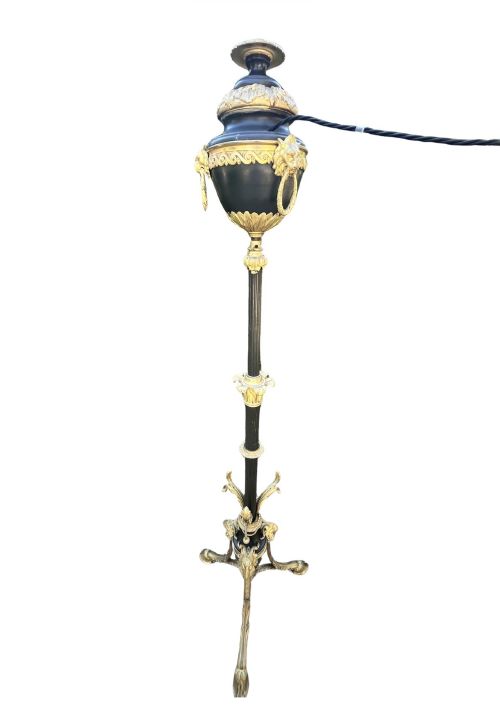
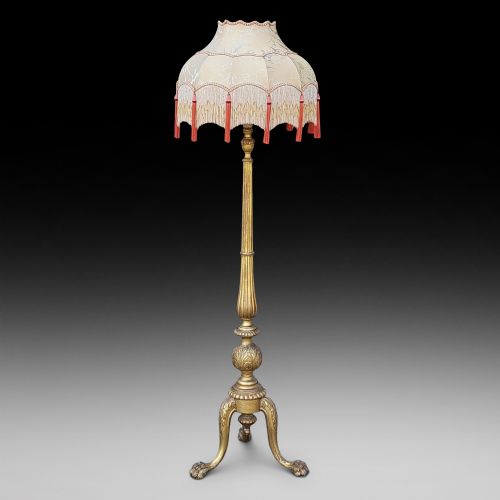
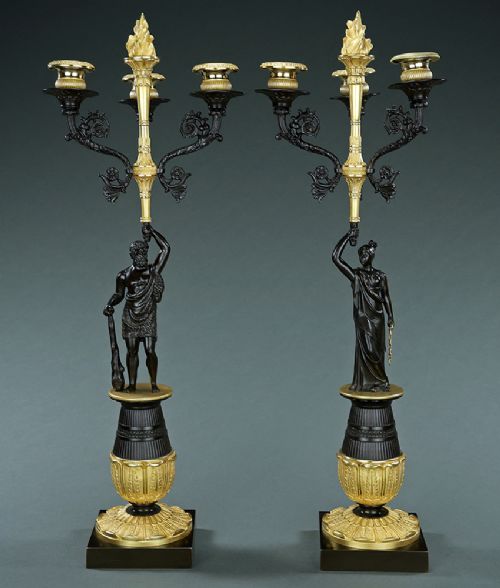
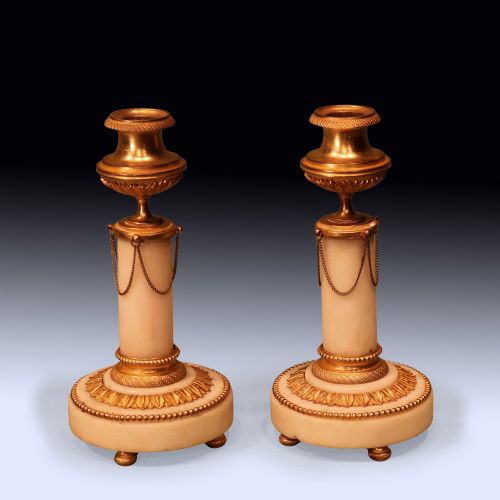
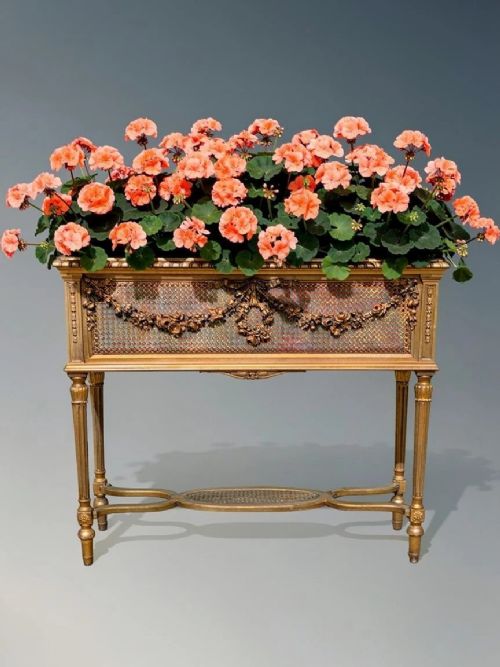
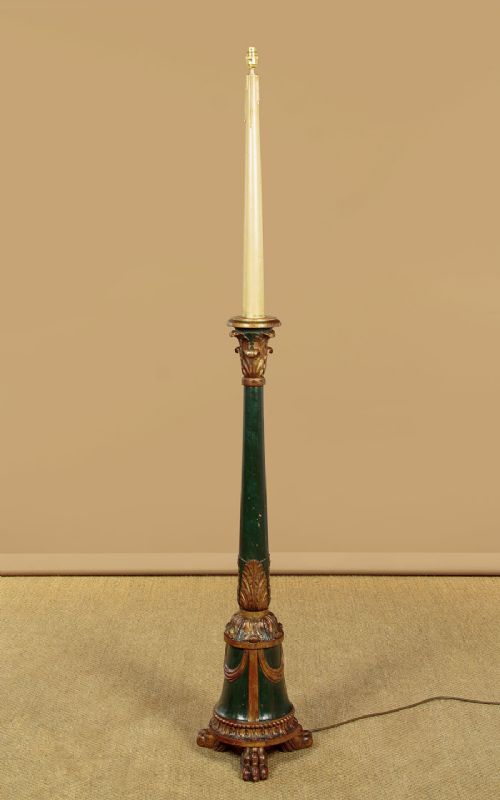
The material evidence spans the nineteenth century up to nineteen thirty, including Regency, Victorian, Louis XVI, and French Empire styles. Forms vary from slender tripod tables and marble-topped gueridons to monumental torchieres and urn stands.
Makers and designers reference historical vocabularies, often following classical architects and cabinetmakers such as Dugourc and Weisweiler. These supports range from grand architectural columns with ormolu collars to modest giltwood tripods and parcel-gilt floor lamps.
What varies in quality
Quality rests upon the crispness of the casting in metal components and the depth of hand-carving in wooden elements. Superior examples display sharply defined acanthus leaves, finely chased ormolu details, and robust structural joinery that supports heavy stone tops without wobble.
The integrity of the gilding further separates standard production from finer output. Deep, layered gold leaf and well-preserved fire gilding reflect light with greater nuance than flat, modern paint applications or worn, degraded finishes.
Several stands double as silent witnesses to Masonic rituals, disguised as tall painted Corinthian columns holding up nineteenth-century candlelight.
Henry Clay·Rabiat
The Gilt Neoclassical Stand Glossary
- Ormolu
- Gilt bronze, typically produced by applying a gold amalgam to a bronze base and heating it. This technique creates a rich, enduring metallic lustre characteristic of French Empire and Regency pieces.
- Gueridon
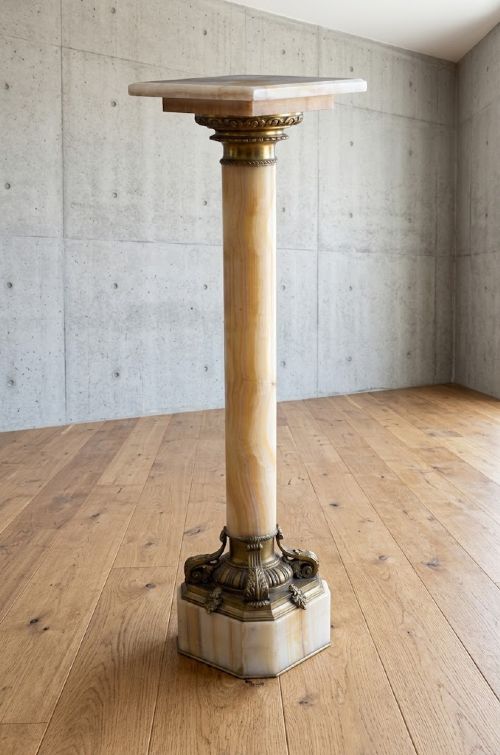
- A small French round table, frequently supported by a single central column or tripod base. These tables often feature inset marble or onyx tops.
- Torchere
- A tall stand or ornamental candlestick designed to hold a light source high above the floor. They frequently take the form of fluted wooden columns or classical figures.
- Caryatid
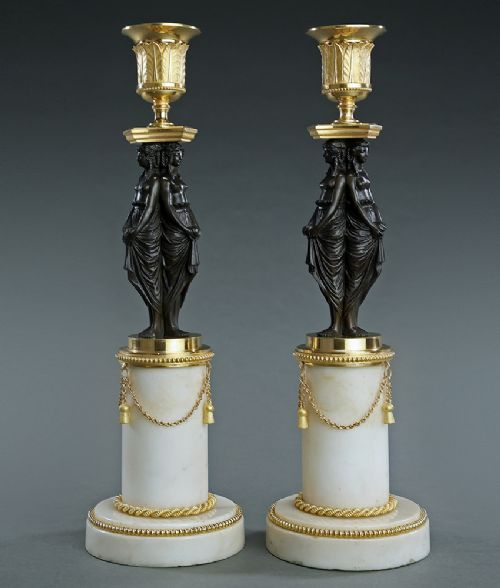
- A sculpted female figure serving as an architectural support in place of a column or pillar. They appear frequently on the shafts of candlesticks and stands.
- Grand Tour
- A cultural journey undertaken by wealthy young Europeans visiting classical sites in Italy and France. Souvenirs from these travels included bronze stands, small-scale columns, and desk accessories.
Gilt Neoclassical Stand: Frequently Asked Questions
What is a gilt neoclassical stand used for?
These pieces serve as functional supports for lighting, decorative urns, and busts, or act as standalone side tables. Their primary purpose is to elevate objects while introducing classical architectural lines and reflective metallic surfaces to an interior.
Historically, they occupied prominent positions in formal drawing rooms, libraries, and galleries. Today, they function equally well in modern spaces as accent tables or sculptural floor lighting.
How do I distinguish French Empire from Regency styles?
French Empire pieces often lean heavily on robust military and classical Roman motifs, incorporating heavy ormolu mounts, sphinxes, and dark patinated bronze. Regency pieces, sharing a similar timeline in Britain, frequently showcase lighter giltwood frames, cane work, and refined classical restraint influenced by Greek architecture.
Both styles draw from ancient vocabularies, but French work tends toward theatrical scale and intense gilding, whereas Regency design balances painted surfaces, parcel gilding, and structural clarity.
How do I care for antique ormolu and giltwood?
Giltwood and ormolu require gentle maintenance to preserve the fragile gold leaf and metal finishes. Dusting with a soft, dry microfibre cloth prevents particle buildup without wearing away the delicate surface layers.
Avoid liquid cleaners, chemical polishes, and direct sunlight, all of which can strip the gilding or discolour the underlying gesso and bronze. Maintain stable room humidity to keep wooden substrates from expanding or cracking.
Where should I place a heavy marble-topped stand?
Heavy marble and onyx stands require stable, level flooring to distribute their weight evenly across the base or feet. Placing them away from high-traffic pathways prevents accidental knocks against fragile stone edges or slender column supports.
Because these stands often feature central column supports rather than four wide legs, positioning them close to a wall or corner provides additional visual and physical stability.