
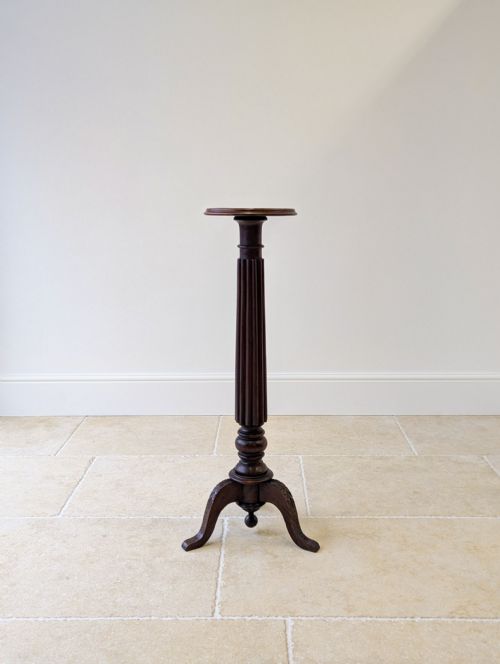
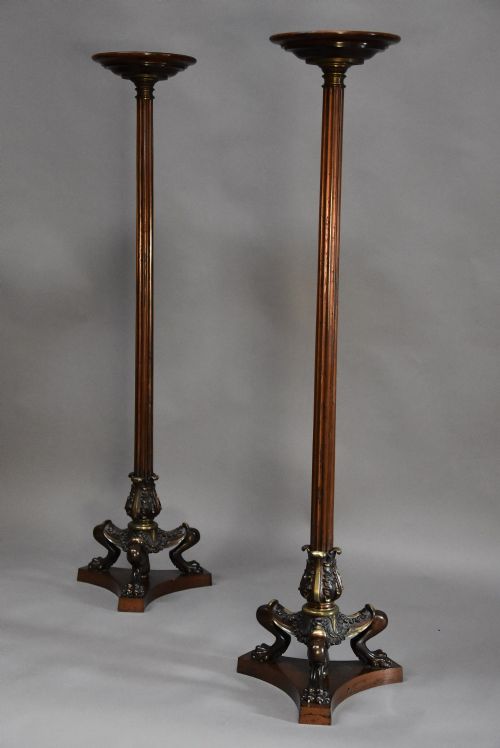


Regency Display Pedestal
These regency display pedestal pieces elevate sculpture and plants, bringing classical proportion and rich timber into a room.
Regency Display Pedestal
A regency display pedestal provides a raised platform for sculpture, urns, and plants, drawing the eye upward within a room. When exploring this selection, a buyer most frequently encounters mahogany and rosewood forms spanning the nineteenth century, including torchères, plant stands, and column cabinets.
The objects take various shapes, from hexagonal and circular columns to square cabinets with panelled doors. Neoclassical influence remains strong across the group, often expressed through giltwood details, bronze mounts, and simulated marble finishes.
Many examples date from the Regency and William IV periods, alongside later nineteenth-century revivals and twentieth-century interpretations. These stands function equally as sculptural elements and practical surfaces for display.
Materials and construction
Cabinetmakers relied heavily on dense timbers such as mahogany, rosewood, walnut, and amboyna, frequently utilising solid construction alongside finely figured veneers. Turning, carving, and joinery created sturdy shafts and capitals designed to bear significant weight.
Decorative surfaces often incorporate brass mounts, bronze columns, and painted finishes imitating marble or stone. Simulated marble on pine or timber gives the visual weight of stone without the extreme mass, while giltwood accents highlight neoclassical motifs.
Brighton Pavilion inspired a lively market for simulated bamboo and lacquered surfaces.
Judging quality and merit
Quality rests upon the crispness of the carving, the selection of timber grain, and the integrity of the structural joints. Pieces displaying well-figured rosewood or flame mahogany with original polish command attention.
The handling of secondary details, such as bronze or brass mounts and convincing faux marble painted surfaces, distinguishes standard production from finer cabinetmaking. Proportional harmony between the base, shaft, and top platform determines visual success.
Gillows·George Smith·Thomas Hope
The Regency Display Pedestal Glossary
- Torchère
- A tall, slender stand designed to support a light source, plant, or small sculpture. These pieces often feature circular tops and turned or carved columns.
- Neoclassical
- A style drawing inspiration from classical antiquity, prominent in Regency design through columns, pilasters, and architectural symmetry.
- Faux marble
- A decorative painted finish applied to wood to simulate stone. This technique provides classical appearance while keeping the pedestal manageable in weight.
- Jardiniere stand
- A specialised piece intended to hold plants or floral arrangements, often incorporating waterproof liners or metal trays.
Regency Display Pedestal: Frequently Asked Questions
What were pedestals originally used for?
Pedestals served primarily to elevate sculpture, urns, and decorative objects in principal rooms and halls.
They allowed collectors to display art at eye level while introducing architectural structure to an interior space.
How do I style a pedestal at home?
Place a single pedestal in an empty corner or flanking a doorway to add height and architectural interest.
Top the surface with a bronze figure, a ceramic bowl, or a trailing plant to soften the geometric lines.
Are these stands suitable for heavy planters?
Solid mahogany and rosewood examples offer sturdy support for substantial planters and heavy stone vessels.
It remains wise to check the footprint and weight distribution of the top platform before placing large items.
How do I distinguish Regency from Victorian pieces?
Regency designs often display restrained neoclassical lines, crisp bronze mounts, and fine figured timbers.
Later Victorian revivals frequently introduce heavier proportions, darker finishes, and eclectic decorative carving.