
Gilt Mounted Table
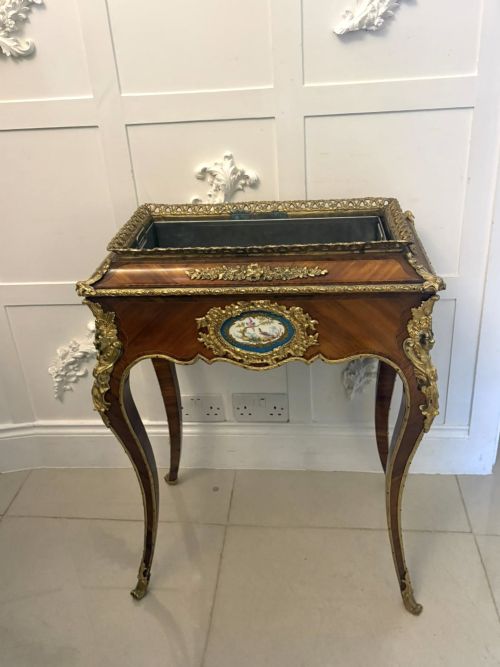
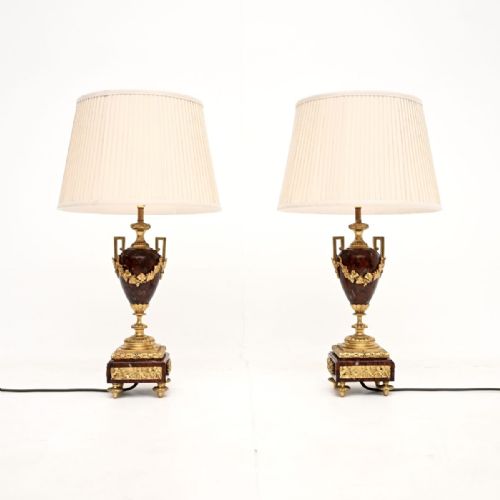
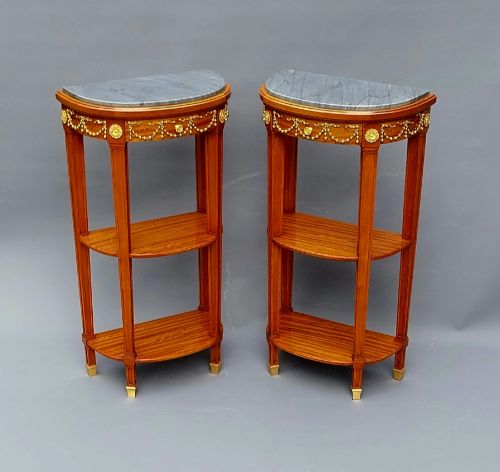
A gilt mounted table brings together fine cabinet timbers and cast metal enrichments, offering a formal surface shaped by nineteenth-century revival styles.
Gilt Mounted Table
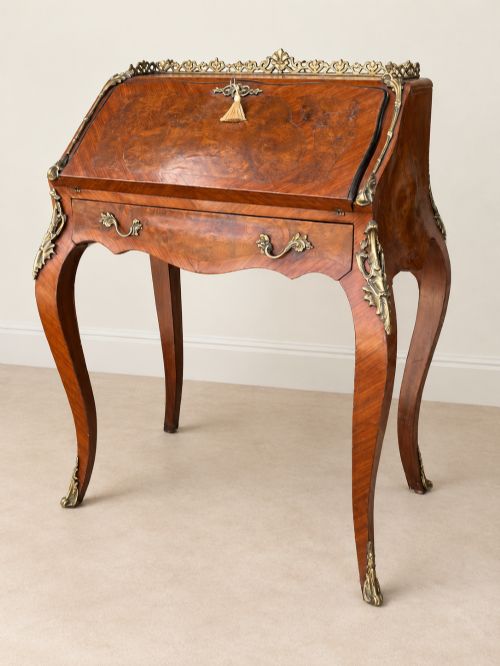
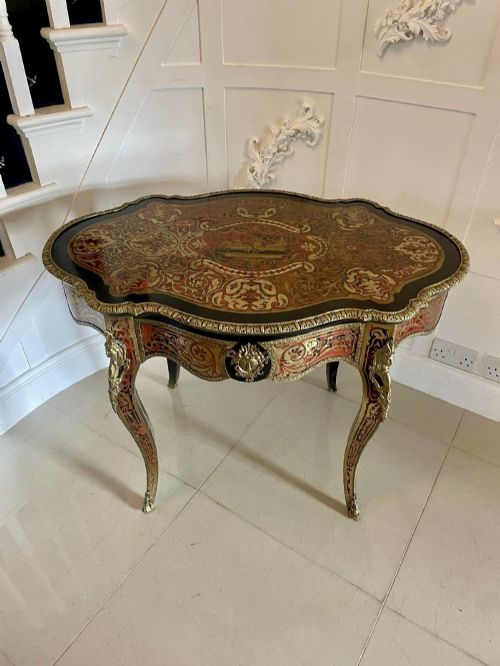
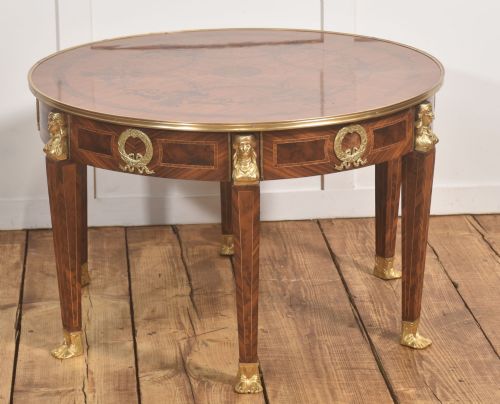
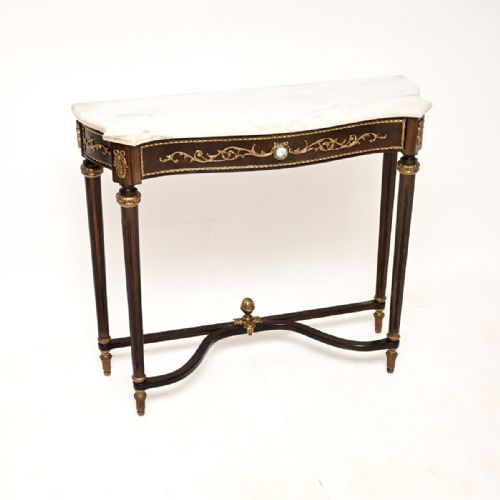
When searching for a gilt mounted table, buyers encounter a diverse selection of nineteenth-century French and English furniture designed for display and daily use. Centre tables, writing desks, and console tables dominate this category, frequently drawing on Louis XV, Louis XVI, and Empire design vocabularies.
The selection ranges from small occasional and lamp tables to substantial bureau plats and dressing furniture. Most examples date from the Victorian period and the later decades of the nineteenth century, reflecting sustained enthusiasm for continental cabinet-making traditions.
Materials and Construction
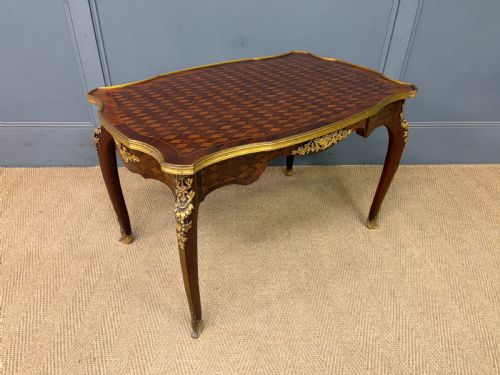
Cabinets makers relied heavily on dense tropical hardwoods like kingwood, mahogany, and rosewood, often enhanced by intricate marquetry or parquetry patterns. These timber carcasses provide the structural foundation for elaborate decorative schemes.
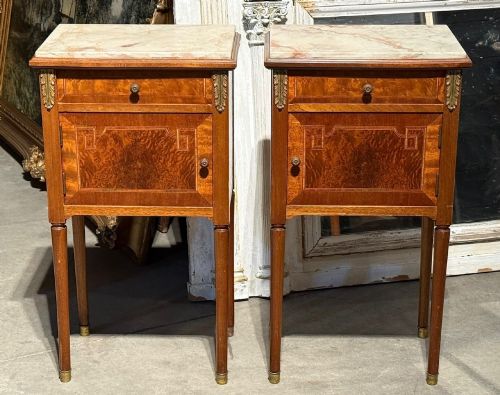
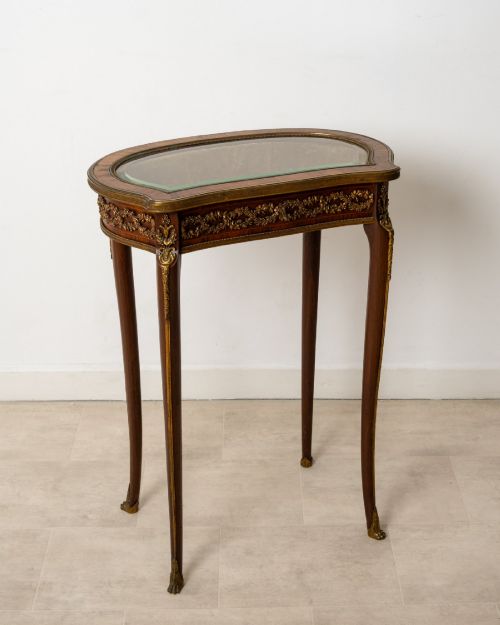
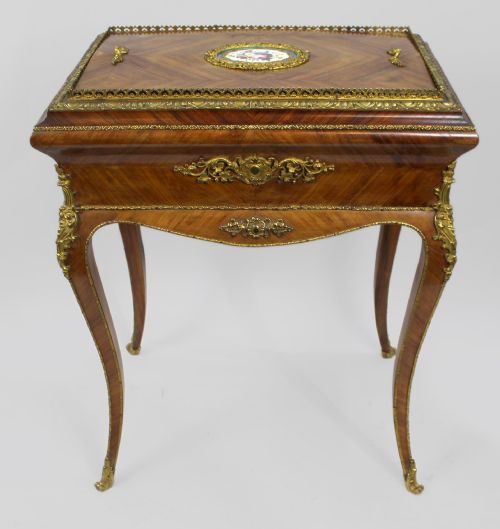
Cast metal elements, described variously as ormolu, gilt bronze, or gilt brass, are secured to corners, legs, and aprons to accent the silhouette. Marble slabs frequently inset into table tops add weight and a cool tactile contrast to the polished timber.
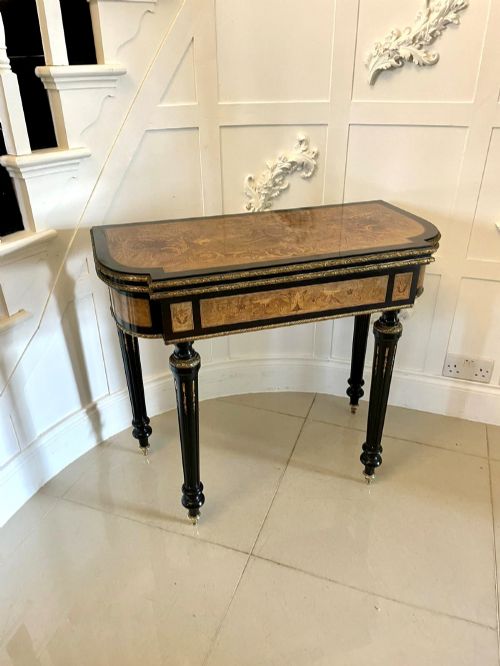
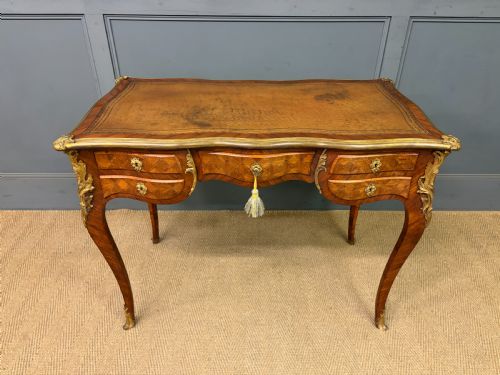
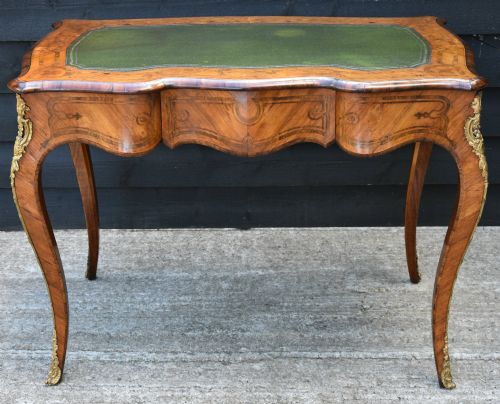
Listings feature frequent examples of kingwood and mahogany combined with gilt bronze ormolu mounts across nineteenth century writing desks and centre tables.
Evaluating Craftsmanship
Superior examples separate themselves through the crispness of the metal chasing and the depth of the timber veneers. Hand-cast ormolu retains sharp detail and refined finishing, whereas lesser metalwork appears soft and uniform.
The precision of the cabinet work, from the alignment of marquetry motifs to the smooth operation of drawers and mechanical leaves, dictates the standing of a piece. Maker attributions or stamps from established workshops further elevate the status of individual furniture.
Edward Holmes Baldock·Francois Linke·Edwards and Roberts·Joseph-Emmanuel Zwiener·Paul Sormani·Felix-Alfred Ternisien·CH Jeanselme and Co·Durand·Krieger Paris·Gillows
The Gilt Mounted Table Glossary
- Ormolu
- A gilded bronze ornament applied to furniture mounts and clocks. The technique involves mercury amalgamation to bond gold leaf to a bronze base.
- Bureau Plat
- A freestanding writing desk fitted with drawers along the frieze. These tables typically feature leather inset writing surfaces and extensive metal mounts.
- Marquetry
- Decorative veneer patterns assembled from various coloured woods to form pictorial or geometric designs. Craftsmen cut these elements meticulously to fit flush across the table surface.
- Gueridon
- A small round table supported by a central pillar or multiple legs. Originating in the seventeenth century, these occasional tables frequently incorporate marble tops.
- Parquetry
- Geometric wood inlay arranged in repetitive patterns such as cubes or chequers. This technique highlights the natural tonal variations of hardwoods.
Gilt Mounted Table: Frequently Asked Questions
Where were these tables used?
These pieces served primarily in formal reception rooms, salons, and private libraries as functional writing desks or decorative display surfaces.
Console tables stood against walls beneath mirrors, while centre tables occupied the middle of rooms to display lamps and decorative objects.
How do I care for marble tops?
Marble surfaces require gentle cleaning with warm water and a soft cloth to avoid scratching the polished stone. Acidic liquids must be kept away to prevent permanent etching of the polish.
Applying a neutral stone wax periodically helps protect the finish from moisture rings and daily wear.
How do I distinguish Louis XV from Louis XVI style?
Louis XV style pieces emphasise asymmetrical curves, undulating serpentine outlines, and exuberant rococo scrollwork. The mounts and legs display fluid organic shapes without straight lines.
Louis XVI style shifts toward neoclassical symmetry, featuring straight fluted legs, rectangular proportions, and geometric architectural motifs.
Are the metal mounts solid gold?
The metal elements consist of bronze, brass, or copper alloys finished with a thin layer of gold through gilding or electroplating. Solid gold would be too soft and heavy for structural furniture mounts.
Careful cleaning preserves this gold surface without wearing through to the base metal underneath.