

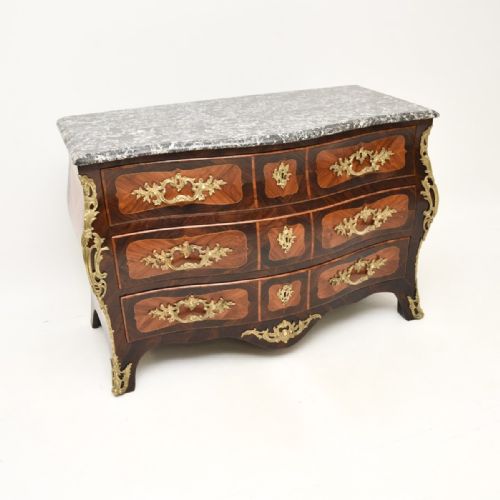
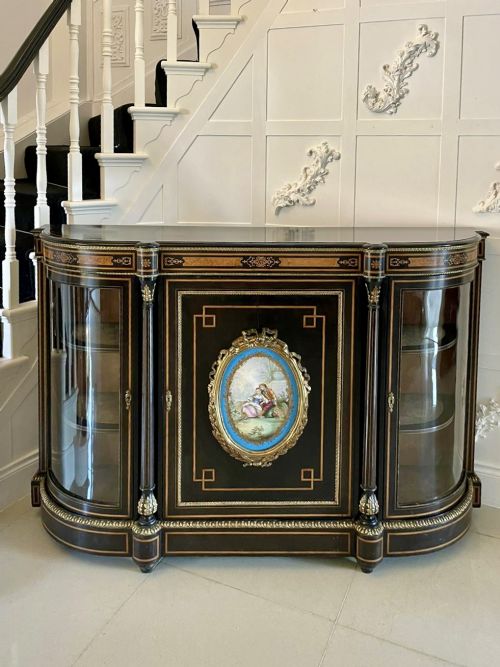
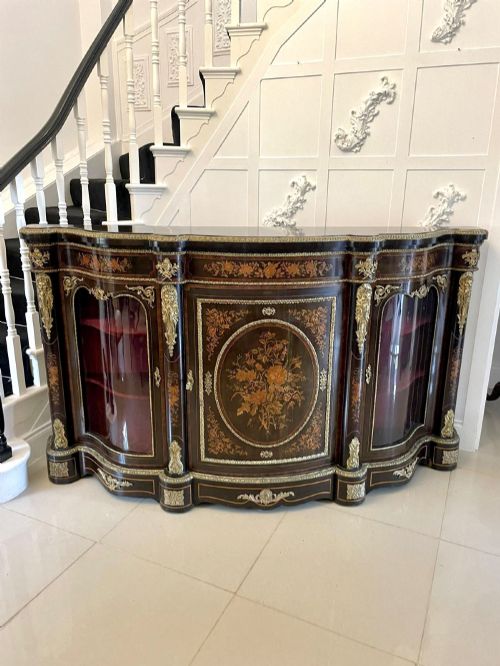
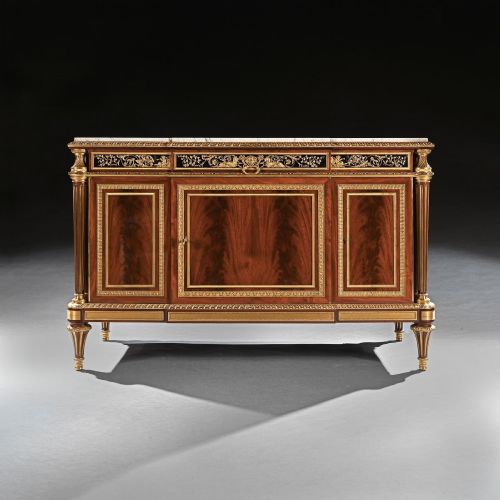
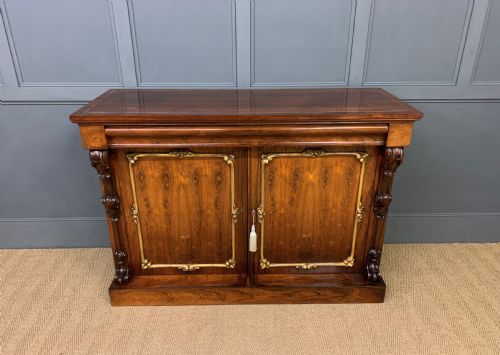
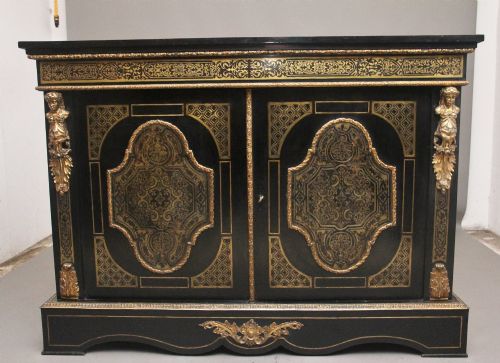
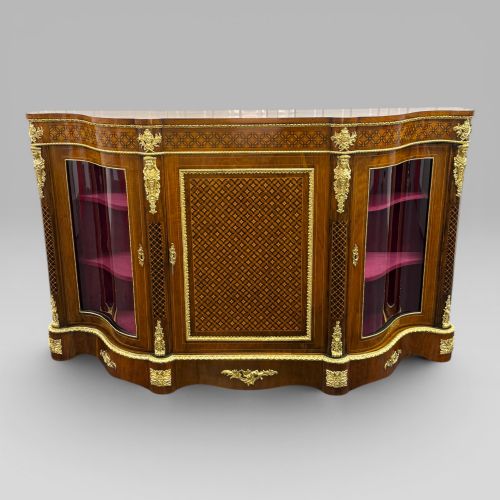
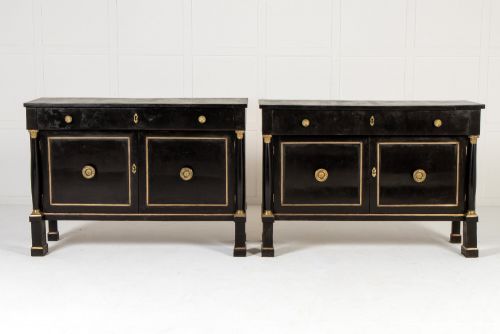
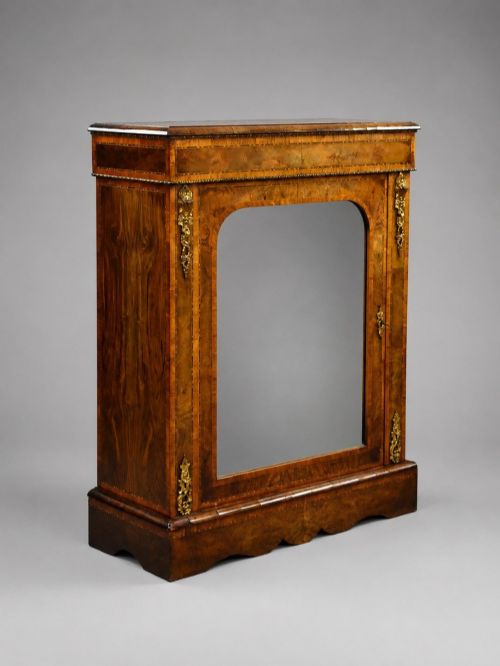
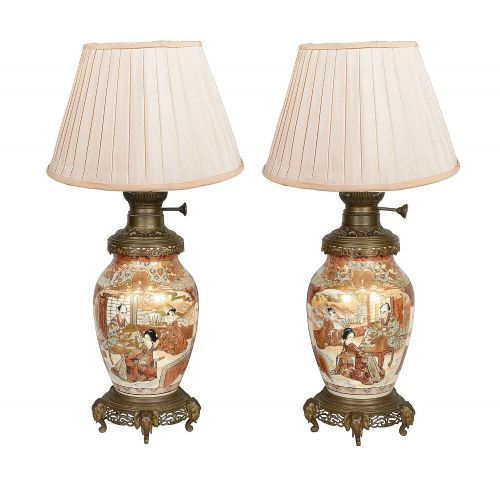
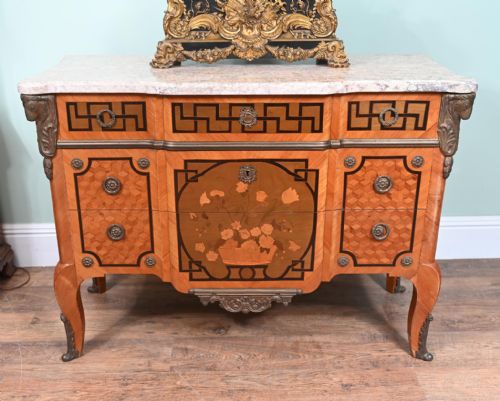
Gilt Mounted Sideboard
A gilt mounted sideboard brings architectural dignity and metallic lustre to a room, uniting timber and cast bronze in a single grand furnishing.
Gilt Mounted Sideboard
A gilt mounted sideboard encompasses credenzas, commodes, and side cabinets unified by metallic enrichment upon timber carcasses. Buyers seeking this phrase encounter 19th-century Victorian and French revival pieces predominantly, alongside select Regency and earlier examples.
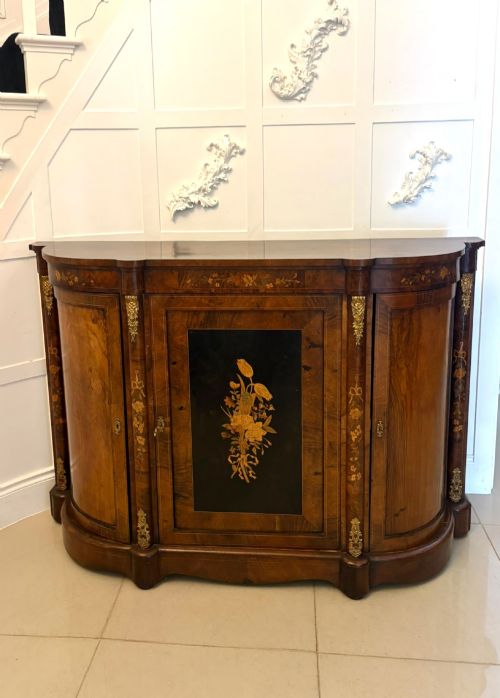
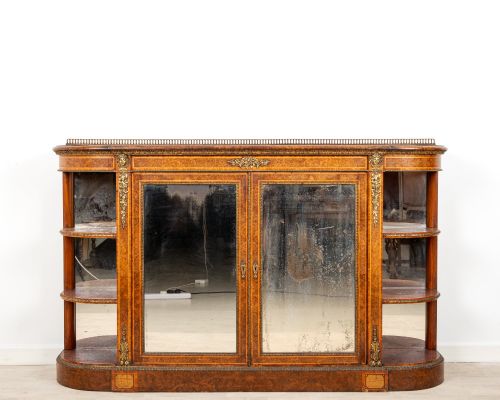
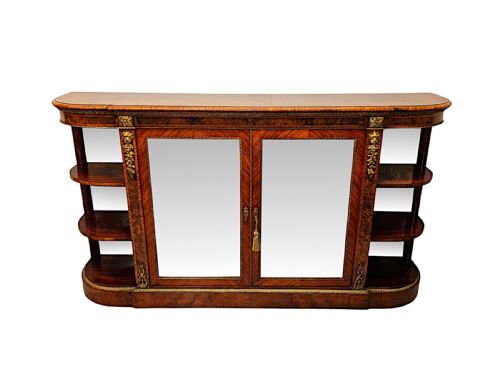
The dominant forms are credenzas and commodes featuring glazed or mirrored doors, marble tops, and detailed floral marquetry. These items originated as formal reception room furniture designed to display porcelain and silver while providing substantial interior storage.
How they were made
Maker's workshops combined walnut, kingwood, ebonised wood, and amboyna veneers over solid secondary timbers, often embellishing surfaces with intricate floral marquetry and Tunbridgeware inlays. Marble slabs were fitted precisely to the upper surfaces of commodes and credenzas to provide durable display areas.
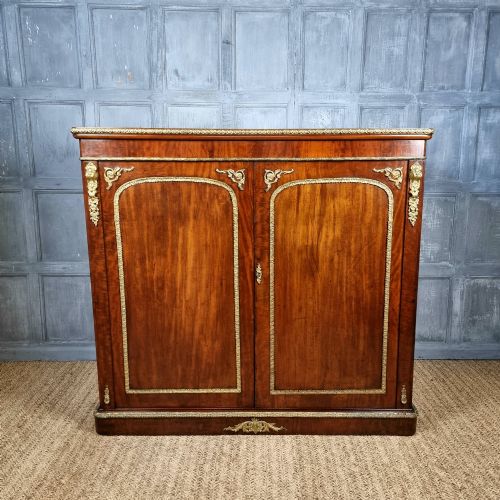
Ormolu and gilt bronze mounts were cast, chased, and fire-gilded before being fixed to corners, friezes, and door borders. Glass panels, mirrored backings, and brass grilles were incorporated into cabinet doors to lighten the heavy timber facades.
Several credenzas hide mirrored doors behind glass panes, designed to catch the candlelight of Victorian drawing rooms.
What varies in quality
Quality rests upon the crispness of the ormolu chasing and the depth of the timber veneers, where superior examples display hand-chiselled mounts and finely figured burr walnut or kingwood. Lesser pieces rely on stamped brass rather than heavy cast bronze and simpler geometric veneers.
The integration of the mounts to the carcass defines the standard of construction, with finer cabinets showing mounts fitted flush into recessed timber channels. Structural rigidity in large breakfront credenzas and the quality of the original marble tops further separate standard workshop production from master cabinetmakers.
Jacques Bircklé·Jacques Bircklé·Henry Dasson·Gillows·Maison Gagneau·Weisweiler
The Gilt Mounted Sideboard Glossary
- Ormolu
- Gilded bronze applied as decorative mounts to furniture frames and door panels. The technique involves applying a mercury-gold amalgam to cast brass or bronze before heating.
- Marquetry
- Decorative patterns formed by fitting contrasting veneers into a wooden background. Craftsmen utilise various coloured woods to depict floral sprays and geometric motifs.
- Meuble d'appui
- A French term for a supportive piece of furniture or low cabinet designed to stand against a wall. These cabinets often feature marble tops and rich marquetry inlay.
Gilt Mounted Sideboard: Frequently Asked Questions
What is a gilt mounted sideboard?
A gilt mounted sideboard is a formal cabinet or credenza decorated with cast bronze or ormolu mounts affixed to timber surfaces. These pieces date largely from the nineteenth century and reflect French and English revival tastes.
They combine practical enclosed storage with display surfaces, frequently incorporating marble tops and glazed doors for ceramics and glassware.
Where were these cabinets placed?
These furnishings were designed for principal reception rooms, dining rooms, and parlours of substantial townhouses and country homes. Their mirrored backs and glazed compartments served to reflect light and showcase valuable collections.
Positioned against principal walls, they acted as focal points for interior decoration during the Victorian and revival periods.
How do I care for marble tops?
Marble surfaces require regular dusting with a soft cloth and immediate wiping of acidic liquids such as wine or citrus juice. Avoid harsh chemical cleaners that can etch the polished stone surface.
Applying a neutral stone wax helps protect the porous mineral structure while maintaining a soft, natural sheen.
How do I distinguish French and English pieces?
French pieces frequently exhibit pronounced rococo or neoclassical revival styling with heavy ormolu mounts, kingwood veneers, and shaped serpentine marble tops. English equivalents by makers like Gillows often favour burr walnut, subtle marquetry, and architectural proportions.
Examination of the secondary interior timbers and construction joints also reveals the origin of the workshop.