
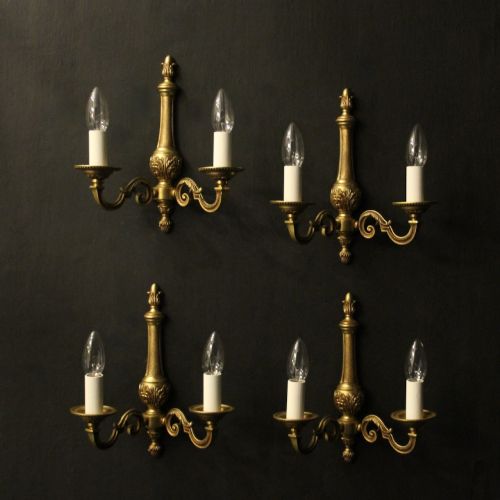
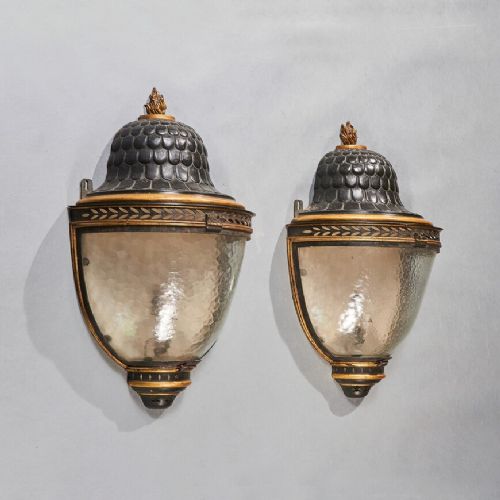
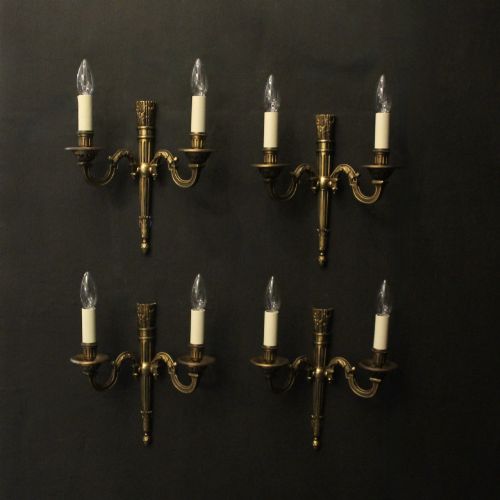
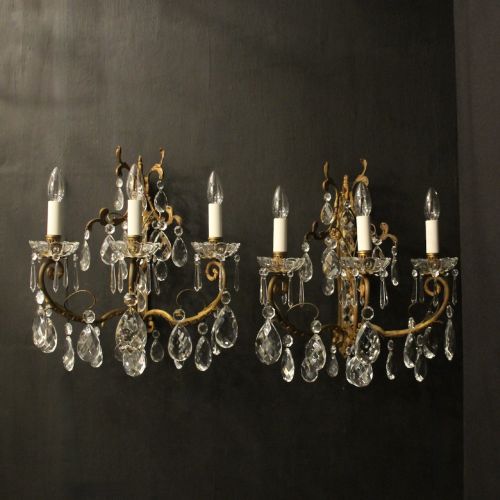
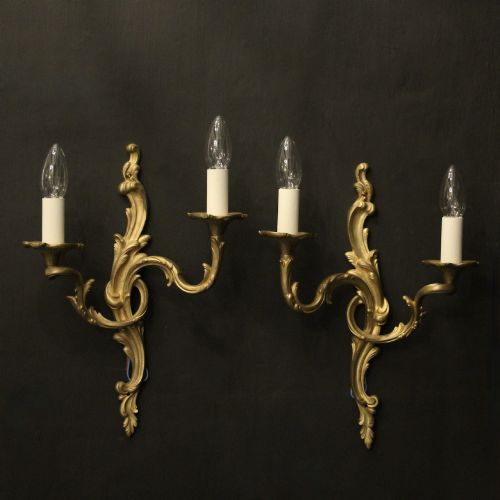
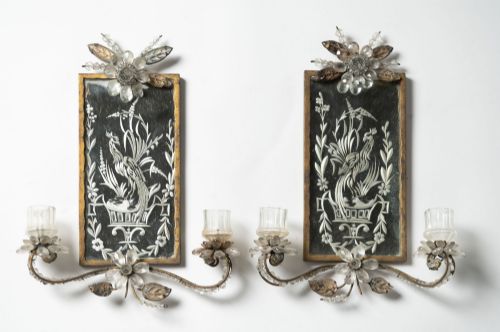
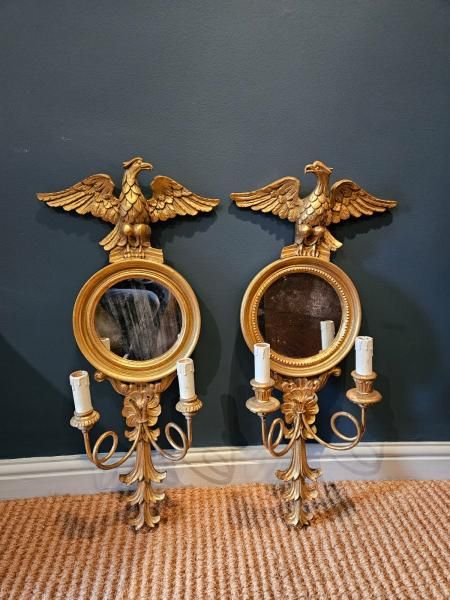
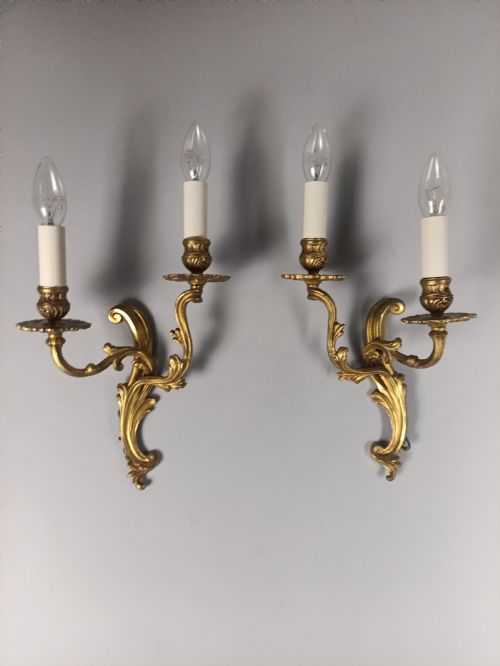


Gilt Metal Wall Sconces
Gilt metal wall sconces bring warmth and decorative illumination to an interior, drawing the eye with their polished or gilded surfaces.
Gilt Metal Wall Sconces
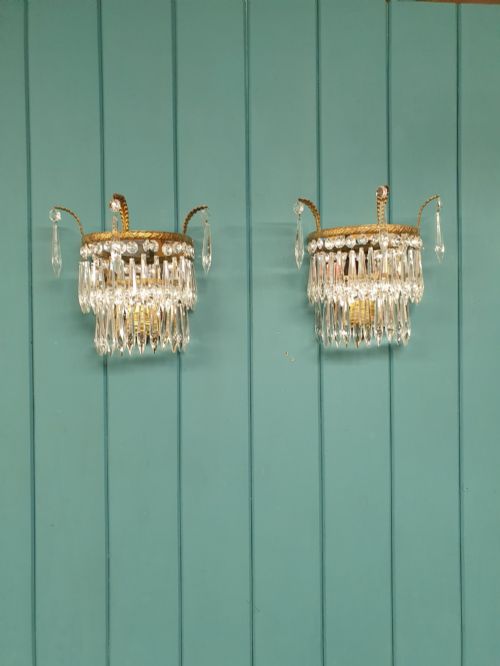
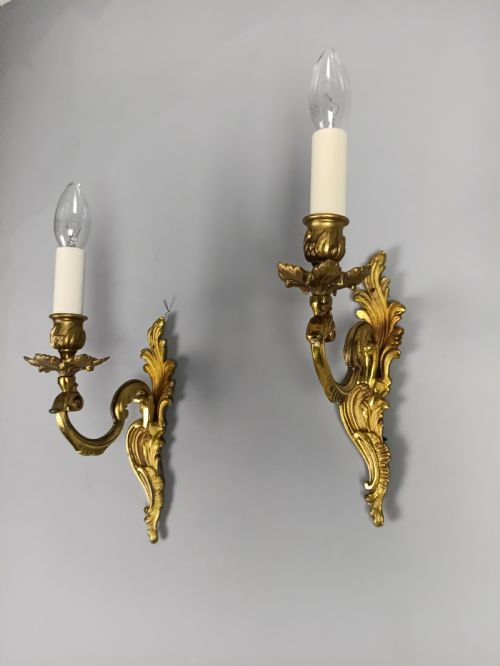
When you search for gilt metal wall sconces, you encounter light fittings designed to mount directly onto vertical surfaces, providing both practical illumination and ornamental presence. The selection spans several centuries, drawing heavily from continental workshops.
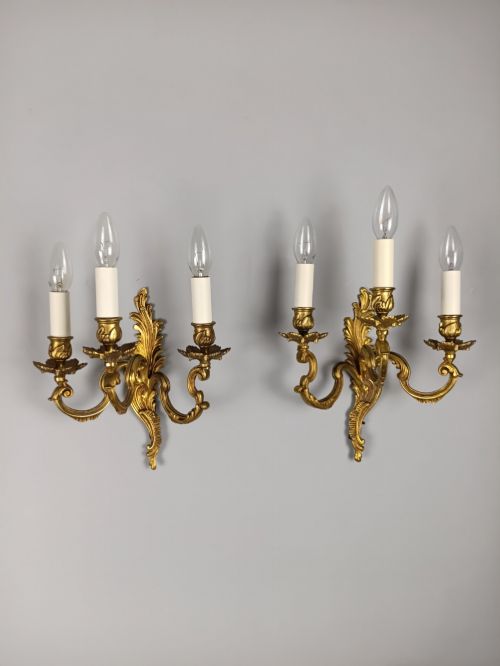
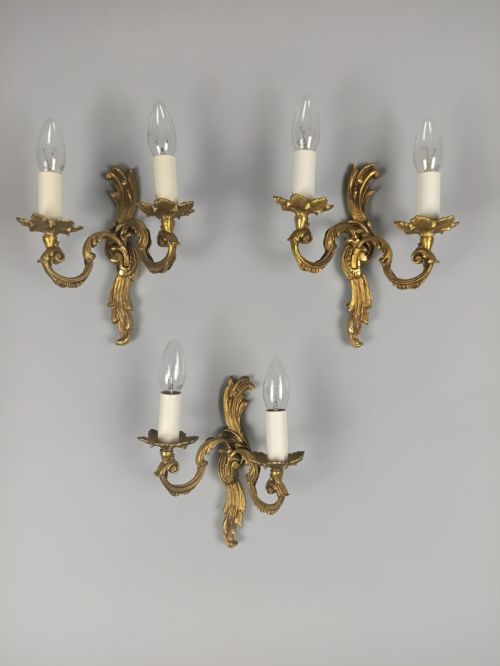
You are most likely to meet French and Italian examples dating from the nineteenth and early twentieth centuries. These take the form of twin or triple arm wall lights, girandoles, and mirrored sconces reflecting candlelight or early electricity.
How they were made
The construction relies primarily on cast metal, brass, bronze, and ormolu, often paired with glass or crystal elements to refract light. Craftsmen shaped these components into fluid scrolls and architectural motifs.
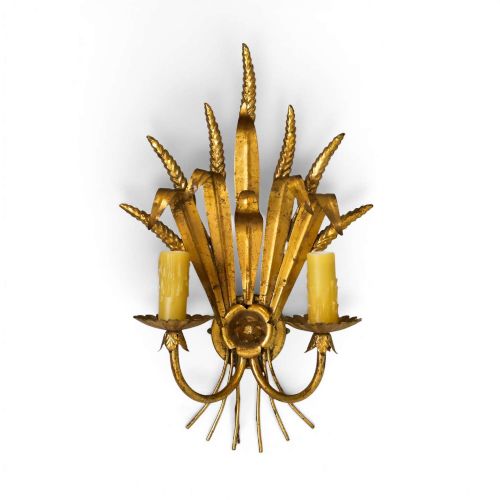
Surface finish is achieved through gilding, applying gold leaf or gilt paint over metal, brass, or carved wood bases. Toleware and tole peinte variations introduce painted tin elements alongside the gilded metal framework.
Gilt Metal Wall Sconces Retail Price Guide 2026
Typical asking prices for gilt metal wall sconces among the pieces listed under this phrase on Sellingantiques today, from the lower quarter to the upper quarter. They describe what is for sale here now, not the wider market.
Listings span periods from the eighteenth century through the 1950s, utilising materials such as ormolu, crystal, toleware, and gilt bronze.
What varies in quality
The standard of the casting defines the piece, distinguishing crisp, deeply chased foliate and figuran detail from soft, shallow reproductions. Superior examples exhibit hand-finished chasing that accentuates every curve and contour.
The depth and preservation of the original gilding or ormolu dictate visual richness. Items retaining their authentic surface patination without aggressive cleaning command greater appreciation.
Maison Baguès
The Gilt Metal Wall Sconces Glossary
- Ormolu
- Finely ground high-carat gold mercury-gilded onto a bronze base. This technique creates a deep, warm metallic lustre characteristic of high-end French decorative objects.
- Girandole
- A branched wall sconce featuring a reflective mirror backplate. The glass multiplies the candlelight within the room.
- Toleware
- Enamelled or painted sheet metal utilised for decorative accessories. It often mimics naturalistic foliage and floral motifs in wall lighting.
- Rococo
- An ornate design style marked by asymmetrical scrolls, C-curves, and shell motifs. It dominates eighteenth-century and revival wall sconces.
- Louis XVI
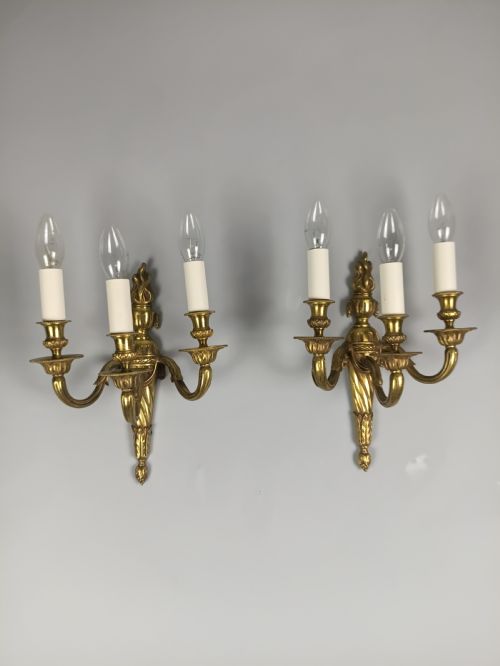
- A neoclassical style defined by symmetry, straight lines, urns, and classical ornamentation. It provides a formal contrast to earlier rococo curves.
Gilt Metal Wall Sconces: Frequently Asked Questions
How do I install antique wall sconces?
Many surviving wall lights were originally configured for candles and require careful adaptation for modern electrical wiring by a qualified electrician.
Heavier bronze and brass examples need secure fixing to wall studs or appropriate masonry anchors to support their weight safely.
How do I clean gilt metal safely?
Dusting gently with a soft, dry microfibre cloth removes surface particles without disturbing the delicate gold leaf or patinated finish.
Water, abrasive cleaners, and chemical solvents should be avoided entirely, as they strip the historic gilding from the metal.
Were these designed for candles or electricity?
The majority of eighteenth and nineteenth-century pieces began life as candle sconces or girandoles, utilising flame to illuminate rooms.
Twentieth-century iterations frequently incorporated electrical fittings from the outset, though older frames often underwent conversion later.
How do I distinguish Rococo from Neoclassical styles?
Rococo sconces display asymmetrical forms, sweeping C-scrolls, and exuberant naturalistic plant motifs without rigid geometric symmetry.
Neoclassical designs introduce straight architectural lines, urns, ram's heads, and balanced proportions reminiscent of classical antiquity.