

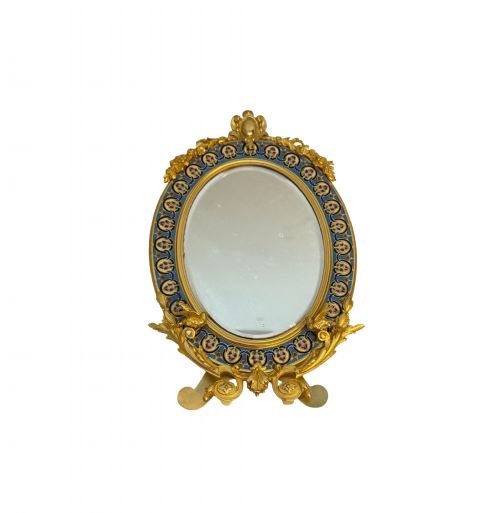


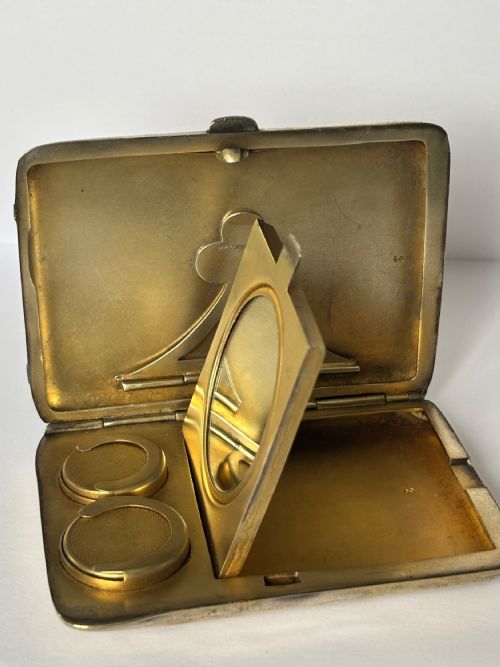


Gilt Metal Mirror
A gilt metal mirror brings reflective depth and bright metallic warmth to a room, ranging from small dressing table pieces to large wall hangings.
Gilt Metal Mirror
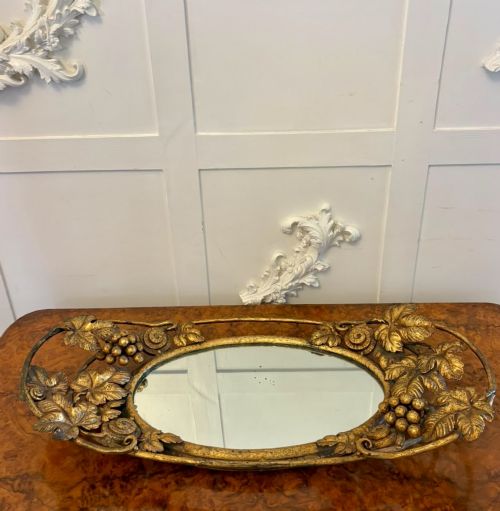
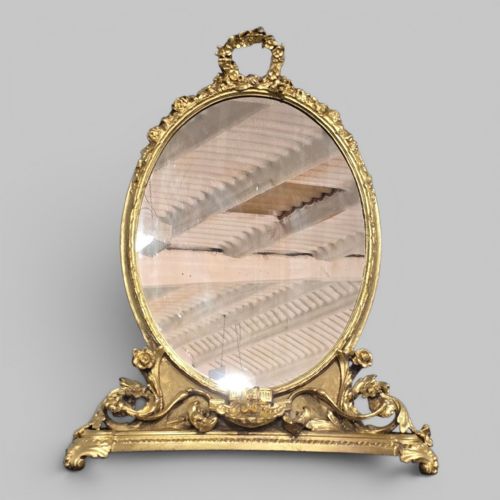
A gilt metal mirror draws the eye through reflective glass set into a polished or gilded metallic frame, combining utility with decorative presence. These objects span wall-hung designs, tabletop dressing mirrors, and small vanity pieces created across the nineteenth and twentieth centuries.
Buyers most frequently encounter Victorian, Edwardian, and later twentieth-century wall mirrors and dressing table mirrors fashioned with gilt brass, bronze, or standard metal frames. Pieces often reflect revival styles such as Rococo, Napoleon III, and Art Deco, showing French and English origins.
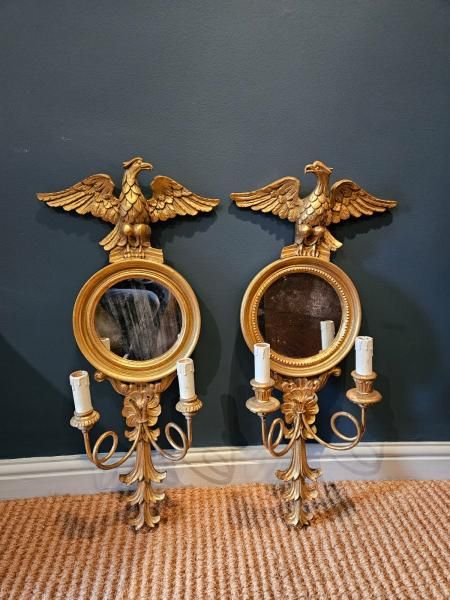
The selection ranges from simple oval and cushion frames to elaborate girandoles fitted with candle sconces and champleve enamel details. Smaller items like hand mirrors, picture frames, and compacts also appear within this category alongside large architectural wall pieces.
How they were made
Makers utilised cast bronze, brass, and plated metals to build durable frames, often applying gold leaf or chemical gilding to achieve a bright surface finish. Glass panels were hand-bevelled or silvered, then secured into metal mounts using pinned backs or structural brackets.
Many items incorporate secondary materials such as marble bases, onyx supports, mahogany timber frames, and champleve enamel panels to add weight and colour contrast. Surface ornamentation relies on metal-casting techniques, chased foliate details, and applied mounts fixed securely to the primary structure.
One past piece managed to turn three cornucopiae and some foliate branches into a tabletop riverbed complete with a mirrored water plateau.
What varies in quality
Quality rests in the crispness of the metal casting and the depth of the chasing, where sharper foliate motifs and well-defined figures indicate superior workshop skill. Heavier gauges of brass and bronze provide structural integrity, whereas thinner stamped metals bend easily under pressure.
The preservation of the original mercury or silvered mirror plate and the intactness of the gilt surface determine the visual harmony of the piece. Superior examples retain their original glass and secure mounting hardware without modern replacement parts altering the composition.
The Gilt Metal Mirror Glossary
- Girandole
- A wall mirror fitted with attached candle sconces that project light into the room from the glass surface. These fixtures often feature twin arms and ornate metal branches.
- Champleve
- An enamelling technique where troughs are dug into a metal surface and filled with coloured vitreous paste before firing. This method adds vibrant decorative panels to frames and dressing accessories.
- Cushion mirror
- A frame style with a convex profile that slopes outward from the wall towards the central glass plate. This form creates a layered, volumetric appearance popular in nineteenth-century designs.
- Ormolu
- Gilded bronze used for decorative metal mounts and furniture hardware. The technique involves applying a gold amalgam to the bronze base and heating it to bond the precious metal.
- Bevelled glass
- A mirror plate with angled, polished edges that catch and refract light differently from the central reflection. This detail signals finer glass production in older pieces.
Gilt Metal Mirror: Frequently Asked Questions
How do I clean a gilt metal mirror?
Dust the frame gently with a soft dry cloth to prevent abrasion to the gilded surface. Avoid liquid chemical cleaners that might strip the gold leaf or seep behind the glass plate.
Clean the mirror glass using a mild glass solution applied directly to a cloth rather than sprayed near the metal mount. Take care not to let moisture pool in the crevices of the cast decoration.
How do I identify a Victorian piece?
Victorian examples often display heavy cast metal frames with classical revival, Rococo, or lion head motifs. The materials frequently include cast brass, ormolu, and heavy glass plates with distinct bevelling.
Look for construction clues on the reverse, such as older screw types, hand-cut backing boards, and patinated metal surfaces that show decades of handling.
Can I place a dressing table mirror in a bathroom?
High humidity and moisture in bathrooms can damage antique gilding, corrode metal joints, and cause silvering on the mirror glass to degrade. These pieces are better suited to dry living spaces, bedrooms, and hallways.
If placed near a vanity, ensure the room ventilation prevents moisture condensation from settling on the unprotected metal and backing materials.