





Gilt Metal Garniture
These gilt metal garniture sets are decorative groupings designed to command a mantelpiece, bringing classical symmetry and rich metallic warmth to a room.
Gilt Metal Garniture
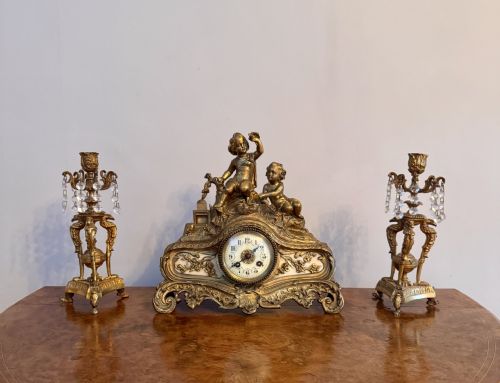
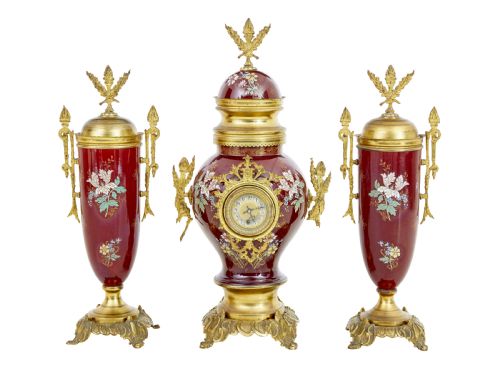
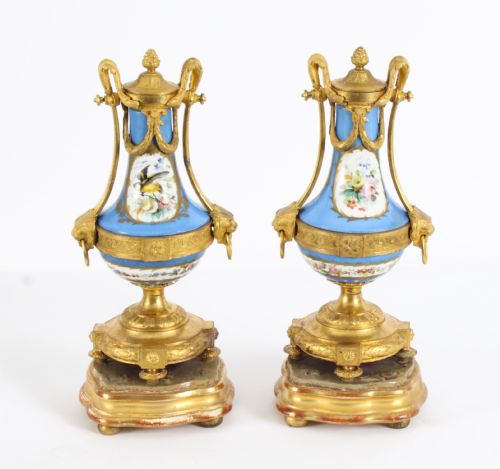
A gilt metal garniture typically comprises a central mantel clock flanked by matching vases, cassolettes, or candelabras designed to create a balanced display. When you search for a gilt metal garniture, you encounter pieces predominantly spanning the nineteenth century, including Victorian and Napoleon III periods.
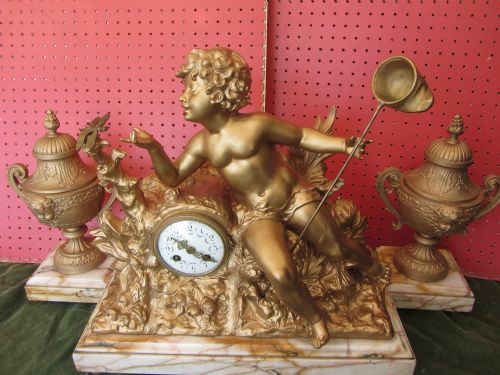
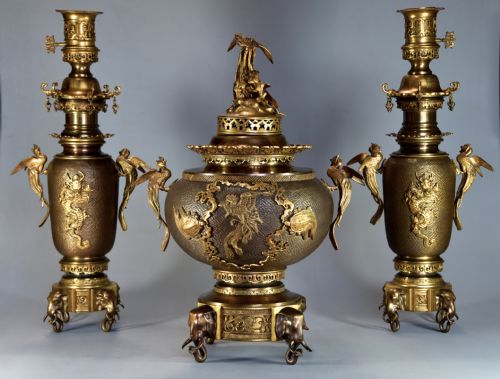
The configurations vary widely across these listings, ranging from French porcelain and gilded metal clock sets to pairs of bronze vases on marble plinths. Many adopt historical design vocabularies such as French Rococo Revival, Louis XVI style, and Japonisme, reflecting the diverse decorative tastes of the nineteenth century.
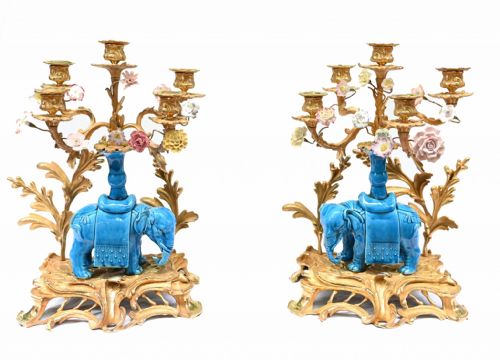
Beyond complete clock sets, the category includes decorative urns, incense burner sets, and elephant candelabras executed in mixed media. These decorative groupings served both a practical timekeeping function and a purely aesthetic role in period interiors.
Materials and construction
The manufacturing process relies heavily on metal casting, utilising ormolu, gilt bronze, brass, and patinated bronze to form the primary structures. Gilt metal and ormolu applications provide a bright, reflective golden surface that catches the ambient light of a room.
Many garnitures incorporate contrasting elements such as marble plinths, porcelain bodies, and enamel details. Artisans combined carved urns, toleware, and porphyry to achieve layered textures and complex polychrome effects within a single set.
Gilt Metal Garniture Retail Price Guide 2026
Typical asking prices for gilt metal garniture among the pieces listed under this phrase on Sellingantiques today, from the lower quarter to the upper quarter. They describe what is for sale here now, not the wider market.
Listings feature nineteenth-century pieces combining gilt bronze, porcelain, marble, and patinated bronze within Louis XVI and Rococo Revival styles.
Distinctions in quality
Quality in these pieces rests upon the crispness of the metal chasing and the depth of the gilding. Finer examples display sharp, well-defined casting in elements like cherubs or foliage, whereas simpler versions show softer details and flatter metallic finishes.
The integration of materials dictates the overall calibre of a set, particularly in how securely bronze or gilt metal mounts fit against porcelain bodies or marble plinths. Superior sets maintain visual harmony across all constituent parts, with consistent patination and balanced proportions.
The Gilt Metal Garniture Glossary
- Garniture
- A set of decorative objects, typically a clock accompanied by matching vases or candelabras, designed to be displayed together on a mantelpiece.
- Ormolu
- Finely ground high-carat gold applied to a bronze base using a mercury amalgamation process, or simply a term for gilt bronze.
- Cassolette
- A decorative vase featuring a reversible lid that can function either as a closed urn or an incense burner.
- Toleware
- Painted or enamelled sheet metal items produced in imitation of Asian lacquerware or popular ceramic designs.
- Bleu Celeste
- A bright turquoise blue enamel or ceramic glaze famously utilised at the Sèvres porcelain factory.
Gilt Metal Garniture: Frequently Asked Questions
How do I style a garniture set?
Place the central clock dead centre on a mantelpiece or sideboard with the flanking urns or candelabras arranged symmetrically on either side.
Keep the surrounding surface clear of clutter so the matched proportions of the complete set remain the visual focal point of the space.
Were these sets purely decorative?
While the flanking pieces served an entirely ornamental purpose, the central clock was fully operational and functioned as the primary timekeeper for the room.
The accompanying vases or candelabras completed the aesthetic balance dictated by nineteenth-century interior design conventions.
What is the difference between ormolu and gilt bronze?
Ormolu specifically denotes bronze objects gilded with a mercury-gold amalgam, producing a distinct warm lustre characteristic of eighteenth and nineteenth-century French metalwork.
Gilt metal is a broader term that can encompass various base metals coated in gold paint, electroplated gold, or foil.
How do I care for gilt metal surfaces?
Dust the metal gently with a soft, dry microfibre cloth to prevent the accumulation of grit in recessed chased details.
Avoid chemical polishes and abrasive cleaners entirely, as these substances will strip away the delicate gold layer or damage underlying patination.