


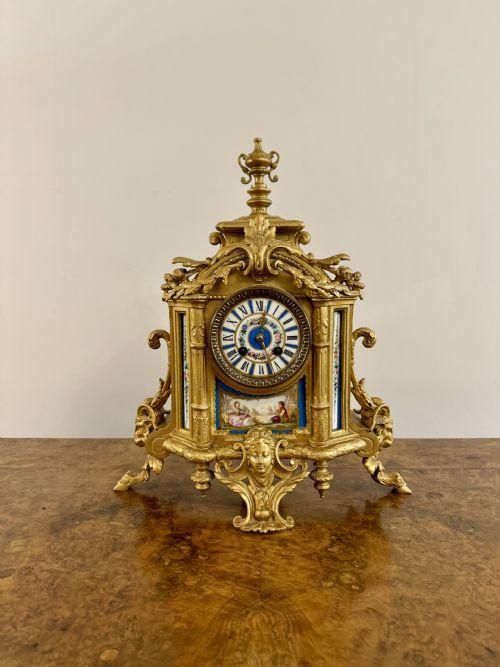


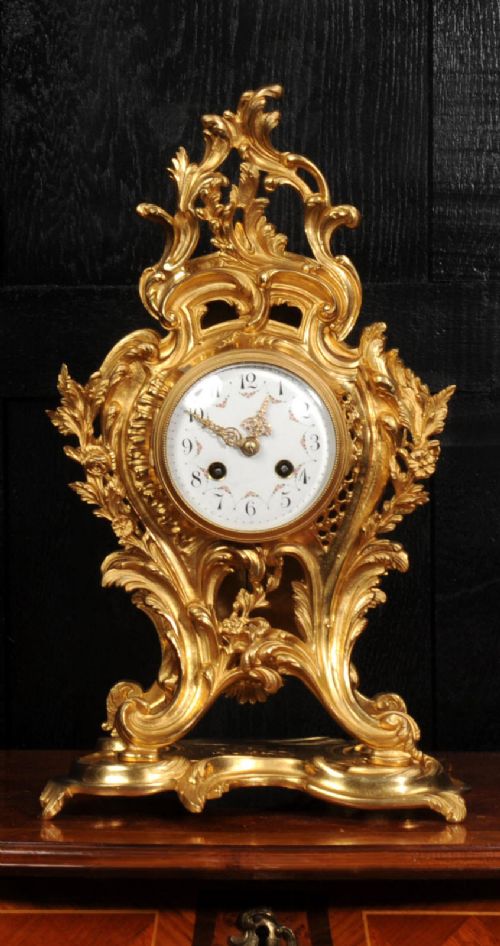


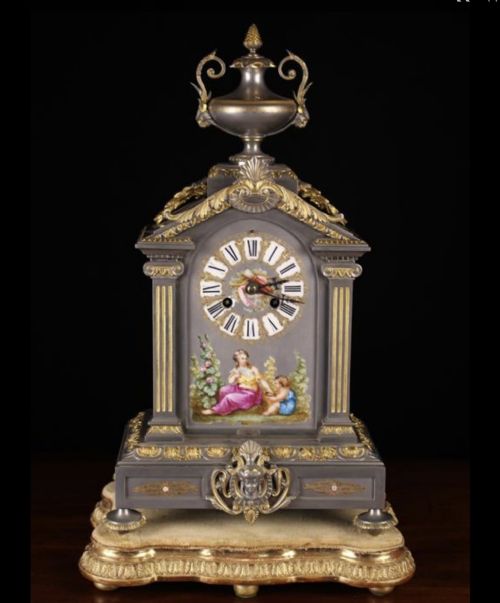

Gilt Metal Desk Clock
A gilt metal desk clock brings metallic sheen and precise mechanics to a workspace, offering both functional timekeeping and decorative presence.

Gilt Metal Desk Clock
A gilt metal desk clock combines metallic finishes with interior clockwork, spanning various forms from miniature carriage designs to larger mantel and boudoir pieces. These items serve as functional timepieces and decorative objects for tabletops, desks, and shelves.
The selections on this page draw from several periods, most notably the Victorian era and the late nineteenth century alongside Regency, Edwardian, and mid-century modern examples. French workshops feature prominently alongside British makers.
Buyers encounter diverse styles ranging from ornate Rococo revival and Neoclassical models to Art Deco and industrial automaton designs. Brass, gilt bronze, ormolu, and gilt metal form the primary housings for these timekeepers.
How they were made
Craftsmen built these clocks using metal foundations of brass, bronze, or gilt metal, often applying mercury gilding or ormolu finishes to achieve a rich golden surface. Specialised foundries cast intricate decorative motifs like putti, cherubs, and architectural flourishes directly into the metal cases.
Internal mechanics relied on precision engineering, incorporating fusee movements, eight-day mechanisms, or striking and repeating complications. Makers integrated delicate materials such as champlevé enamel dials, porcelain panels, and protective glass panels to complete the functional housing.
Gilt Metal Desk Clock Retail Price Guide 2026
Typical asking prices for gilt metal desk clock among the pieces listed under this phrase on Sellingantiques today, from the lower quarter to the upper quarter. They describe what is for sale here now, not the wider market.
Listings feature gilt metal desk clocks across Victorian, Regency, and mid-century periods, utilising brass, bronze, porcelain, and glass.
What varies in quality
The fidelity of the casting and the depth of the gilding separate standard production from exceptional work, as finer pieces display crisp, hand-chased details on the bronze or brass surfaces. The reputation of the maker and the complexity of the movement, such as fusee or repeating mechanisms, further elevate an example.
Integration of secondary materials like hand-painted porcelain panels or intricate champlevé enamel work indicates higher craftsmanship. The preservation of original components and the precision of the mechanical restoration dictate the standing of a piece within its period.
Leon Message·Jollet et Cie·John Barwise of London·Andre Guilmet·Jaeger LeCoultre·P.H Mourey
The Gilt Metal Desk Clock Glossary
- Ormolu
- Finely ground high-carat gold applied to a bronze object using a mercury amalgamation process. This technique creates a durable, warm metallic lustre characteristic of fine French horology.
- Fusee
- A conical pulley used in mechanical clocks to maintain even tension on the driving chain as the mainspring unwinds. This mechanism improves timekeeping accuracy throughout the power reserve.
- Champlevé enamel
- A technique where troughs are gouged into a metal surface and filled with vitreous enamel before firing. The piece is then polished flat to create a smooth, patterned design.
- Carriage clock
- A portable spring-driven timepiece originally designed for travelling officers in the nineteenth century. These clocks typically feature glass panels on all sides to showcase the movement.
- Automaton
- A mechanical device that mimics human or animal actions, integrated into the clock design for visual movement. These pieces animate figures or machinery alongside standard timekeeping.
Gilt Metal Desk Clock: Frequently Asked Questions
How do I wind a vintage mechanical desk clock?
Most mechanical clocks require a key inserted into the dial or backplate to tension the mainspring gently. Turn the key slowly until you feel resistance, taking care not to overwind the mechanism.
Ensure you do not force the spring past its limit to prevent damage to the gear train. Regular winding maintains steady tension for accurate timekeeping.
Where should I place a gilt metal desk clock?
Position your clock on a stable, level surface away from direct sunlight, moisture, and extreme temperature fluctuations. Desks, mantels, and bookshelves provide suitable display areas where the movement remains undisturbed.
Keep the clock away from exterior doors or heavy vibrations that could disrupt the pendulum or balance wheel. A stable environment preserves both the delicate gilt finish and the internal mechanics.
How do I identify a French Rococo revival clock?
French Rococo revival pieces feature asymmetric scrollwork, naturalistic shell motifs, and elaborate cast ornamentation including cherubs or floral garlands. The gilt bronze or ormolu surfaces often exhibit high relief casting with organic, flowing lines.
These clocks frequently date from the nineteenth century and reflect earlier eighteenth-century French design aesthetics. Examining the dial signatures and movement construction helps confirm the French origin.
What is the difference between a fusee movement and a standard spring movement?
A fusee movement uses a conical drum and a chain to regulate the pull of the mainspring, ensuring constant power as the spring runs down. Standard spring movements attach the mainspring directly to the gear train, resulting in a slight decrease in force over time.
Fusee movements generally indicate higher grade British horology, particularly in nineteenth-century pieces. They require careful handling during winding and maintenance due to the exposed chain mechanism.