

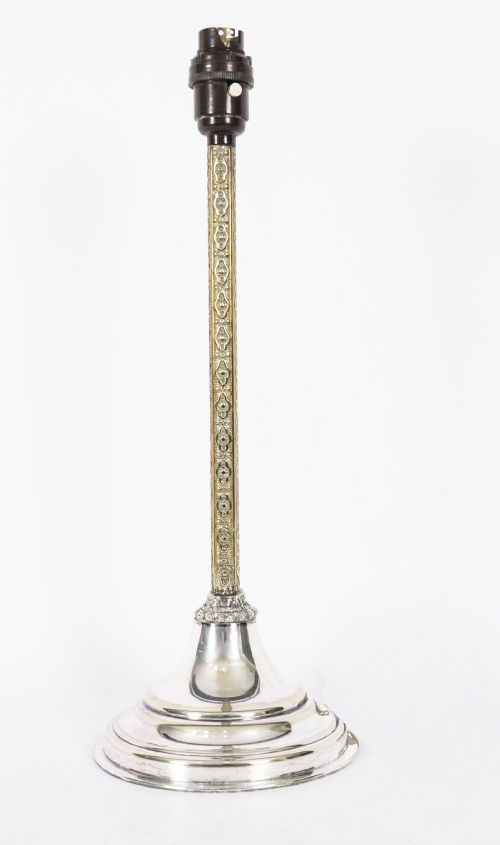
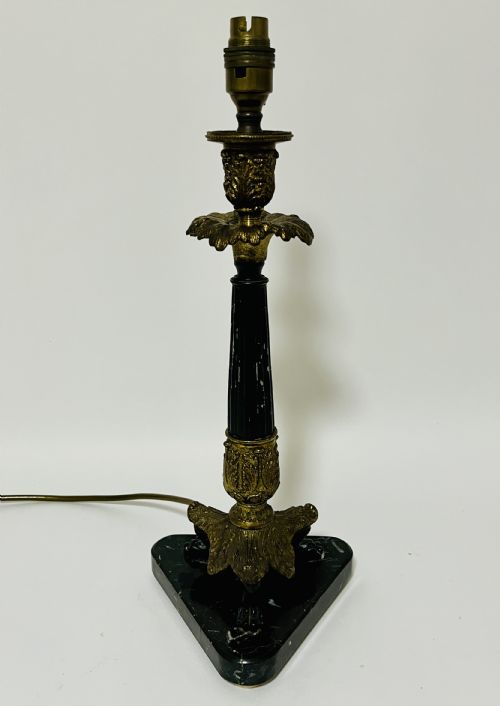


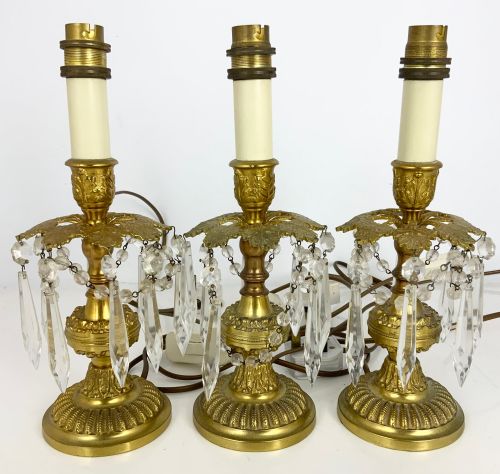


Gilt Metal Candlestick Lamp
These gilt metal candlestick lamp pieces are converted lighting fittings and table lights, bringing period illumination and metallic warmth into a room.
Gilt Metal Candlestick Lamp
The objects stem from distinct periods including Victorian examples, nineteenth century pieces, and twentieth century adaptations from 1920 and 1930. Many items began life as purely functional lighting devices before receiving conversion work to hold electrical fittings. Candelabras with lustres and bouillotte lamps form a significant portion of the available decorative options on this page.
Materials and construction methods
Makers utilised cast bronze, gilt bronze, gilt brass, and silver plate to build the foundational structures of these lighting pieces. Many examples incorporate heavy metal casting techniques, often combining ormolu highlights with marble components or fabric elements.
Conversion processes typically involved altering historic altar candelabra, standard lamps, and table lights to accommodate modern wiring while preserving the original metalwork. The resulting items unite nineteenth and early twentieth century manufacturing standards with subsequent electrical adaptations.
Gilt Metal Candlestick Lamp Retail Price Guide 2026
Typical asking prices for gilt metal candlestick lamp among the pieces listed under this phrase on Sellingantiques today, from the lower quarter to the upper quarter. They describe what is for sale here now, not the wider market.
Listings span the nineteenth century to 1930, featuring materials like Bakelite, bronze, fabric, and silver plate across table and standard lamp formats.
Factors determining the quality of pieces
Quality separates objects through the precision of the metal casting and the crispness of the chased or parcel gilt details. Superior examples exhibit substantial weight in bronze or brass, retaining intricate decorative motifs associated with French Empire and Italianate Baroque styles without losing definition.
The integration of the electrical conversion relative to the original antique base influences the overall cohesion of the piece. Well executed adaptations respect the integrity of the historic metalwork, whereas lesser examples compromise the balance and proportion of the original candlestick form.
Mappin & Webb
The Gilt Metal Candlestick Lamp Glossary
- Ormolu
- Gilded bronze produced by applying a finely ground high-carat gold-mercury amalgam to a bronze object. This decorative surface treatment appears frequently on French Empire pieces.
- Bouillotte lamp
- An adjustable metal table lamp featuring a central shaft, a saucer-like base to catch wax, and a Toleware or metal shade. These originated for use during the card game of bouillotte.
- Lustre
- A glass pendant or prism hung from lighting fixtures to refract light. They decorate nineteenth-century table lamps and candelabra.
- Parcel gilt
- A term describing an object that is only partially gilded, leaving portions of the underlying bronze, silver plate, or brass exposed for contrast.
Gilt Metal Candlestick Lamp: Frequently Asked Questions
What is a gilt metal candlestick lamp?
A gilt metal candlestick lamp is a lighting fixture formed by converting historic candlesticks, candelabra, or bouillotte lights for modern electrical use. These pieces often originate from nineteenth century or early twentieth century European workshops.
They combine metallic structures in brass, bronze, or silver plate with electrical fittings to serve as functional table or standard lamps.
How do you date these lamps?
Dating relies upon stylistic markers from periods such as the nineteenth century, Victorian era, or the 1920s and 1930s. Design idioms like French Empire, Rococo Revival, and Italianate Baroque provide clear chronological indicators.
Material composition and manufacturing techniques, such as heavy bronze casting or parcel gilt finishes, further assist in placing the object within its correct historical timeframe.
Were these lamps originally electric?
Most of these pieces started as non-electric lighting devices, including altar candelabra, standard lamps, and traditional table candlesticks. They were subsequently converted to hold electrical wiring and bulbs.
This adaptation process allows historic metalwork to function as modern table lighting while retaining its original decorative aesthetic.
Where do these lamp styles originate?
The available pieces show strong continental European influences, particularly French design movements like French Empire, Neoclassical, and Chateau styles. Italianate Baroque forms also appear among the listed standard lamps.
Maker attribution sometimes points to established British silversmiths such as Mappin & Webb working with parcel gilt silver plate.