

Gilt Library Table
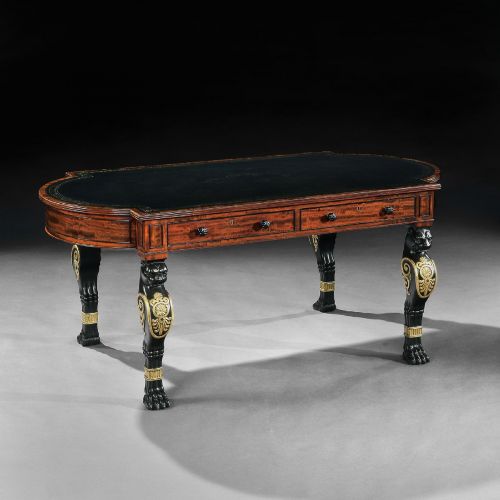
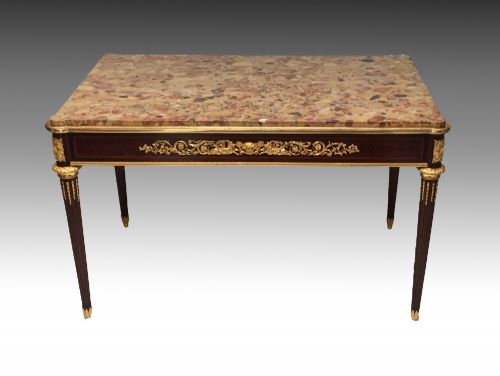
A gilt library table brings together fine cabinet timbers, tooled leather, and cast ormolu mounts to anchor a grand room.
Gilt Library Table
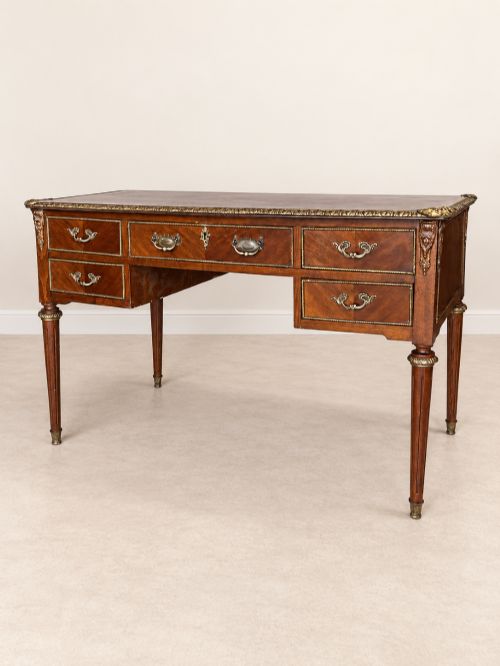
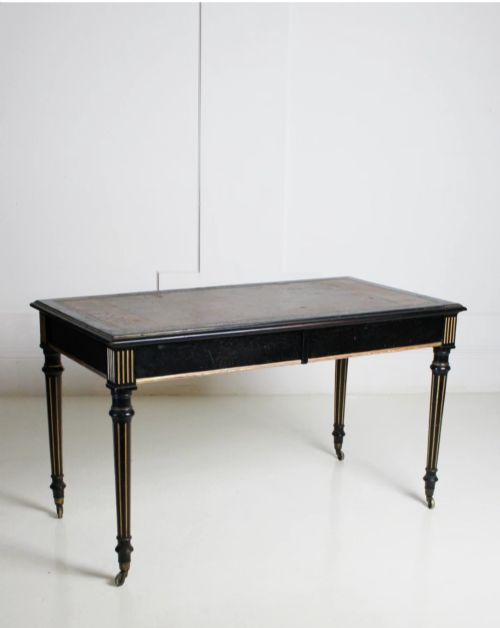
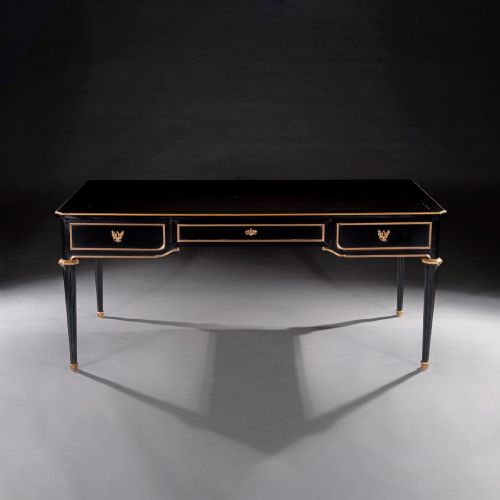
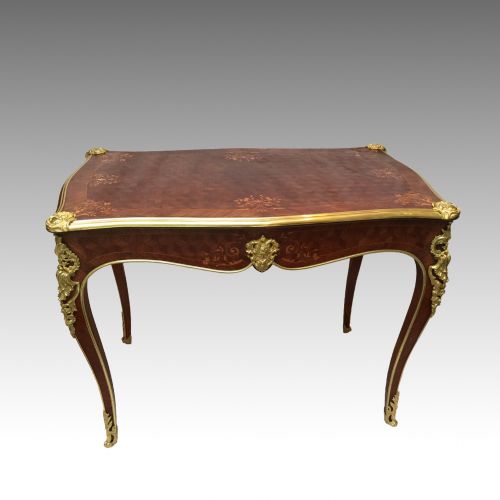
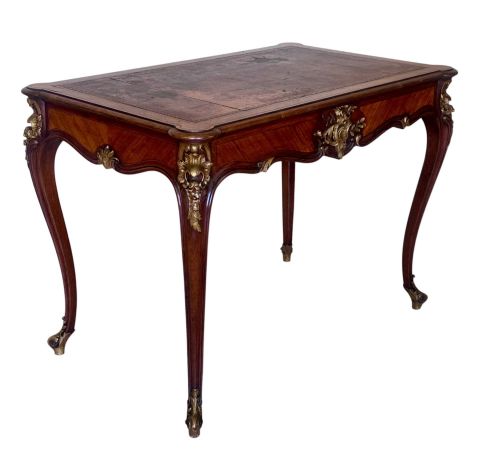
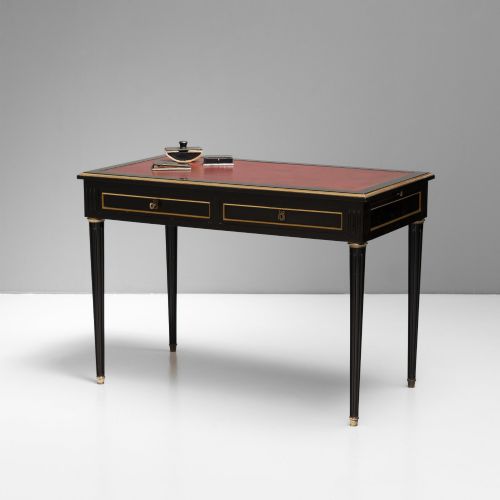
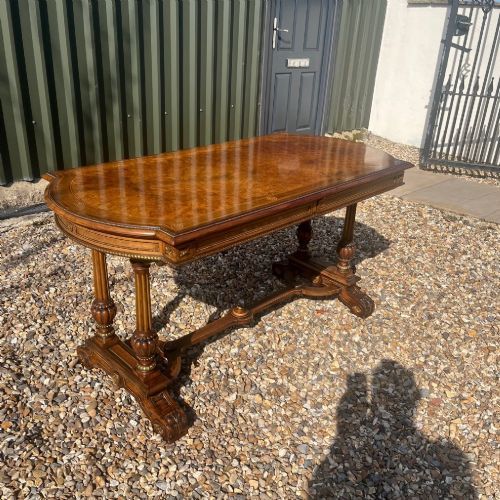
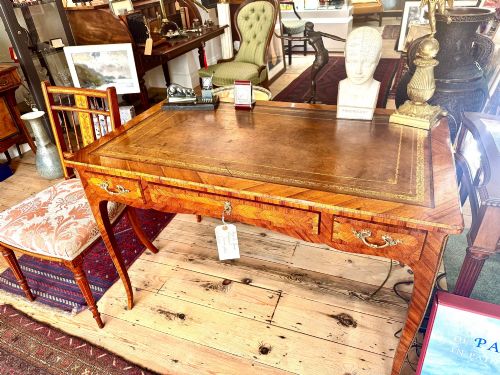
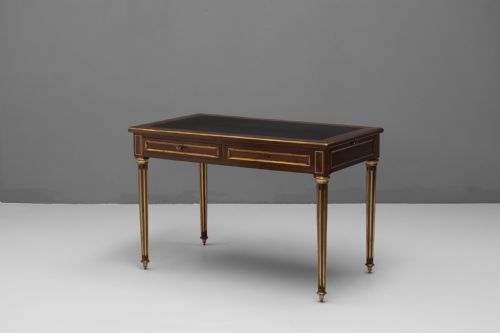
A gilt library table is a substantial freestanding writing or centre table designed for formal rooms, often taking the form of a bureau plat or partner's desk. You will most frequently encounter nineteenth-century French and Victorian interpretations on this page, drawing heavily on Louis XV and Louis XVI revival styles.
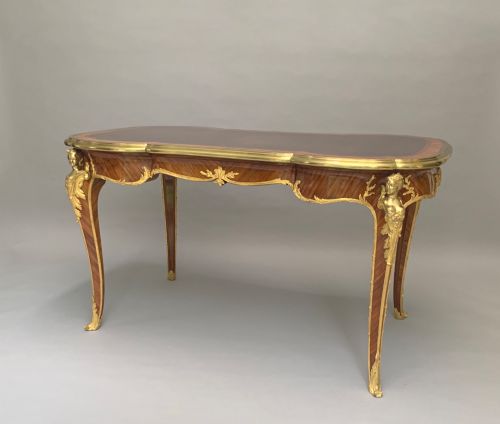
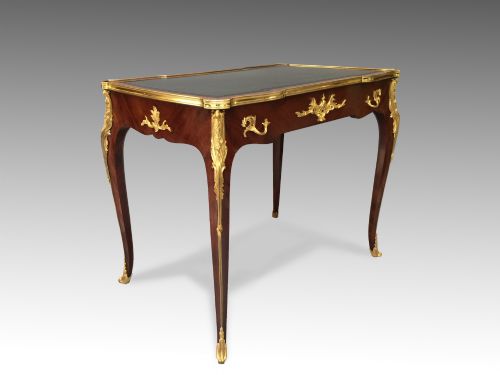
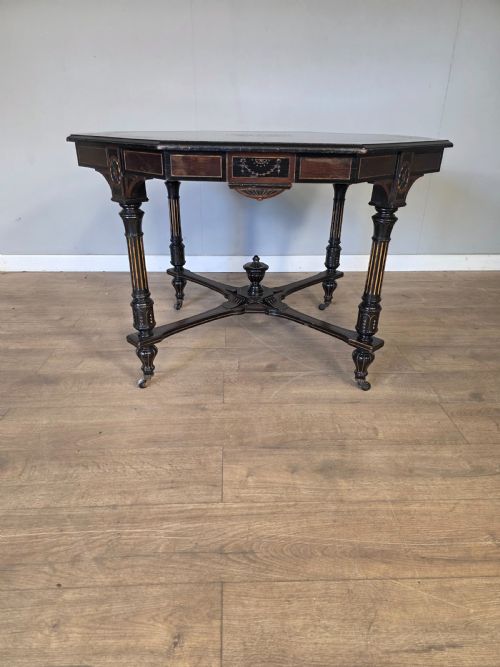
The materials span rich exotic timbers like kingwood, rosewood, and mahogany, contrasted with ebonised wood and highlighted by gilt bronze or ormolu mounts. Many examples incorporate fitted leather writing surfaces, while related forms include centre tables, sofa tables, and desk lamps.
These tables served as the functional and aesthetic centrepieces of nineteenth-century studies and libraries, built to be viewed from all four sides. The survival of pieces bearing maker signatures indicates their elite status among historical domestic furnishings.
What varies in quality
The distinction between standard production and the highest grade lies in the crispness of the ormolu chasing and the depth of the timber veneers. Master makers employed heavier, more finely detailed gilt bronze mounts that integrate seamlessly with the carcase structure.
Interior construction details, such as the choice of secondary timbers and the precision of the dovetailing in the drawers, separate workshop pieces from signed masterworks. The quality of the original leather tooling and the preservation of the hand-applied polish further define the tier of the piece.
The listings span the eighteenth, nineteenth, and twentieth centuries, dominated by Victorian and nineteenth-century French revival designs.
Francois Linke·Edwards and Roberts·CH Jeanselme and Co·Maison Millet·Holland and Son
The Gilt Library Table Glossary
- Ormolu
- Gilded bronze used for decorative mounts and hardware on high-end furniture. The technique involves applying a mercury and gold amalgam to cast bronze before heating.
- Bureau Plat
- A freestanding writing table fitted with drawers across the frieze. These pieces are finished on all sides to allow placement in the centre of a room.
- Marquetry
- The art of applying pieces of veneer to a structure to form decorative patterns and pictures. Makers used various tinted woods to achieve tonal shading.
- Parquetry
- Geometric mosaic woodwork used for repeating patterns on tabletops. This technique showcases the natural grain and colour variations of exotic timbers.
- Ebonised
- Wood treated to imitate the dark, dense appearance of ebony. It is commonly found on nineteenth-century revival library furniture.
Gilt Library Table: Frequently Asked Questions
Where should a library table be placed?
These tables are designed to stand away from walls as freestanding centrepieces in a room. Their finished backs and ornamented sides allow them to sit comfortably in the middle of a study or library.
Ensure there is adequate clearance around the piece for chairs and movement, as nineteenth-century library tables command substantial floor space.
How do I care for the leather top?
The leather writing surface benefits from occasional dusting with a dry, soft cloth and minimal exposure to direct sunlight. Avoid harsh chemical cleaners that can strip the gold leaf tooling.
Specialist leather balms can be applied sparingly to maintain suppleness, provided the finish is compatible with nineteenth-century vegetable-tanned surfaces.
What is the difference between a bureau plat and a library table?
A bureau plat is a specific French form of writing desk featuring a rectangular top and frieze drawers. Library table is a broader term that encompasses English partners desks and heavy centre tables.
Both types share a finished reverse side and substantial proportions suited for formal administrative work.