
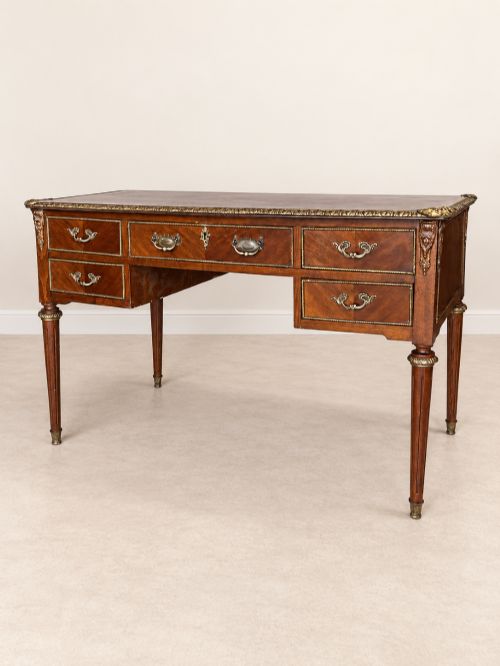
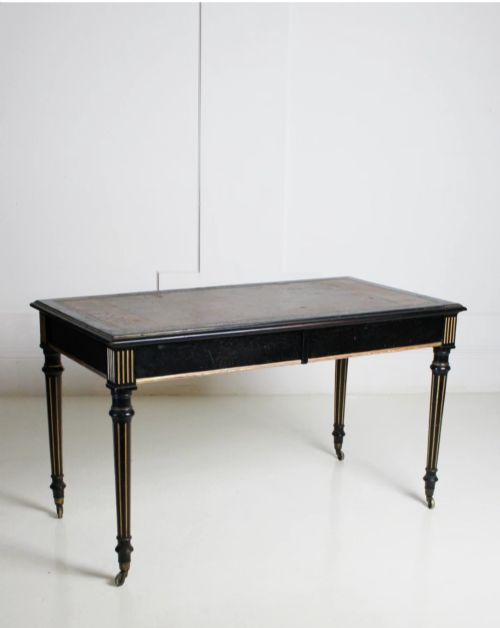
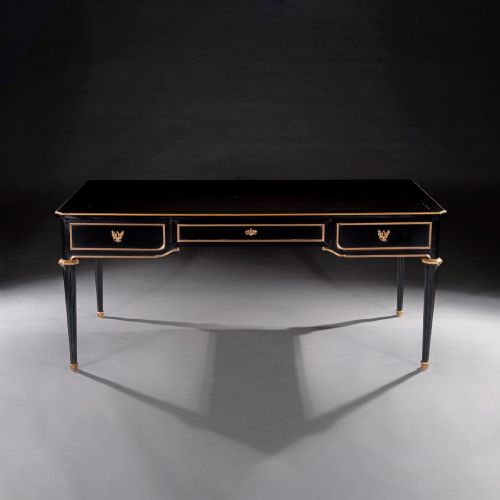
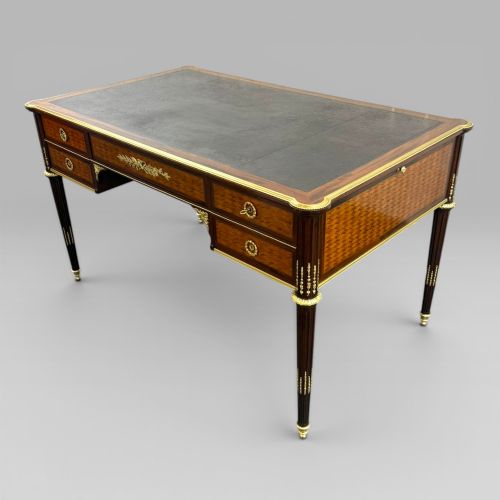



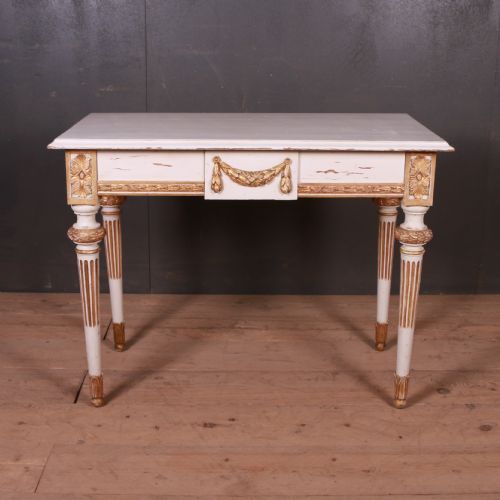
Gilt Fluted Leg Desk
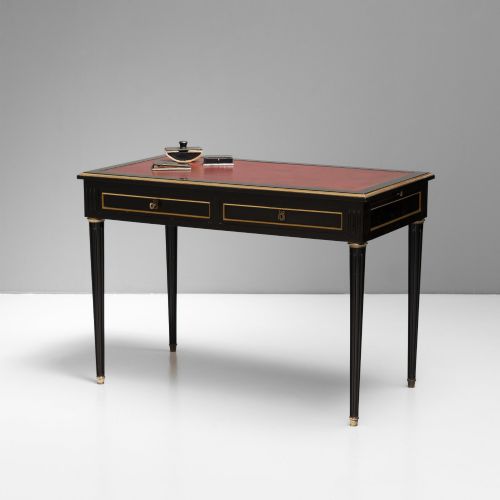
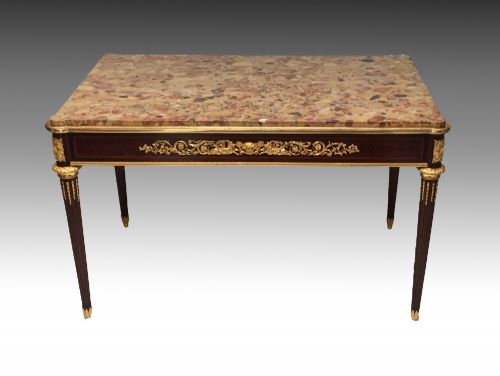
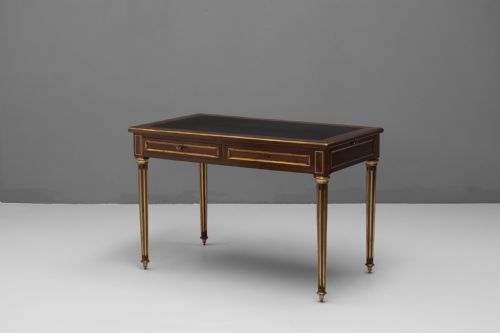
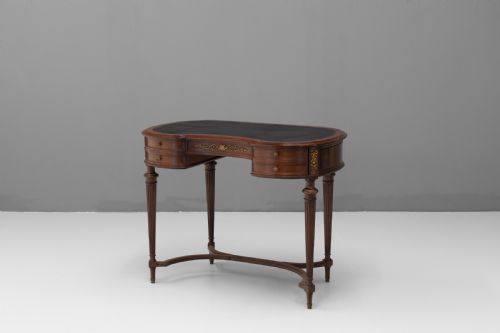
A gilt fluted leg desk offers classical French elegance, combining refined wood and gilded mounts to anchor a sophisticated workspace.
Gilt Fluted Leg Desk
A gilt fluted leg desk brings classical proportion and refined detail to a workspace. These pieces draw heavily on Louis XVI design principles, featuring straight fluted supports and restrained neoclassical lines.
The selection here encompasses writing tables and bureau plat forms from the nineteenth and early twentieth centuries. Many examples incorporate leather writing surfaces alongside brass, ormolu, or gilt bronze mounts.
How they were made
Cabinetmakers utilised dense timbers such as mahogany and ebonised wood as the primary structural foundations. Parquetry and inlay techniques frequently decorated the surfaces, adding intricate geometric patterns.
Gilding and cast bronze or ormolu mounts were applied to highlight the structural lines, particularly around the fluted legs and apron. Leather inserts were traditionally fitted into the top surface to provide a durable writing area.
Some chairs refuse to sit straight without a sympathetic book beneath one leg.
What varies in quality
The refinement of the cast bronze or ormolu mounts distinguishes the finest examples from standard production. Crisp chasing and deep, consistent gilding indicate superior workshop execution.
Timber selection and the precision of the parquetry or inlay work reveal the maker's skill. Desks attributed to notable makers demonstrate exceptional control over proportion and surface detail.
François Linke·Henry Dasson
The Gilt Fluted Leg Desk Glossary
- Ormolu
- Gilt bronze mounts applied to furniture for decorative contrast. The technique involves fusing a mercury and gold amalgam onto bronze.
- Parquetry
- Geometric wood inlay work arranged in patterns such as squares or cubes. This technique creates textural and tonal variation on flat surfaces.
- Fauteuil
- An open-armed upholstered armchair with exposed wooden framing. These chairs frequently accompany desks of the same period.
Gilt Fluted Leg Desk: Frequently Asked Questions
What is a bureau plat?
A bureau plat is a traditional freestanding writing table featuring a leather inset top and frieze drawers. These tables were designed to stand away from the wall in the centre of a room.
They combine a large writing surface with decorative mounts, serving both practical workspace needs and formal reception room requirements.
How do I identify Louis XVI style?
Louis XVI style furniture is characterised by straight structural lines, symmetry, and classical restraint. This contrasts with the curving forms of the preceding Rococo period.
Key indicators include fluted column legs, square or rectangular frames, and neoclassical bronze mounts such as acanthus leaves and ribbons.
Where should I place a gilt desk?
These desks are designed to be viewed from all sides, making them ideal for placement in the centre of a study or library. Their finished backs allow them to float within a room rather than hugging a wall.
Pairing them with a matching armchair creates a cohesive workspace with classical French proportions.
What materials are typical for these desks?
Common materials include mahogany, ebonised wood, and satine, frequently accented with brass or ormolu hardware. Writing surfaces are traditionally lined with leather.
These durable materials were selected to withstand daily writing use while maintaining an elegant appearance.