
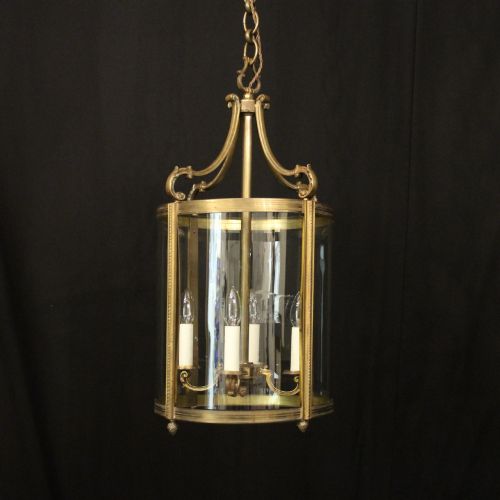
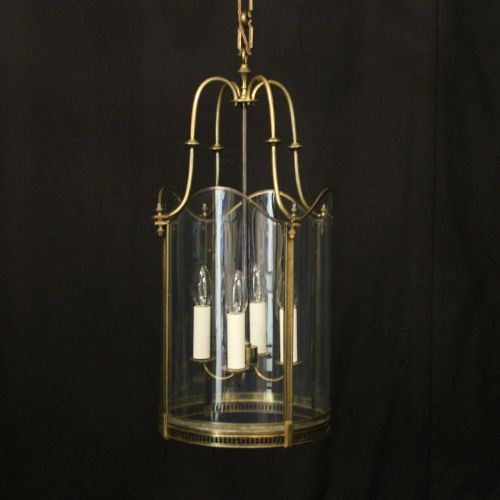
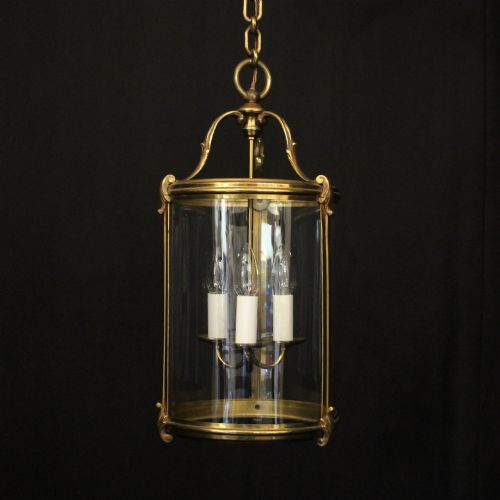
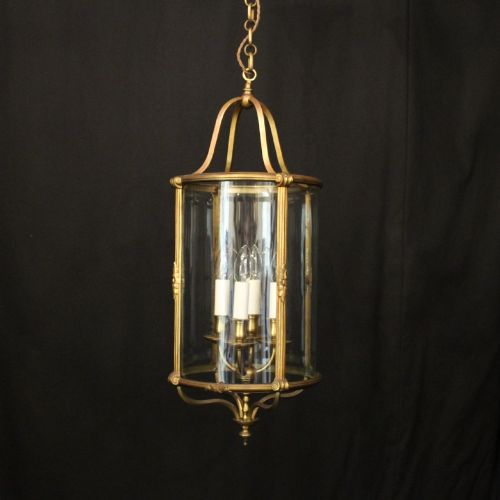
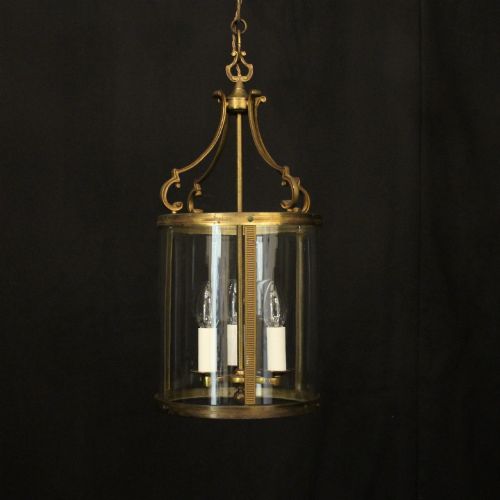
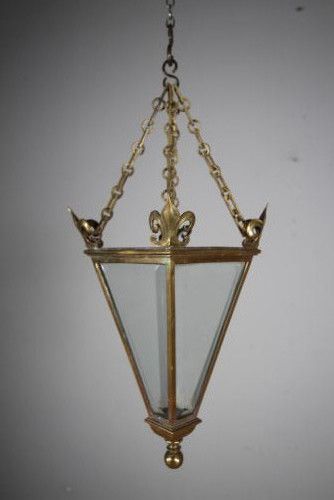
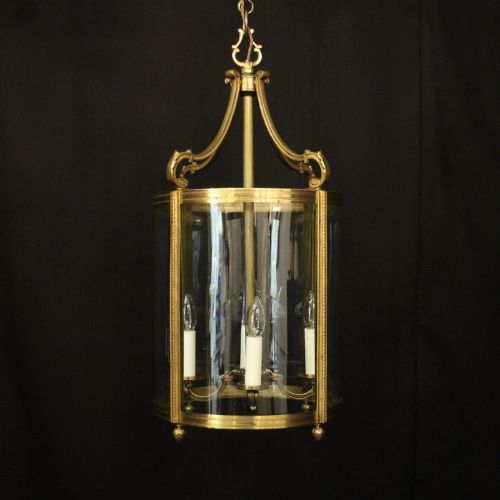

Gilt Glass Lantern
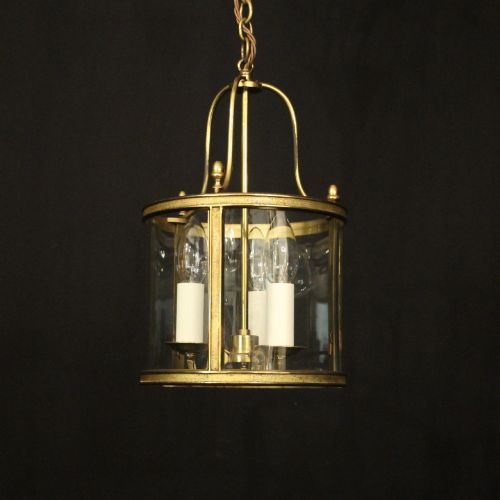
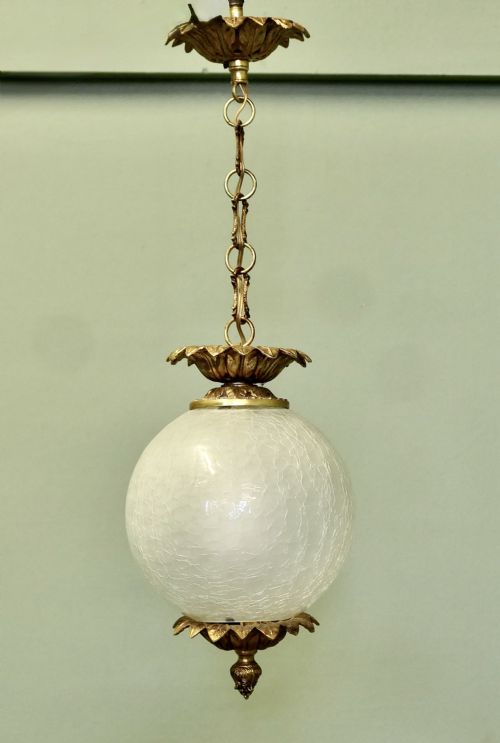
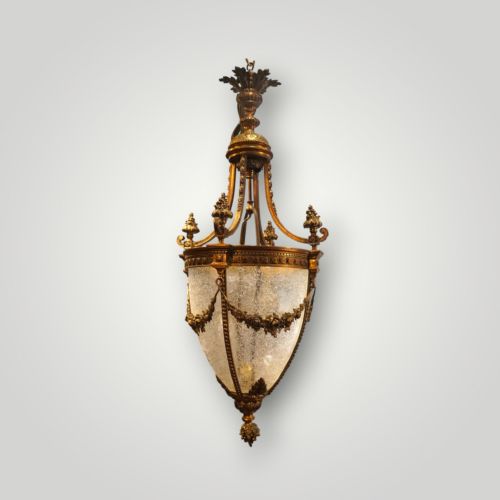
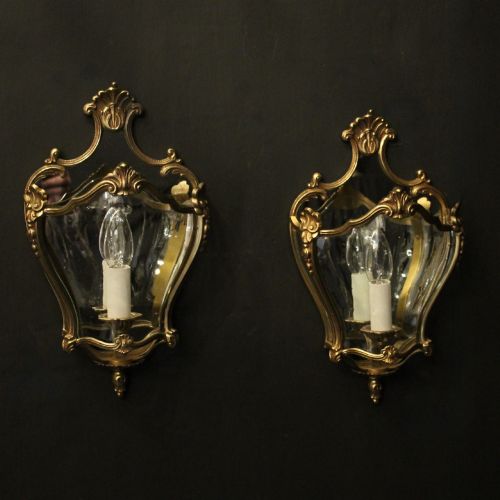
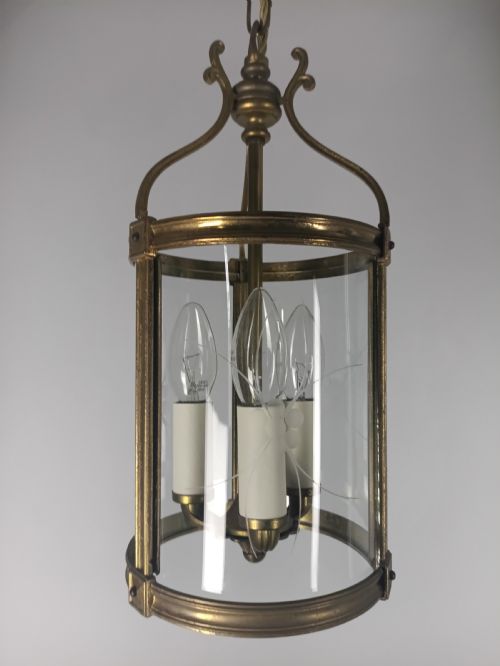
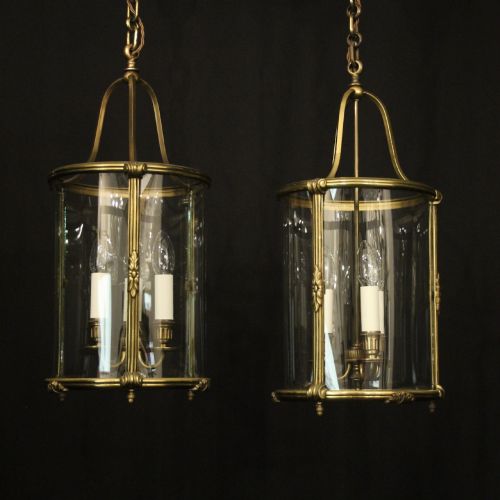
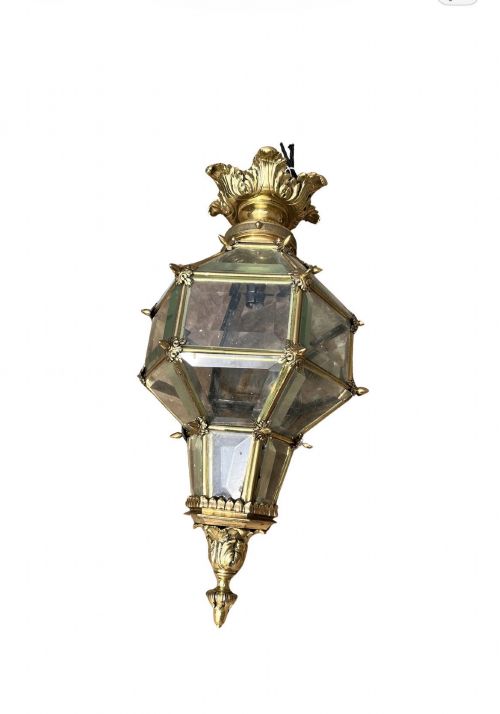
These gilt glass lantern pieces provide grand illumination for hallways and reception rooms, combining polished metalwork with clear glass panels.
Gilt Glass Lantern
A gilt glass lantern is a hanging or wall-mounted lighting fixture primarily designed for entrance halls, stairwells, and principal reception rooms. The form bridges the gap between functional illumination and decorative architectural ornament, utilising transparent enclosures to maximise light output from internal candleholders or electric bulbs.
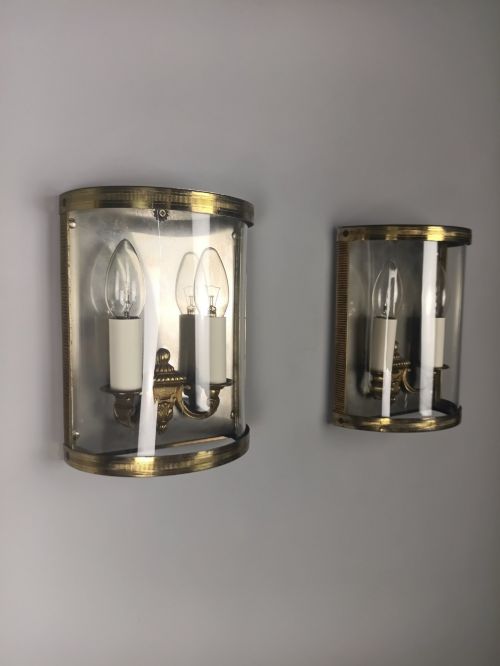
Buyers browsing this selection meet a high concentration of French origin pieces, predominantly dating from the nineteenth century through the interwar decades of the nineteen-thirties. These pieces commonly manifest as hall lanterns, ceiling lights, and wall sconces drawing upon Louis XVI and neoclassical design vocabularies.
The inventory ranges from single-light chambers to substantial multi-light configurations featuring convex or bevelled glass panes. Examples span various scales, from compact wall-mounted half lanterns intended for narrower passageways to large hanging pendants designed for high-ceilinged vestibules.
Materials and construction methods
Makers constructed the structural frames of these lanterns using cast bronze, brass, or gilt metal, often applying a layer of gold leaf or gilt finish to the metal surface. This metallic framework supports glass panels that are either flat, bevelled, curved into a convex profile, or occasionally etched.
Internal mounting plates and candle branches securely hold the electrical fittings or historical light sources within the glass enclosure. Artisans frequently incorporated decorative cast mounts, foliage motifs, and pierced galleries into the bronze or brass framework to frame the transparent glass windows.
The listings incorporate several nineteenth-century pieces alongside early twentieth-century examples up to the nineteen-thirties, using bronze, brass, and cut or convex glass.
Distinctions in quality
The standard of a gilt glass lantern rests largely upon the crispness of the bronze or brass casting and the depth of the gilding applied to the metal. Superior examples display sharply rendered neoclassical ornament, hand-finished chasing, and substantial metal weight rather than thin, pressed sheet construction.
Glass selection further differentiates the tiers of manufacture, with bevelled, convex, or intricately cut glass panes requiring significantly greater skill to produce than plain flat glass. The integration of structural mounts and the robustness of the hanging suspension complete the distinction between standard production and masterwork pieces.
Perry & Co
The Gilt Glass Lantern Glossary
- Convex glass
- Curved glass panels that bulge outward, designed to diffuse light more widely and create softer reflections across the room.
- Gilt bronze
- Bronze metal treated with a thin layer of gold, providing a durable and luminous finish that resists tarnishing over decades.
- Hall lantern
- A ceiling-hung or wall-mounted lighting fixture specifically scaled and shaped for narrow entrance spaces and corridors.
- Bevelled glass
- Glass panes with angled edges cut around the perimeter, catching light to produce prismatic refractive effects.
- Louis XVI style
- A classical revival aesthetic characterised by symmetry, straight architectural lines, ribbons, urns, and restrained classical foliage.
Gilt Glass Lantern: Frequently Asked Questions
Where should I hang a gilt glass lantern?
These fixtures suit entrance hallways, high-ceilinged vestibules, and stairwells where their downward illumination and decorative metalwork can be viewed from multiple angles. Their scale allows them to anchor large transitional spaces without overwhelming surrounding architectural details.
Ensure adequate ceiling height when selecting hanging pendant versions, as many traditional designs demand clearance to hang properly within a domestic setting.
Are these lanterns wired for modern electricity?
Many surviving examples have been adapted over time to accept standard electrical wiring, though specific rewiring status varies across individual pieces. Buyers should inspect the internal fittings to confirm whether professional electrical adaptation is necessary.
Local lighting specialists can typically update the internal wiring and bulb sockets while preserving the historical bronze framework and glass panels.
How do I distinguish nineteenth-century pieces from later ones?
Nineteenth-century examples frequently exhibit heavier cast bronze frames, hand-chased surface details, and occasionally thicker bevelled or cut glass panes. Victorian and nineteenth-century pieces often reflect strict adherence to revival styles such as Louis XVI or Gothic.
Twentieth-century iterations from the nineteen-twenties and nineteen-thirties often incorporate cleaner lines, lighter brass construction, and occasionally Art Deco geometric influences.
What maintenance do gilt surfaces require?
Gilt bronze and brass surfaces require gentle dusting with a soft, dry cloth to prevent the accumulation of grime on the metal and glass. Avoid abrasive cleaners or chemical polishes, as these substances can strip away the historical gilt layer.
Glass panels can be cleaned with a mild glass cleaner applied to a cloth rather than sprayed directly onto the fixture, protecting the surrounding metalwork.