




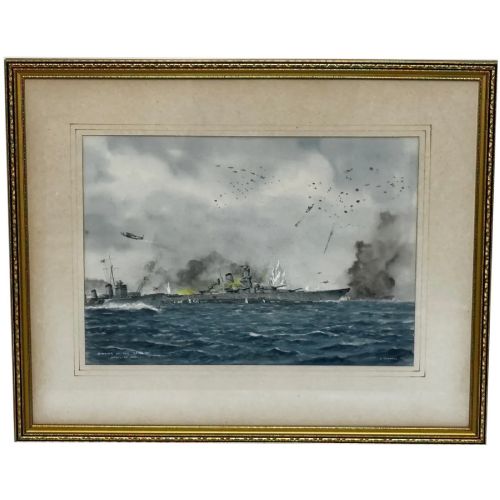

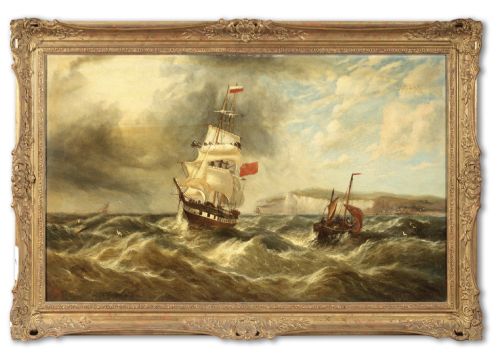
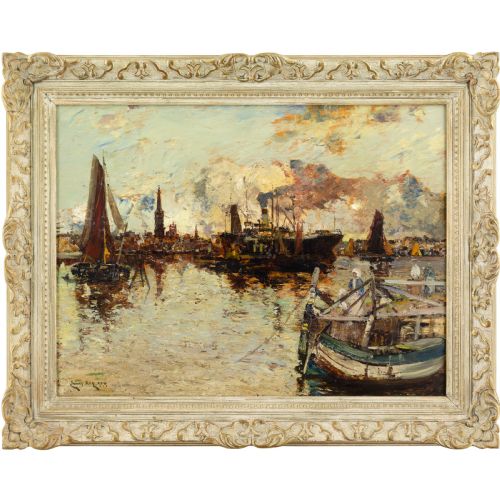

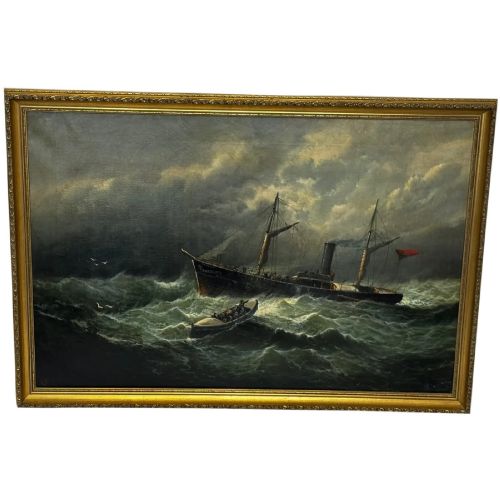
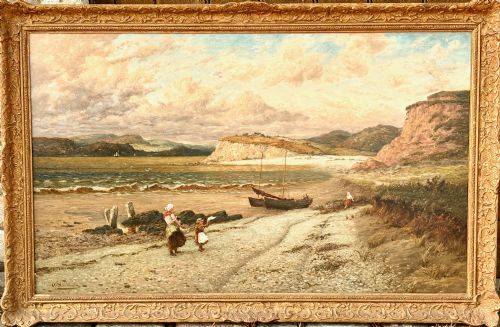
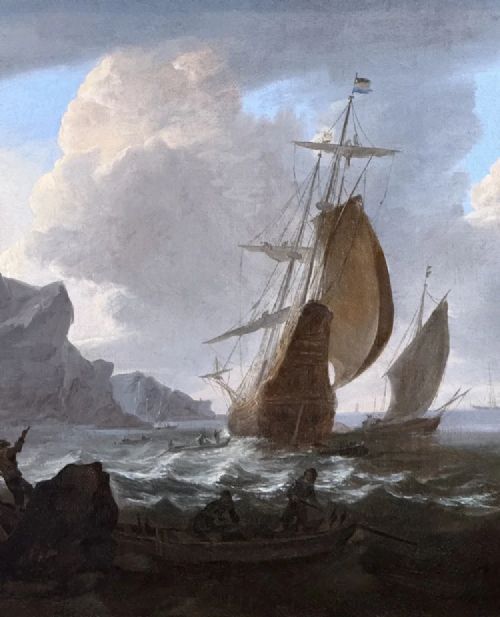
Gilt Framed Seascape Artwork
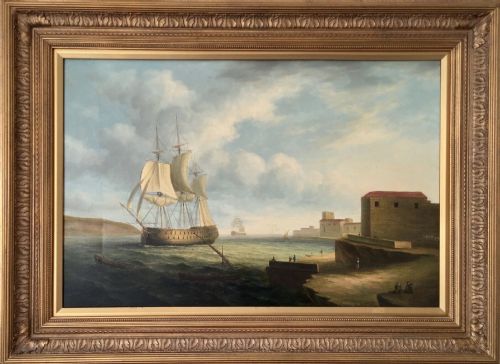
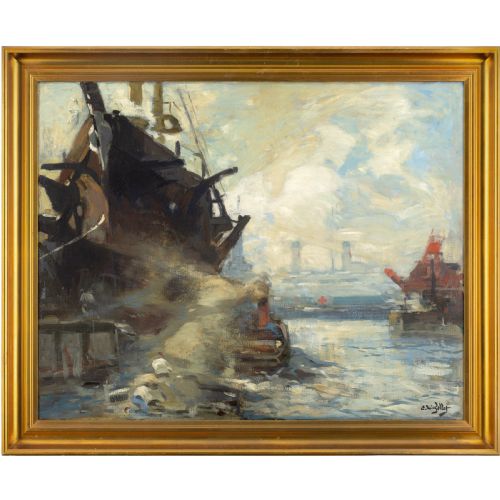
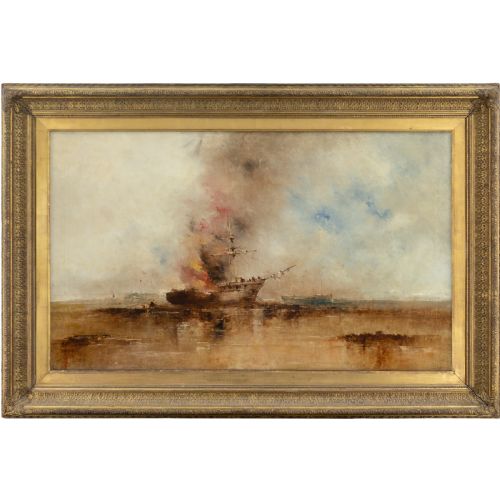
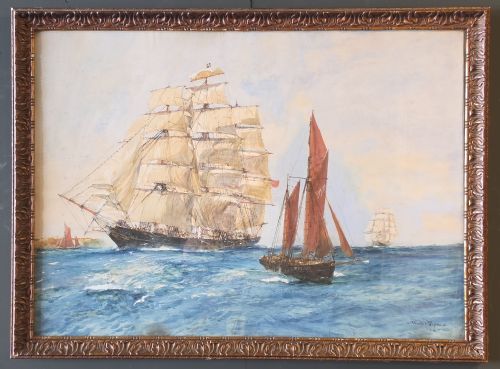
These gilt framed seascape artwork pieces capture the drama of the open water and historic harbours through oil and watercolour.
Gilt Framed Seascape Artwork
When you search for gilt framed seascape artwork, you encounter maritime oil paintings and watercolours depicting ships, coastal inlets, and open waters. The selection spans the nineteenth century through to the mid twentieth century, encompassing Victorian maritime scenes alongside later British and continental works.
Most examples present coastal views, harbours, or vessels navigating rough seas, housed in period wood frames finished in gilt or giltwood. You will find works ranging from intimate en plein air panels of Cornwall to large canvases depicting naval battles and merchant shipping.
How they were made
Artists painted primarily with oil paint on canvas, board, or panel, alongside watercolours executed on paper. Canvas supports frequently bear the marks of nineteenth century and twentieth century studio preparation, sometimes mounted within oval or rectangular formats.
The frames utilise wood bases finished with gilt or giltwood layers, matching the decorative standards of their respective periods. These enclosures protect the pigment layers while providing the characteristic metallic border that frames the maritime subject.
Listings feature works from the 17th, 19th, and 20th centuries, executed in oil and watercolour on canvas, paper, and wood.
What varies in quality
Quality rests in the handling of light, atmosphere, and maritime movement by the artist, distinguishing skilled observation from mechanical reproduction. Works demonstrating precise command of sea spray, rigging detail, and atmospheric haze command greater artistic interest.
The construction and original finish of the gilt frame also influence the overall character of the piece. Hand carved or moulded wooden frames retaining their original gilding contribute significantly to the integrity of the object.
James Hardy·Eugène-Louis Gillot·William McAlpine·Charles Edward Dixon·John Rose Miles·James Kay RSW·William Broome·Francis Moltino·Bernard Benedict Hemy·Thomas Creswick·Willem Bos·John Wilson Carmichael·John Moore of Ipswich·Thomas Hodgson Liddell·William Henry Williamson
The Gilt Framed Seascape Artwork Glossary
- Giltwood
- Wood that has been treated and coated with a thin layer of gold leaf or metallic powder. This finish is characteristic of the decorative frames housing many nineteenth century paintings.
- En plein air
- The practice of painting outdoors to capture direct natural light and atmospheric conditions. This technique appears in coastal Cornwall and harbour scenes from the period.
- Marine art
- Artistic representation of the sea, ships, coastal views, and naval engagements. It encompasses both calm harbour watercolours and dramatic depictions of vessels in gales.
- Panel
- A rigid support used for painting, typically made of wood rather than stretched fabric. Several nineteenth century maritime works utilise wooden panels for stability.
Gilt Framed Seascape Artwork: Frequently Asked Questions
What periods do these seascapes cover?
The selection spans from the seventeenth century through the nineteenth century, Edwardian era, and into the mid twentieth century.
Most pieces originate from the Victorian period, reflecting active maritime trade and coastal exploration.
Are these artworks painted on canvas?
Many works utilise oil paint on stretched canvas or canvas board, whilst others are executed on wooden panels or paper.
Watercolour examples on paper also appear alongside traditional oil paintings.
How should I hang a gilt framed painting?
Ensure your wall fixings match the weight of the wooden frame and canvas, using appropriate picture hooks or professional hanging wire.
Keep the artwork away from direct sunlight and damp conditions to preserve both the paint and the gilt finish.
What subjects feature in these maritime scenes?
Common subjects include merchant ships, warshippes, fishing boats off the coast, and busy European harbour views.
Scenes range from calm Venetian canals to dramatic representations of vessels in heavy gales and rough seas.