





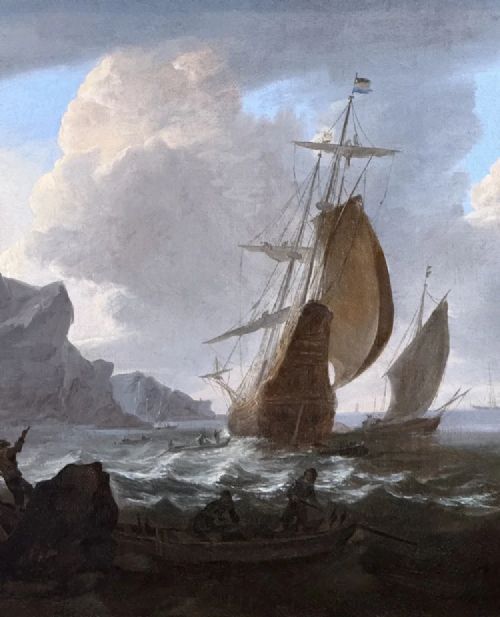

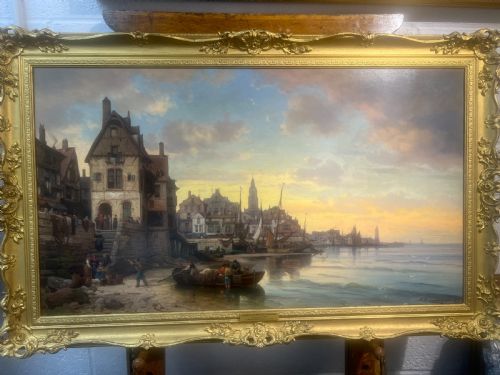
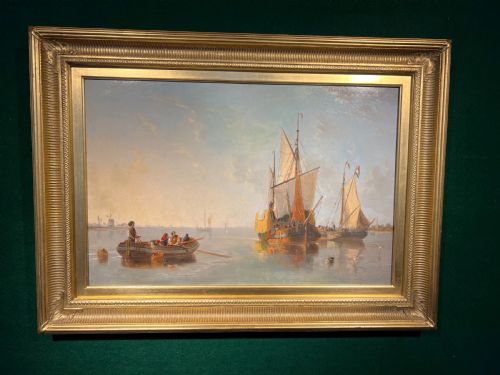
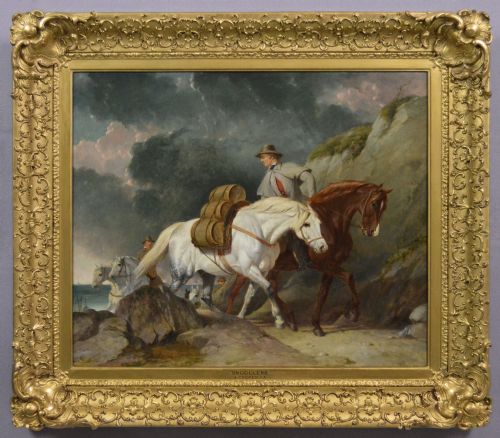
Gold Gilt Coastal Painting
A gold gilt coastal painting brings the movement of the sea and the warmth of traditional frames into a room.
Gold Gilt Coastal Painting
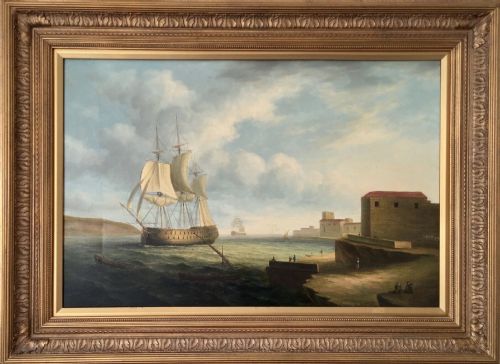
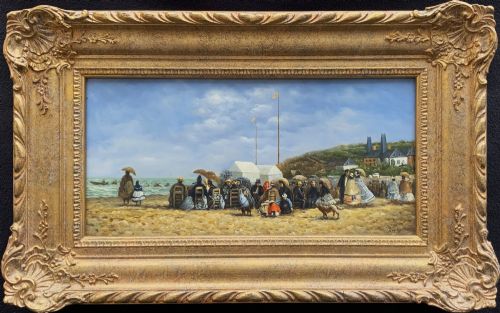
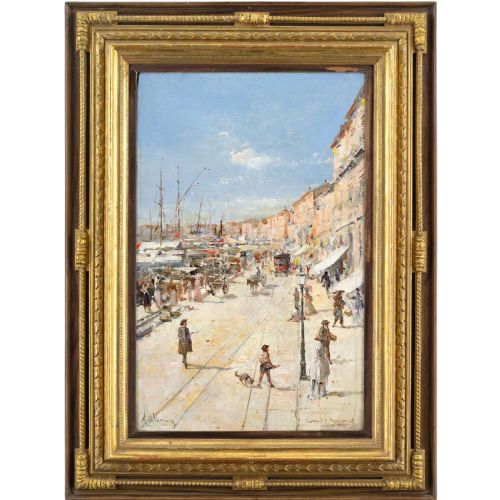
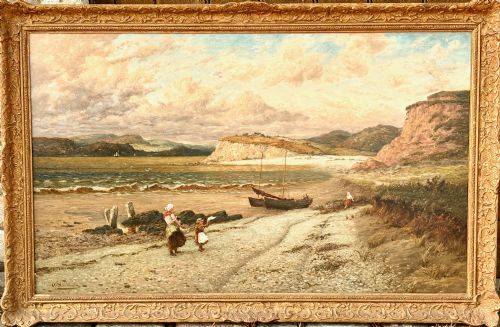
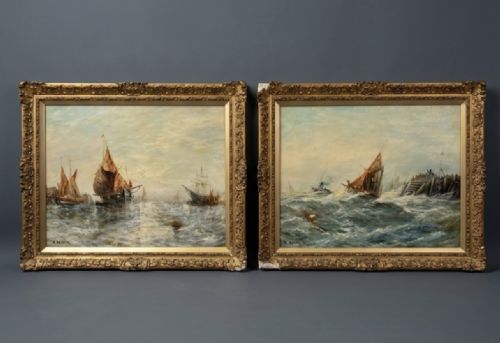
A gold gilt coastal painting captures maritime scenes, harbours, and shores, typically housed within ornate wooden frames finished in metallic leaf. The selections span the nineteenth century into the twentieth century, encompassing Victorian maritime art, French Post-Impressionism, and romantic seascapes.
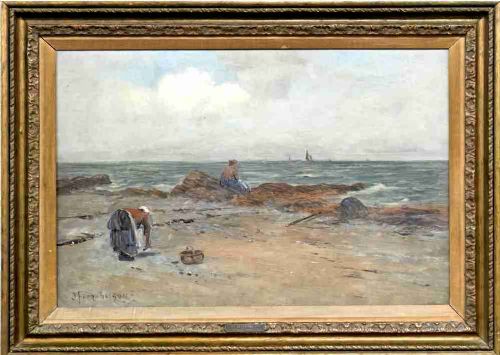
Most examples encountered here are oils on canvas or panel, alongside watercolours on paper depicting coastal paths, fishing boats, and cliffs. Subjects range from tranquil Cornish harbours and stormy Dutch gales to sunlit Mediterranean gatherings and rugged northern shores.
Buyers encounter works by named artists from British and continental European schools, as well as atmospheric provincial pieces bearing period frames. These artworks combine topographical interest with the rich visual weight of gilded surrounds.
Materials and construction
Artists painted primarily with oil on stretched canvas, wooden panels, or occasionally board, while watercolours were executed on heavy paper. Oil paint allowed for textured impasto representing churning waves and atmospheric skies, capturing light upon water through layered pigments.
Frames consist of carved wood or composition moulded ornament finished with gold leaf or metallic gilt, designed to complement and illuminate the artwork. The physical support often bears maker stamps, canvas stencils, or inscriptions that record the origins of the piece.
The inventory spans the nineteenth and twentieth centuries, featuring works executed in oil on canvas, panel, and board, alongside watercolours on paper.
Evaluating the standard of execution
Quality rests upon the skill of the brushwork in rendering light, maritime architecture, and the natural movement of water. Superior works display confident handling of atmosphere and proportion, whereas simpler pieces rely on formulaic composition.
The integrity and originality of the gilt frame contribute substantially to the character of the object. Period frames exhibiting original gilding and joinery elevate the overall presentation compared to later replacements.
Edward Mills·William Banks Fortescue·Augusto Alberici·Bonaventura Peeters·Bernard Benedict Hemy·Charles Euphraisie Kuasseg·John Wilson Carmichael·Abraham Cooper·Joseph Farquharson·Erich Mercker·William Henry Williamson·Bernard Benedict Hemy·George Stanfield Walters·Abraham Hulk I·John Bedloe Goddard·Raymond Moritz·William Edward Webb·Charles Napier Hemy·Gustave Vidal·George Turland Goosey·Gustave De Bréanski·Pieter Cornelis Dommersen·Adrian Van Porten
The Gold Gilt Coastal Painting Glossary
- Giltwood
- Wood carved and coated with gold leaf or metal powder to create a bright, reflective surface. It provides the traditional heavy border characteristic of nineteenth-century picture frames.
- Impasto
- Paint applied thickly to a canvas or panel so that it stands out from the surface. This technique allows artists to build tangible texture into representations of crashing waves and clouds.
- Marine art
- Painting that focuses primarily on ships, shipping, harbours, and coastal views. It encompasses historical naval battles, calm anchorages, and turbulent open seas.
- Provenance
- The documented history of ownership of an artwork. A clear record helps establish authenticity and dates of creation.
- Watercolour
- Paint consisting of colour suspended in a water-soluble binder, used on paper supports. It produces translucent washes ideal for luminous sky and water effects.
Gold Gilt Coastal Painting: Frequently Asked Questions
What subjects appear in these paintings?
The artworks depict a variety of maritime and shore subjects, including bustling harbours, sailing vessels in gales, quiet coves, and figures on cliffs. Scenes range from British coastal towns like St Ives and North Shields to Mediterranean ports and Dutch waters.
The selection also includes daily coastal life, such as fishermen, boat builders, and leisure gatherings by the sea. Each piece captures a specific nineteenth or twentieth-century perspective on the coastline.
How do I identify the period of a frame?
Period frames from the nineteenth century typically utilise carved wood or composition mouldings applied to a wooden carcass, finished with genuine gold leaf over a red or white gesso ground. Examining the mitred corners, backboards, and fastener types helps determine age.
Original frames often show minor losses, craquelure in the gesso, and oxidation that matches the age of the canvas it surrounds. Replacement frames usually feature modern fixings and uniform, unaged gilding.
Are watercolours framed differently from oils?
Watercolour paintings on paper require protection behind glass, which necessitates glazed frames with mount boards to keep the paper away from the glass surface. Oils on canvas or panel are open to the air, protected only by varnish layers.
Because of this, watercolours often survive with exceptionally delicate, original gilt frames specifically built to house glass and mats. Oil paintings use heavier mouldings capable of supporting the rigid weight of stretched canvas frames.
How should I care for a gilt wood frame?
Gilt wood frames require a stable indoor environment away from direct sunlight, excessive humidity, and sudden temperature shifts that can crack the gesso and gold leaf. Dusting should be done gently with a dry, soft brush without using liquid cleaners.
Avoiding harsh materials preserves the fragile metallic surface and prevents the underlying wood from warping. Proper handling ensures the historic character of the frame remains intact.