


Coastal Cliff Seascape Canvas
These coastal cliff seascape canvas works capture dramatic shores and open waters in oil, ready to bring atmosphere into a room.
Coastal Cliff Seascape Canvas
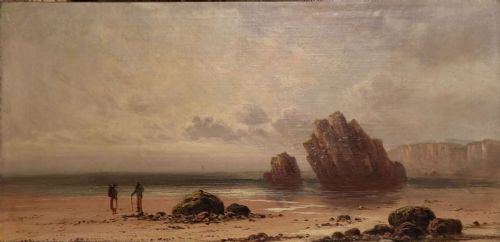
When you search for coastal cliff seascape canvas, you are looking at oil paintings on canvas that depict rugged shores, headlands, and open marine views. These works capture the changing light and weather of coastal environments, ranging from quiet beach scenes to dramatic sea stacks.
The pieces you meet on this page span the Victorian era, the nineteenth century, and the early decades of the twentieth century. They include British and French views, taking in locations from Cornwall and the Isle of Man to the Riviera.
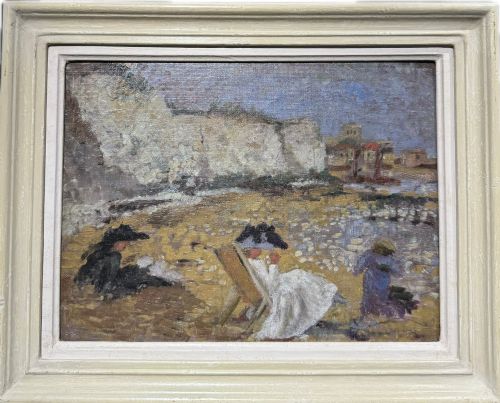
Most examples present traditional oil paint on stretched canvas, often housed within wood and gesso frames. They shift in mood from nineteenth century realism and Victorian marine art to impressionist and post-impressionist interpretations.
How they were made
Artists built these works using oil paint applied to stretched canvas, working pigments across the weave to capture the texture of cliffs, water, and sky. The medium allowed for rich blending and visible brushwork, particularly in impressionist and realist interpretations.
Many canvases are housed in wood frames finished with gesso and occasionally gold leaf, providing structural support and framing the composition. These traditional framing materials developed patinas that reflect their age and handling over the decades.
Several artists clearly preferred standing on windy British and French beaches to paint salt spray directly into their morning oil mixtures.
What varies in quality
Quality in a coastal cliff seascape canvas rests on the artist's handling of light, atmosphere, and spatial depth. Stronger works command the eye through confident brushwork and a convincing sense of scale between figures, cliffs, and open water.
The integrity of the canvas surface and the preservation of the original paint layer also distinguish superior pieces. Works that retain their textural depth without excessive restoration offer a more direct connection to the painter's hand.
Thomas Rose Miles·Herbert James·William Edward Webb·Edward T Jones·Alfred Egerton Cooper
The Coastal Cliff Seascape Canvas Glossary
- Canvas
- A heavy woven fabric stretched across a wooden frame to serve as a foundation for oil painting. It provides a flexible and durable surface that holds layered pigments securely.
- Gesso
- A plaster-like mixture applied to wooden frames to create a smooth surface for gilding or painting. It forms a hard layer beneath gold leaf or decorative finishes.
- Sea Stack
- A geological landform consisting of a steep and often vertical column or columns of rock in the sea. Artists frequently used these dramatic formations to anchor marine compositions.
- Impressionism
- A nineteenth century art movement characterised by relatively small, thin, yet visible brush strokes and an emphasis on accurate depiction of light. Painters of this style often worked outdoors to capture fleeting atmospheric conditions.
- Realism
- The precise, detailed, and accurate representation of nature and contemporary life. In marine art, this approach ensures topographical and nautical accuracy.
Coastal Cliff Seascape Canvas: Frequently Asked Questions
How do I date an oil painting on canvas?
Dating relies on stylistic evidence, stretcher construction, and materials like canvas weave and frame type. Nineteenth century and early twentieth century works often show specific preparatory grounds and framing styles characteristic of their period.
Signatures, inscriptions on the reverse, and artist records provide further confirmation. Comparing brushwork and subject matter to known dated pieces helps narrow the decade.
How were these marine paintings displayed?
These works were traditionally hung in domestic interiors within decorative wood and gesso frames, often gilded. The frame was chosen to complement the tones of the oil paint and enhance the depth of the seascape.
Today, they suit similar traditional or contemporary wall spaces, provided they are kept away from direct heat sources and strong moisture fluctuations.
What is the difference between realism and impressionism in these views?
Realist coastal paintings focus on topographical precision, clear light, and careful detail in the rendering of cliffs, figures, and water. Every element is defined with structural clarity.
Impressionist works prioritize the overall effect of light and atmosphere through visible brushstrokes and blended colour. Detail gives way to the sensory experience of the weather and the moment.
How do I care for an antique canvas?
Protect the canvas by maintaining stable indoor humidity and avoiding direct sunlight, which can degrade oil paint and warp the wood stretcher. Dust the surface gently with a soft, dry brush without applying pressure.
Avoid using water or cleaning solvents on the paint layer. Professional conservation is recommended for any structural repairs or cleaning of the varnish.