
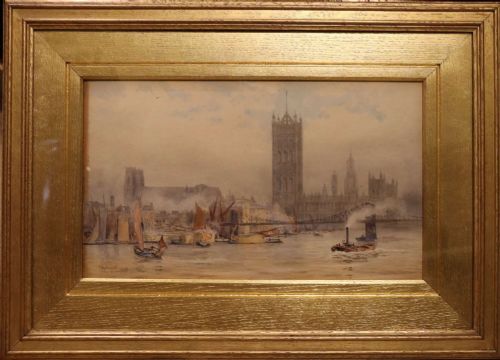
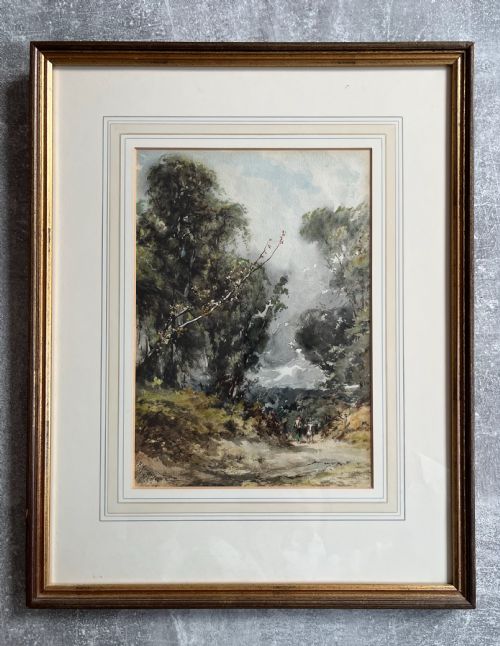
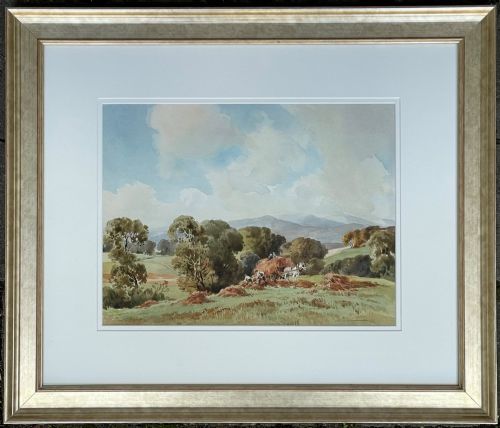
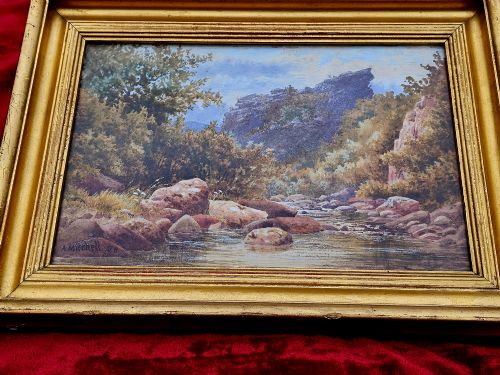
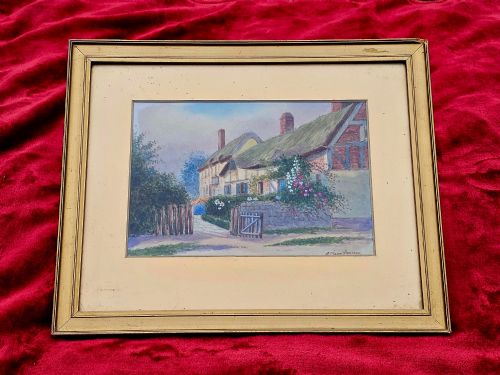

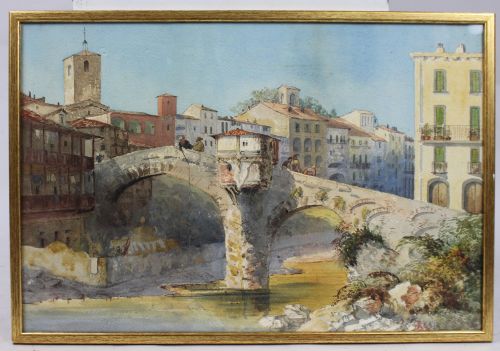
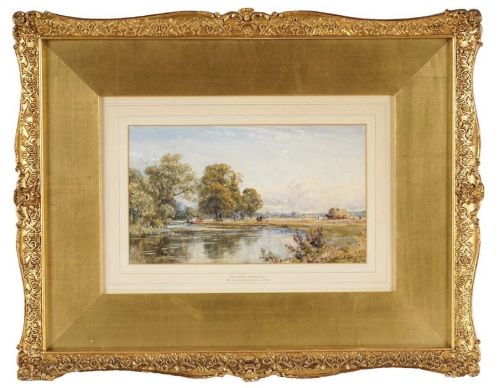
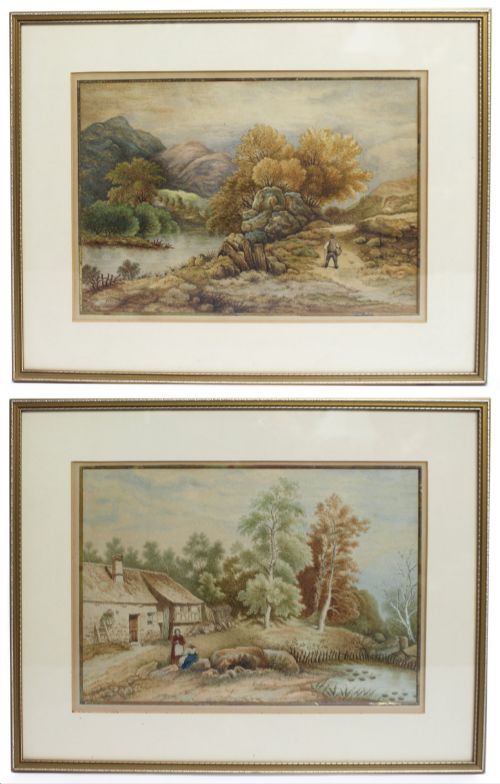
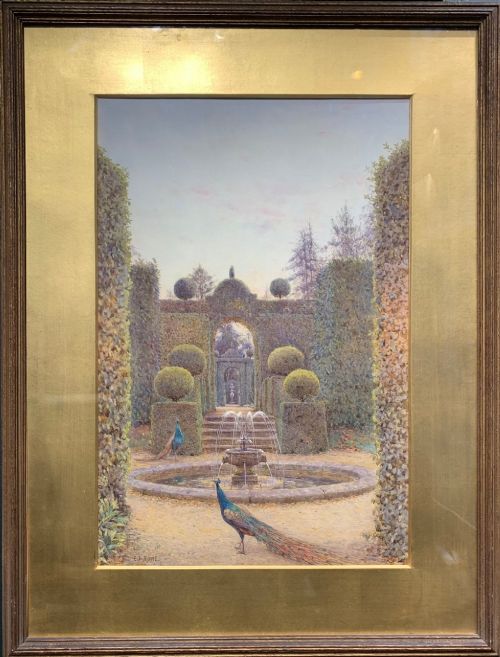

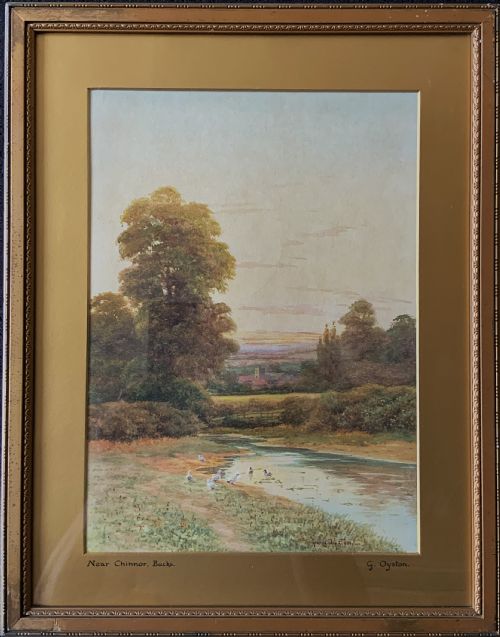
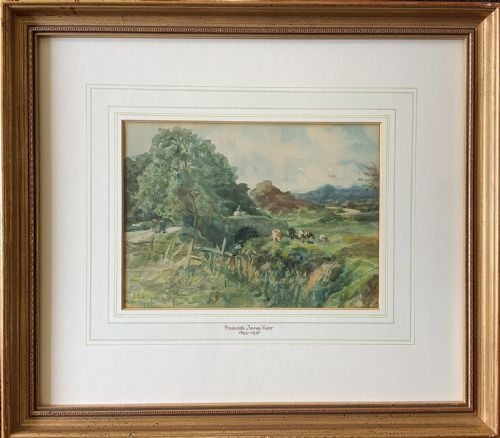
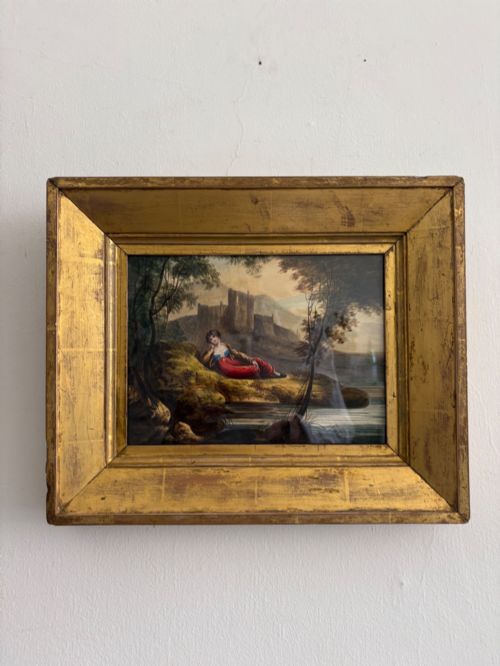
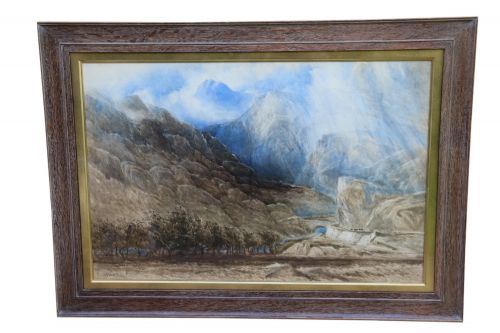
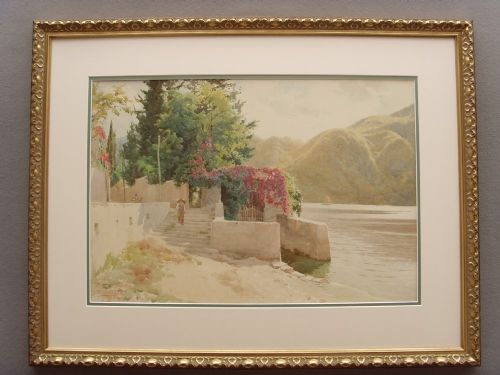
Gilt Framed Landscape Watercolour
A gilt framed landscape watercolour brings nineteenth- and early twentieth-century country and coastal views directly into your room inside original gilded mouldings.
Gilt Framed Landscape Watercolour
A gilt framed landscape watercolour represents painted scenery on paper secured behind protective glass within an ornamental wooden frame finished with gold leaf. You will frequently encounter Victorian and Edwardian examples featuring rivers, valleys, coastal harbours, and rural farmland.
The selections span traditional British scenes alongside continental views from Italy and France, created across the nineteenth and early twentieth centuries. These paintings range from intimate cabinet watercolours to large-scale gallery compositions produced by named artists and regional schools.

Materials and construction methods
Artists painted primarily with water-soluble pigments on heavy paper sheets, occasionally combining gouache for opaque highlights and pencil underdrawings to define contours. These works required mounting behind glass to protect the delicate water-based pigments from atmospheric moisture and fading.
Makers constructed the enclosing mouldings from wood before applying layers of gesso and gold leaf to achieve the characteristic gilt surface. These frames often remain original to the artwork, utilising period joinery and decorative plaster corners.
Gilt Framed Landscape Watercolour Retail Price Guide 2026
Typical asking prices for gilt framed landscape watercolour among the pieces listed under this phrase on Sellingantiques today, from the lower quarter to the upper quarter. They describe what is for sale here now, not the wider market.
Listings demonstrate a strong concentration of nineteenth-century and Edwardian watercolours utilising traditional wood and gold leaf frames.
Distinguishing quality factors
Quality rests upon the artist's command of light, atmosphere, and brushwork, separating master execution from standard amateur production. Superior sheets display confident tonal gradations and precise spatial depth without overworked pigments.
The integrity and originality of the gilt wood frame heavily influence the overall standard. Hand-carved or well-gilded period frames that complement the scale of the painting elevate the piece far above those housed in later replacements.
George Fotherly Hargitt·Percy Lancaster·Ernest Arthur Rowe·George Oyston·Robert George Talbot Kelly·David Cox Jnr·William Hoggatt·George Weatherill
The Gilt Framed Landscape Watercolour Glossary
- Gouache
- An opaque water-based paint containing pigment mixed with a binding agent and white filler, used on watercolours to create heavier highlights.
- Gesso
- A plaster-like mixture applied to wooden frames as a smooth base before the application of gold leaf.
- Gold leaf
- Extremely thin sheets of beaten gold applied to frames to create a brilliant metallic finish.
- Provenance
- The documented history of ownership that traces a painting from its creation to the present day.
- Wash
- A thin, translucent layer of diluted watercolour pigment spread evenly across the paper to represent skies or water.
Gilt Framed Landscape Watercolour: Frequently Asked Questions
How should I display my watercolour?
Hang your artwork away from direct sunlight to prevent the delicate pigments from fading over time. Maintain stable room temperatures to protect both the paper support and the antique wooden frame.
Ensure the picture hangs securely on a wall that does not suffer from dampness. The protective glass should remain sealed to keep dust and atmospheric moisture away from the painted surface.
Are these frames original?
Many pieces retain their original nineteenth- or early twentieth-century gilt wood mouldings. You can often identify period frames by their traditional corner construction and authentic patination.
Replacement frames do appear on the market when earlier mouldings suffered too much damage. Examining the rabbet and backboards helps determine whether the frame has kept its original association with the painting.
How do I date these paintings?
Dating relies upon artist biographies, signed dates, stylistic markers, and framing techniques. Victorian and Edwardian examples often feature specific paper watermarks and distinct mount styles.
Costume details within landscape figures and architectural elements also provide reliable clues to the decade of creation. Comparing the handwriting on signed inscriptions helps verify the active period of the artist.
What subjects are most common?
Traditional British countryside scenes, rivers, and coastal harbours dominate the available subjects. You will frequently find views depicting Welsh mountains, Scottish lochs, and English pastoral farmland.
Continental scenes from Italy and France also appear regularly, reflecting popular travel destinations of the nineteenth-century picturesque movement. Each subject captures the topographical interests of its specific period.