
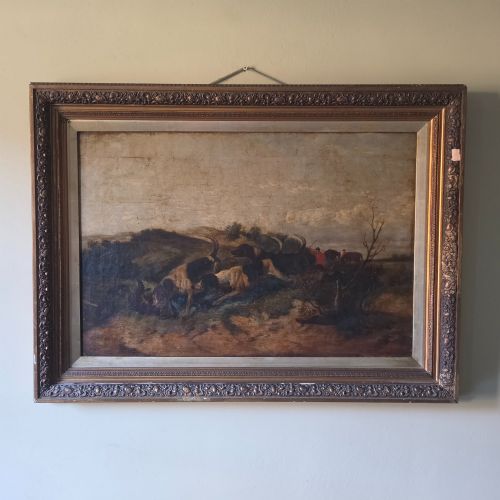
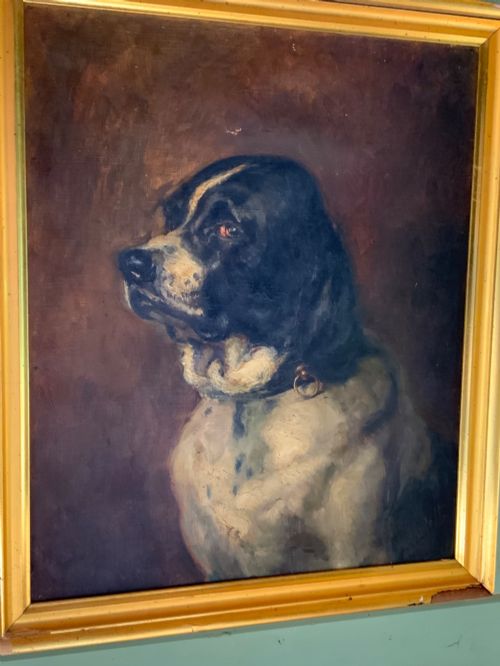
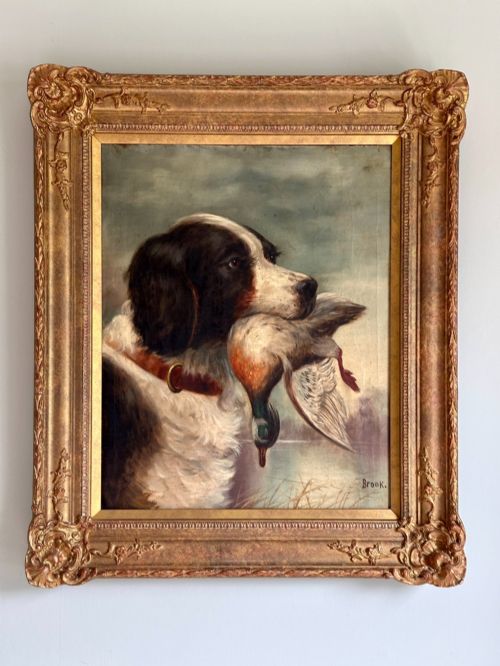
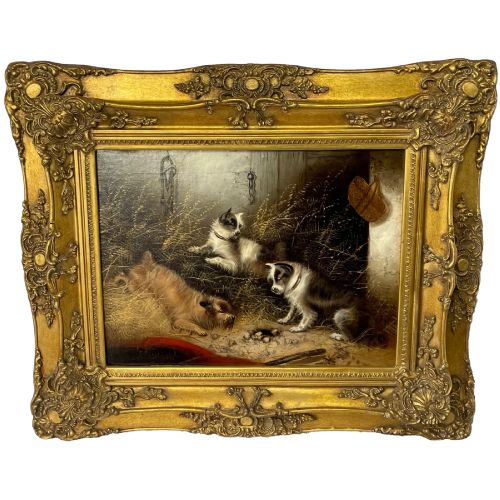
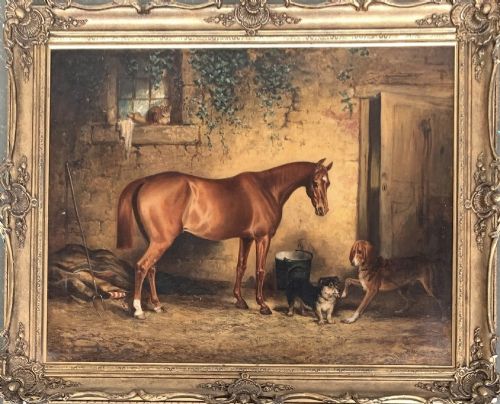
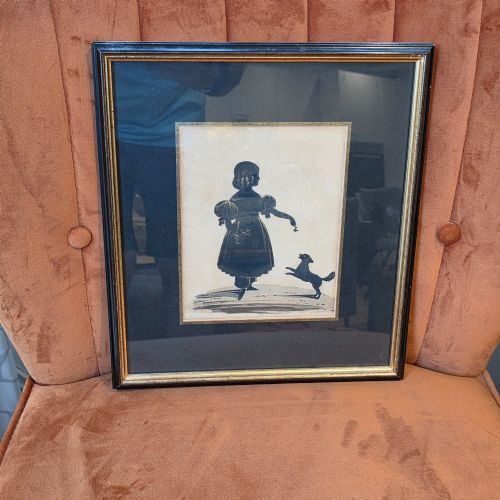
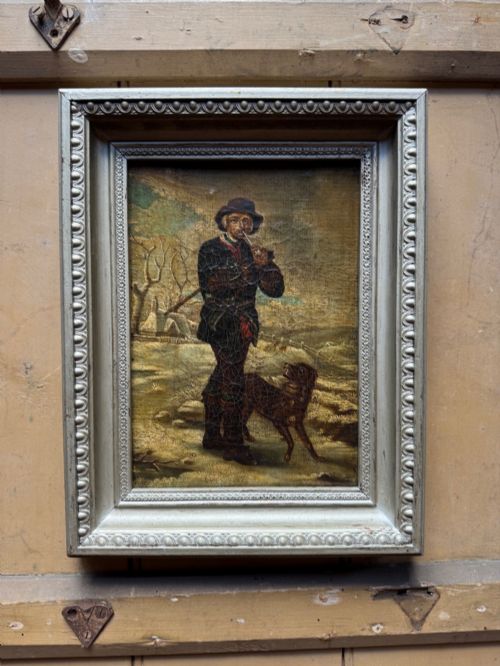
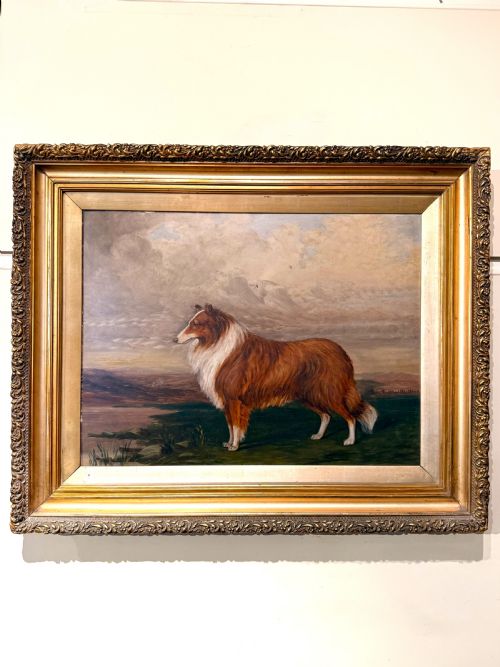
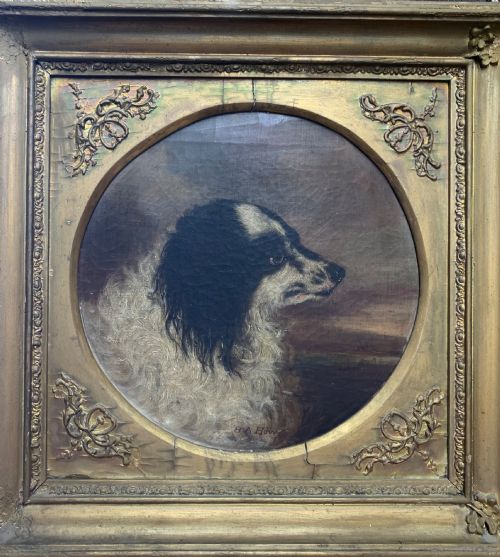
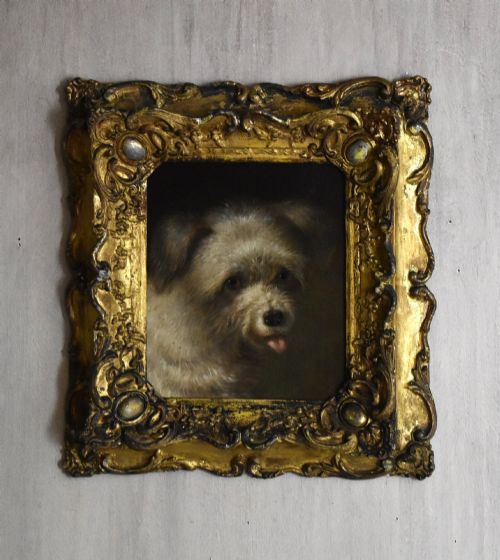
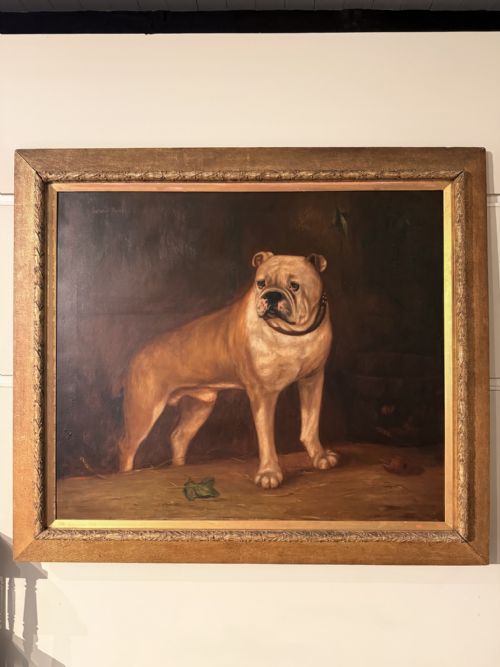
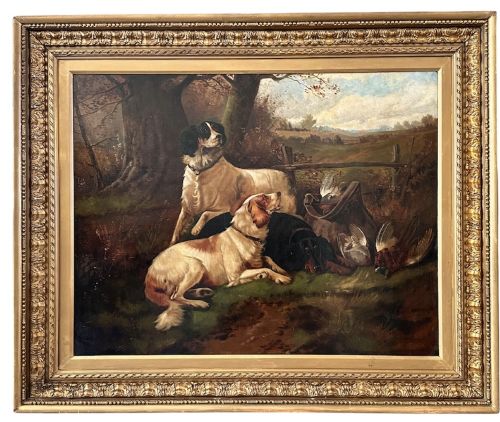
Gilt Framed Dog Portrait
When you search for a gilt framed dog portrait, you are looking at centuries of canine art housed in gilded wood.
Gilt Framed Dog Portrait
A gilt framed dog portrait brings together historical animal painting and ornate gold leaf or gilded wood surrounds.
You will most frequently meet 19th-century and Victorian works on canvas and board, ranging from sporting art to naive studies.
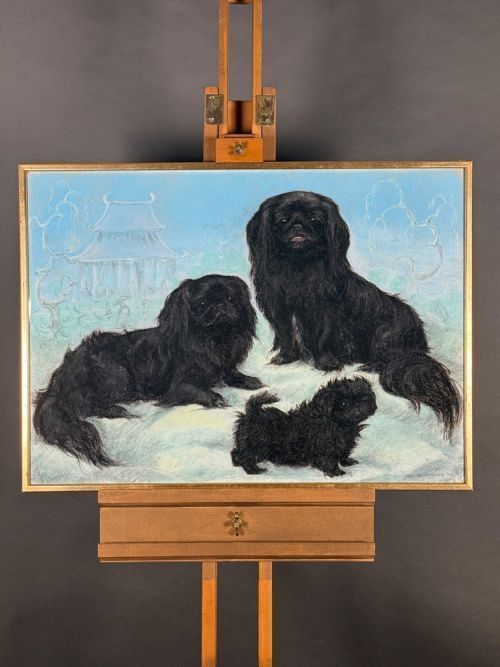
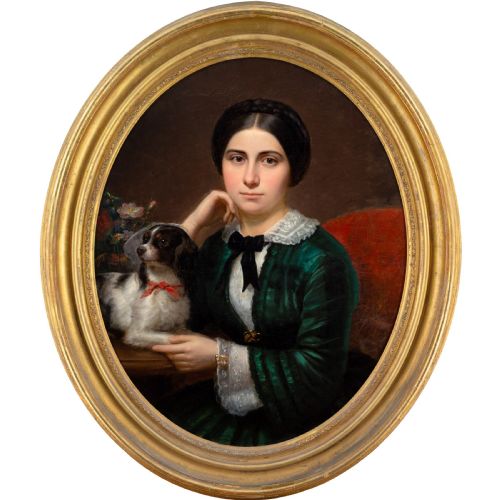
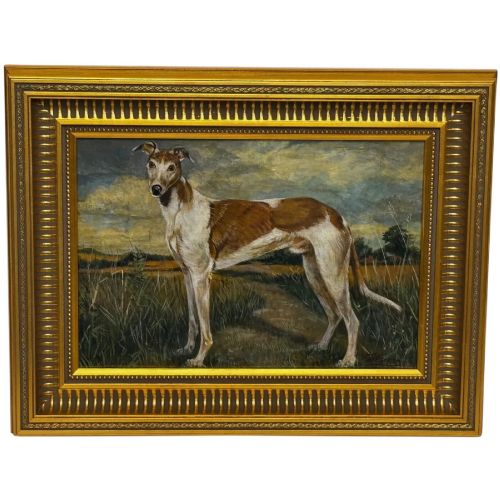
The subjects span working gun dogs, terriers, hounds and lapdogs rendered by British and continental schools.
Materials and Technique
Painters used oil paint on canvas or board, alongside pastel, watercolour, needlework and cut paper silhouettes.
Frames were constructed from wood and finished with gold leaf, gilt, or giltwood to accentuate the artwork.
Materials recorded include oil on canvas, wood, giltwood, gold leaf and pastel on paper.
Defining Quality
The skill of the brushwork in capturing the anatomy, texture of the coat and expression of the animal dictates the artistic merit.
The originality, depth of gilding and period suitability of the wooden frame contribute significantly to the overall integrity of the piece.
Henry Barraud·William James Hubard·Martin Theodore Ward·John Sargent Noble·C R Breytle·John Emms·John Frederick Herring Senior·LM Webb·Arthur Wardle·William Barraud·Sir Edwin Landseer·Colin Graeme Roe·Valentine Thomas Garland·John Trivett Nettleship·John Alfred Wheeler·Robert Cleminson·Mary Beale·J Cecil Bradshaw
The Gilt Framed Dog Portrait Glossary
- Giltwood
- Wood that has been treated and coated with gold leaf or a gold-coloured finish. This material forms the ornate surrounds typical of these framed artworks.
- Oil on Canvas
- Pigment mixed with drying oil applied to stretched woven fabric. This method provides the rich tones seen in nineteenth-century sporting art.
- Sporting Art
- Depictions of hunting, hounds, horses and gun dogs in rural landscapes. These works record the specialised breeds and working animals of the period.
- Needlework
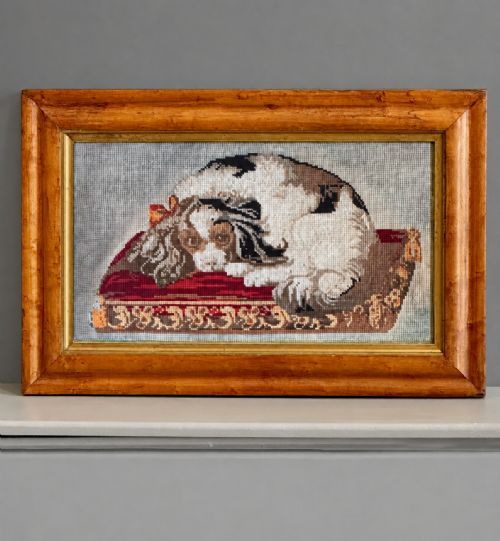
- Stitched thread designs on canvas, such as Berlin work. This textile technique produced detailed portraits of spaniels and other pets.
Gilt Framed Dog Portrait: Frequently Asked Questions
What periods do these dog portraits come from?
The pieces span from the seventeenth century through the Victorian era and into the mid-twentieth century. Most examples date from the nineteenth century.
Victorian and Edwardian works dominate the selection, reflecting the era's fondness for animal painting.
Are the frames original to the paintings?
Many works retain their period gilt frames, such as burr maple or gilded wood surrounds matching the age of the canvas. Some pieces may have been reframed later in their history.
Examining the joinery and wear on the wood helps determine if the frame has stayed with the portrait since its creation.
How do I hang and display a gilt framed portrait?
These framed artworks require sturdy wall fixings due to the weight of traditional wood and plaster mouldings. Keep them away from direct sunlight and damp environments to protect the canvas and gold leaf.
Pairing a gilded dog portrait with traditional or eclectic room decor highlights the warmth of the wood and the character of the subject.
What dog breeds appear most often in these artworks?
King Charles spaniels, terriers, collies, setters and hounds feature prominently across the paintings and needleworks. Working gun dogs and lapdogs were favourite subjects for nineteenth-century artists.
Artists often portrayed specific animals belonging to prominent owners, recording individual pets alongside sporting scenes.