







English School Dog Oil
An English school dog oil captures canine companions alongside their owners across centuries of canvas, bringing genuine historic character straight into your room.
English School Dog Oil
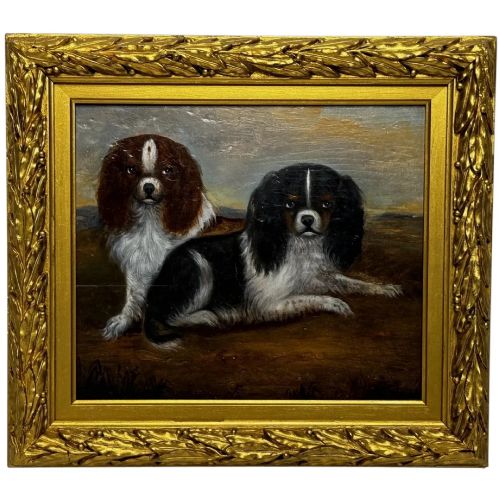
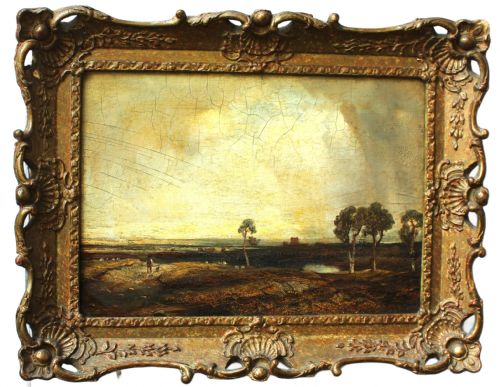
An English school dog oil represents historical canine portraits and rural sporting scenes executed by painters working within British traditions from the seventeenth to the nineteenth centuries. When searching for an english school dog oil, collectors encounter everything from naive depictions of border collies to sophisticated Regency and Victorian canvases depicting spaniels, sporting dogs, and family pets.
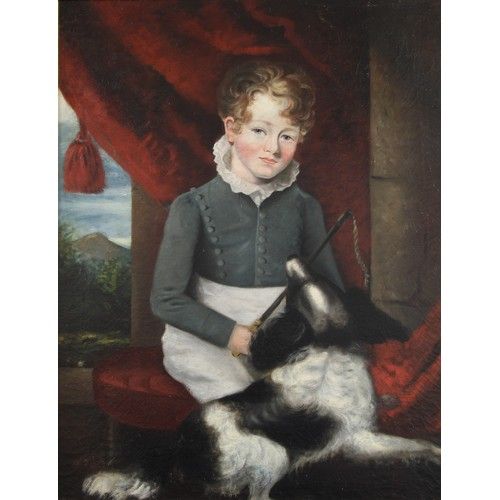
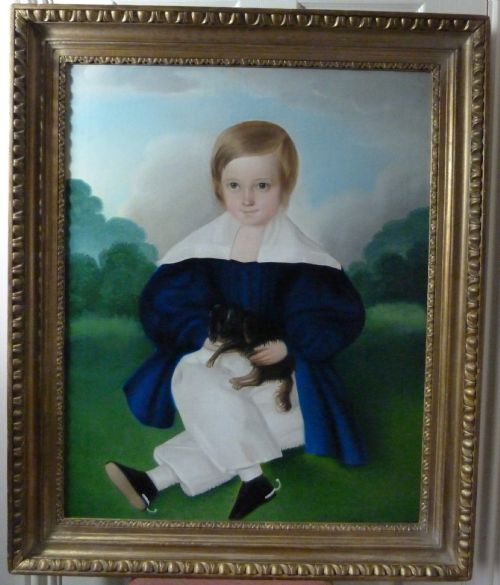
These works frequently appear as portraits of young boys or gentlemen accompanied by their animals, rendered in oil paint on canvas or wooden board. The subjects range from formal aristocratic commissions to provincial and naive interpretations showing dogs with distinct personalities in open landscapes or domestic interiors.
How they were made
Painters of these works utilised traditional oil paint applied to stretched canvas or wooden board substrates, often framed in period giltwood moulding embellished with gesso detail. The technique relies on layered oil pigments to build depth in the fur, fabrics, and backgrounds, capturing the texture of a dog's coat through careful brushwork.
Support structures varied depending on the century, with earlier seventeenth and eighteenth-century works typically resting on heavy wooden boards or closely woven canvas, while nineteenth-century examples often display standard commercial canvas preparations.
Listings feature works spanning from the seventeenth century through the Victorian period, executed in oil on canvas, wooden board, and giltwood frames.
What varies in quality
The anatomical accuracy and expressiveness of the canine subject distinguish a superior painting from a provincial or strictly naive effort. Master painters captured the intelligent gaze and bodily posture of spaniels and collies with convincing weight and musculature.
Condition of the oil paint surface, stability of the underlying canvas or board, and the presence of the original giltwood and gesso frame heavily influence the integrity of the piece. Subtle handling of light in the surrounding landscape or interior adds further depth to the composition.
C R Breytle·John Constable·Thomas Beach·Dean Wolstenholme·Daniel Mytens
The English School Dog Oil Glossary
- Oil on canvas
- Pigments ground in drying oils applied to a woven fabric support. This combination allowed artists to blend tones smoothly and create durable surfaces that survived centuries.
- Giltwood
- Wood carved and coated with gold leaf or a gold-coloured metallic finish. It forms the traditional decorative framing for many historic British portraits.
- Gesso
- A plaster-like mixture applied to wooden frames or panels to prepare the surface for gilding and ornamentation. It provides a smooth base for detailed carving work.
- English Naive School
- A classification for self-taught or provincial artists working outside the formal academic standards of the Royal Academy. These works prioritize direct charm and character over strict perspective.
- Provincial
- Describing art produced in regional areas away from metropolitan artistic centres. These pieces often retain local character and independent stylistic quirks.
English School Dog Oil: Frequently Asked Questions
How do I date an old dog painting?
Dating relies on examining the clothing and hairstyles of any human figures, the construction of the canvas stretcher, and the style of the giltwood frame. Portrait conventions and painting techniques also shift noticeably between the seventeenth and nineteenth centuries.
Secondary clues include handwritten inscriptions on the reverse of the canvas or board, maker stamps on the stretcher bars, and the specific breed type depicted, which often reflects the popular sporting preferences of a given decade.
Are these paintings cleaned professionally?
Many historic oils accumulate layers of discoloured varnish and surface grime over centuries in domestic settings. Professional conservation involves removing this darkened layer to reveal the original brightness of the palette.
Careful cleaning must preserve the underlying oil paint and any historical retouching, maintaining the authentic patina expected from a painting dating back to the Georgian or Victorian eras.
How should I hang an oil painting?
Oil paintings on canvas require stable environmental conditions away from direct sunlight, damp walls, and sudden temperature fluctuations from radiators. Using robust picture wire attached securely to heavy brass D-rings ensures the weight distributes evenly across the frame.
Allowing slight airflow behind the canvas prevents moisture accumulation, while positioning the artwork at eye level maximises the visual impact of the brushwork and the giltwood frame.
What is the difference between naive and academic work?
Academic painters trained in official institutions mastered human and animal anatomy, linear perspective, and subtle chiaroscuro lighting. Naive school artists worked with simplified perspective and direct observation, producing charmingly literal interpretations.
Both approaches hold distinct appeal for collectors, where academic works offer refined technical execution while naive paintings provide unpretentious historical character and regional storytelling.