




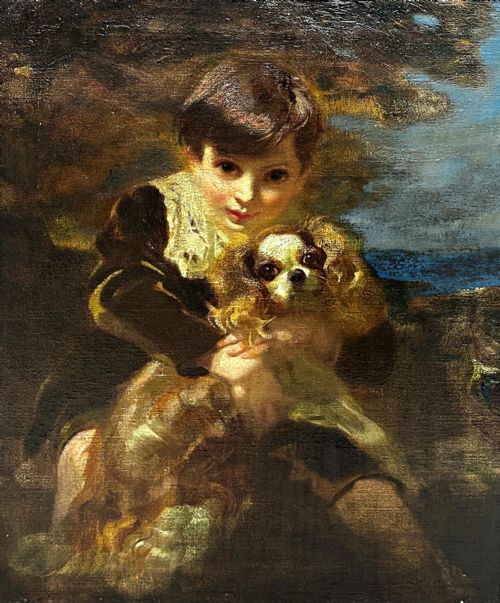

Vintage Spaniel Portrait
A vintage spaniel portrait brings real character into a room, capturing the loyal gaze of these dogs in oil, watercolour and print.
Vintage Spaniel Portrait
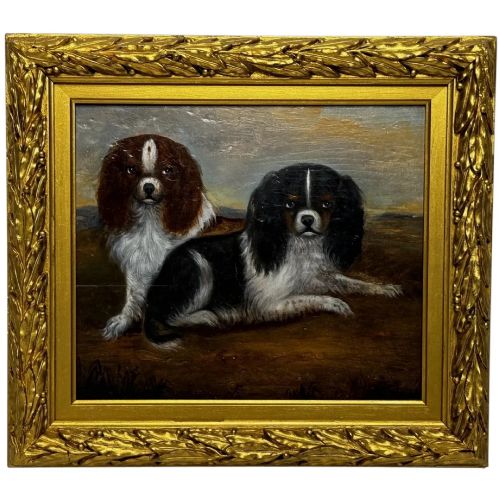
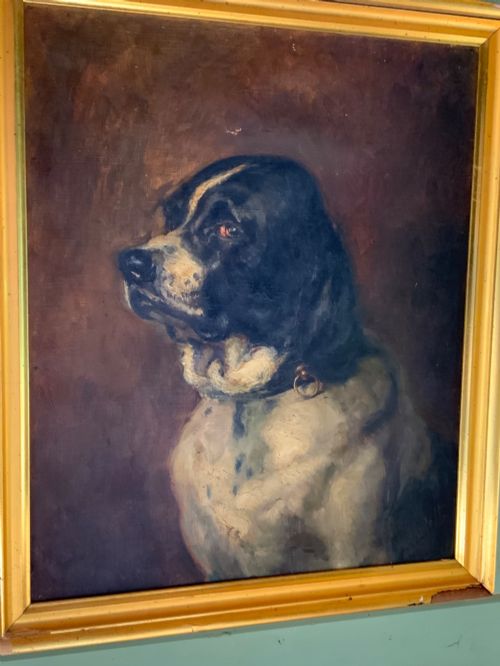
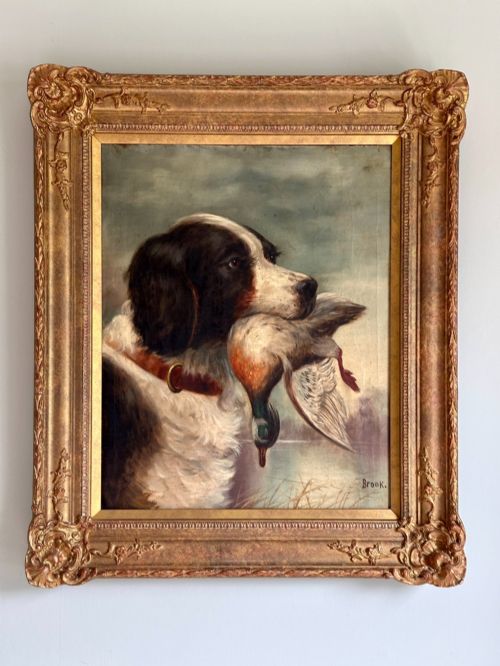
A vintage spaniel portrait is a painted or printed depiction of the breed, created across the nineteenth and twentieth centuries. These artworks record individual dogs, often named in period records, resting in interiors or posed outdoors with game.
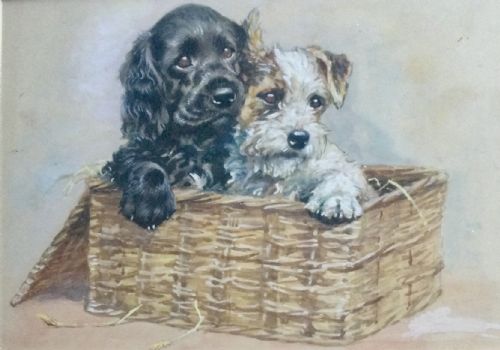
The versions most commonly met on this page range from nineteenth century oil paintings on canvas or panel to early twentieth century watercolours and original etchings. Subjects span specific breeds like the cocker spaniel, clumber spaniel and cavalier king Charles spaniel, sometimes shown alongside other dogs.
Makers and artists working within British sporting art and the French school shaped these works, utilising styles from Victorian realism to early twentieth century illustration. Each piece serves as a domestic tribute to sporting gundogs and beloved pets alike.
How they were made
Artists painted these subjects using oil on canvas or wooden panel, layering pigments to render the soft curl of a spaniel ear and the gleam of an eye. Other works utilise watercolour on paper or take the form of original etchings.
Finished works found their homes within period surrounds, most notably wooden and giltwood frames that complement the depth of the painted surface.
Listings feature works from the nineteenth century, 1910, 1920, 1930, and 1950 in oil, watercolour, and etching.
What varies in quality
The distinction between works rests on the artist's command of anatomy and expression, where skilled brushwork captures the intelligent, gentle gaze specific to spaniels rather than a generic canine form. Stronger compositions place the animal within a convincing interior or landscape rather than a stiff setting.
The handling of materials also separates works, as finely ground oils on panel or nuanced watercolour washes retain their vibrancy and detail over the decades. Original framing contemporary to the artwork further elevates the integrity of the piece.
Herbert Dicksee·William Barraud·Mabel Gear·Samuel John Carter·Frank Owen Salisbury·William Albert Clark
The Vintage Spaniel Portrait Glossary
- Oil on Canvas
- Pigment mixed with drying oil applied to a woven fabric support. This traditional medium allowed artists to build rich textures and deep tones.
- Etching
- A printmaking technique where lines are bitten into a metal plate with acid. Artists like Herbert Dicksee utilised this method to render fine fur details.
- Giltwood
- Wood carved and covered with a thin layer of gold leaf. Such frames often accompanied fine nineteenth and early twentieth century portraits.
- Sporting Art
- Depictions of rural pursuits, game animals and gundogs. Spaniels frequently appear in this genre due to their working history.
- Watercolour
- Paint consisting of pigment suspended in a water-soluble vehicle. It yields translucent washes on paper that capture light delicately.
Vintage Spaniel Portrait: Frequently Asked Questions
What periods do these portraits cover?
The works span from the nineteenth century through to the middle of the twentieth century. This covers Victorian realism up to mid-century British art.
Earlier examples often depict named sporting dogs in oils, while later pieces include watercolours and etchings by known artists.
How were spaniel portraits used originally?
Owners commissioned or purchased these paintings to celebrate cherished pets, working gundogs or specific champions. They hung in country houses and town interiors alike.
Many recorded beloved companions or documented the loyalty of dogs belonging to notable figures.
How do I live with a vintage spaniel portrait?
These artworks suit studies, living rooms and hallways, bringing warmth and a focal point to traditional or eclectic interiors. They pair well with wood furniture and period decor.
Keep them away from direct sunlight to protect the pigments on canvas, paper or panel.
How can I tell the difference between periods?
Nineteenth century pieces often feature heavier oil painting techniques on canvas with ornate gilt frames. They frequently lean towards Victorian realism or sporting traditions.
Twentieth century works introduce lighter watercolours, etchings and mid-century painting styles that reflect changing artistic tastes.