


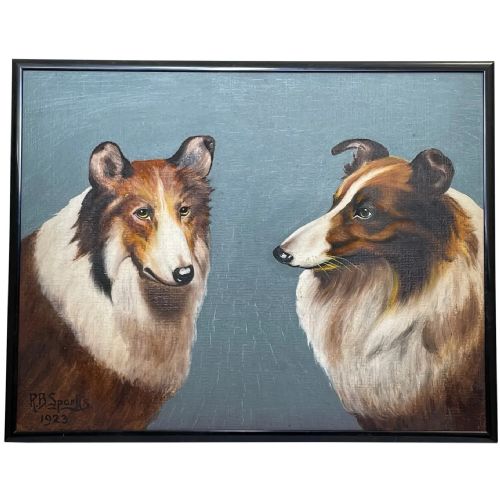

Edwardian Canine Portrait Painting
These edwardian canine portrait painting works capture character in oil and pastel, offering a tangible link to past companions.
Edwardian Canine Portrait Painting
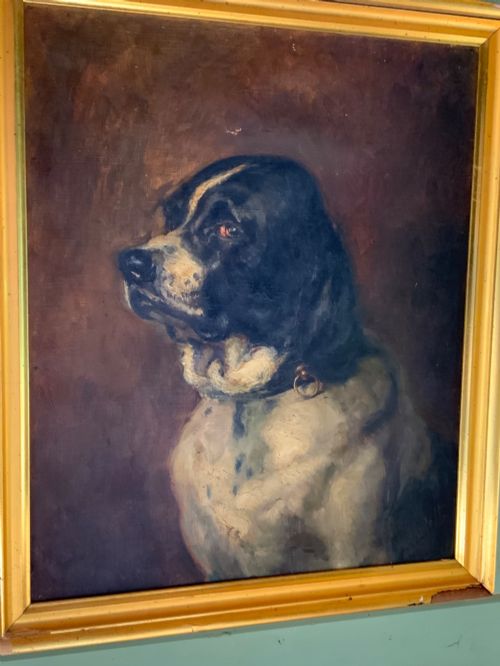
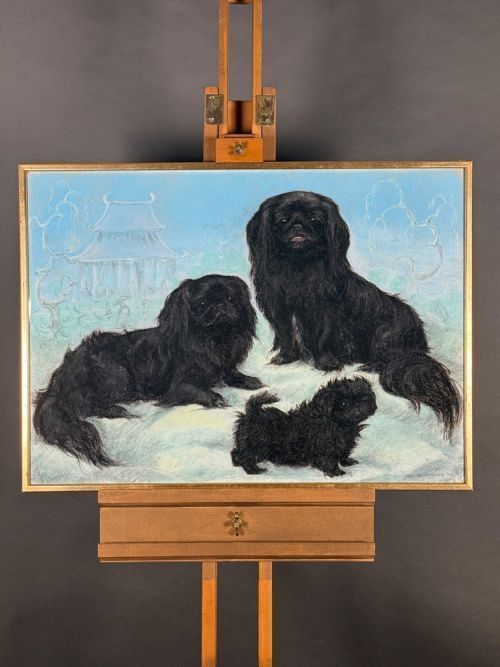
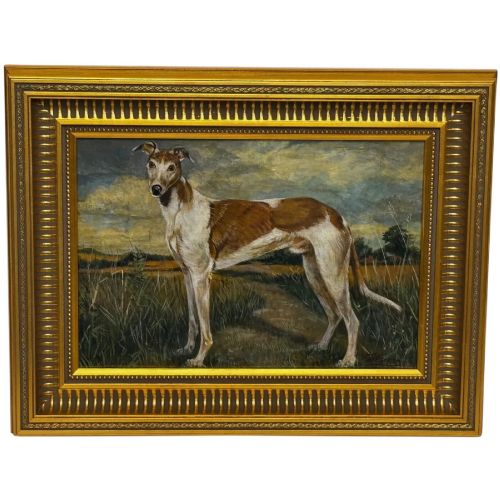
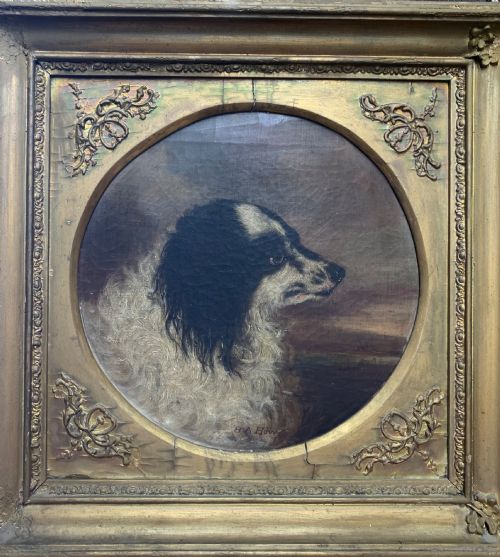
When buyers search for an edwardian canine portrait painting, they encounter representations of dogs rendered in oil on canvas, oil on board, and pastel on paper. The selection spans the nineteenth century through the early twentieth century, alongside Victorian and later twentieth-century examples.
The subjects range from working lurchers, spaniels, collies, and retrievers to bulldogs, terriers, greyhounds, pugs, and Pekingese dogs. These works frequently appear within frames featuring wood, giltwood, and gold leaf.
While the phrase points towards the Edwardian era, surviving pieces in this category frequently bridge adjacent periods, notably the Victorian era and the nineteen-twenties.
Materials and methods
Artists utilised oil paint and pastel applied to canvas, board, and paper to construct these canine studies. Canvas and wood formed the primary structural supports for the painted works.
Frames incorporating giltwood, gold leaf, and plain wood enclose the artworks. These finishing elements preserved the paintings and pastels across decades.
The periods represented span from the nineteenth century through the nineteen-twenties and nineteen-sixties.
Assessing quality
Quality rests in the handling of the subject, where anatomical precision and the depiction of expression distinguish accomplished hands from simpler works. The integration of the animal within a landscape or interior setting further shapes the depth of the composition.
The preservation of the paint surface and the material integrity of the original frame contribute to the standing of an individual piece.
John Emms·Valentine Thomas Garland·John Trivett Nettleship·Philip Eustace Stretton·Samuel Fulton
The Edwardian Canine Portrait Painting Glossary
- Oil on Canvas
- A painting medium where pigments are suspended in a drying oil and applied to stretched fabric. This technique allowed artists to build rich layers of colour and texture.
- Giltwood
- Wood carved and coated with gold leaf or metallic powder. It provides a reflective, ornamental border for framing artworks.
- Pastel on Paper
- A dry medium consisting of powdered pigment and a binder pressed into sticks, used on a paper support. It produces a velvety surface texture.
- Sporting Art
- Depictions of animals, hunting, and rural pursuits. This genre focuses closely on the anatomy and attributes of specific breeds.
Edwardian Canine Portrait Painting: Frequently Asked Questions
What dogs appear most often?
Terriers, collies, spaniels, and bulldogs form the bulk of the subjects recorded in these canine portraits.
Working dogs and prized champions also appear frequently across the selection.
How are these artworks framed?
Many pieces retain traditional wooden frames finished with giltwood or gold leaf.
These surrounds match the period of the painting or drawing.
Are all these works from the Edwardian period?
The selection includes pieces from the nineteenth century, the Edwardian era, and the nineteen-twenties.
Victorian sporting art and early twentieth-century fine art overlap within this category.
Where should I hang a dog portrait?
These framed artworks suit studies, libraries, and living spaces where traditional paintings are displayed.
Keeping them away from direct sunlight protects the oil and pastel mediums.