
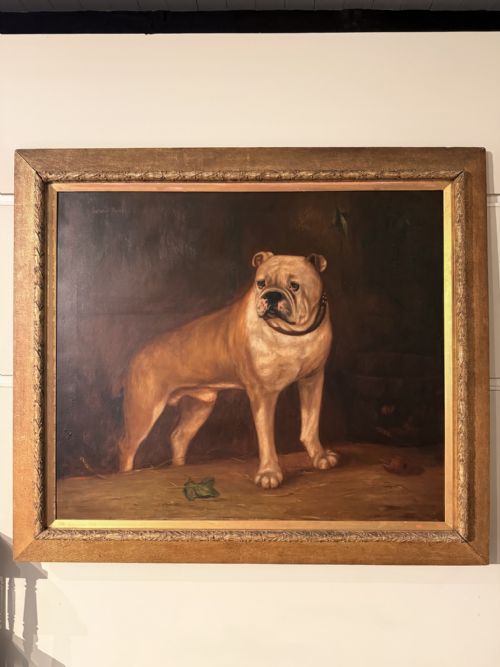
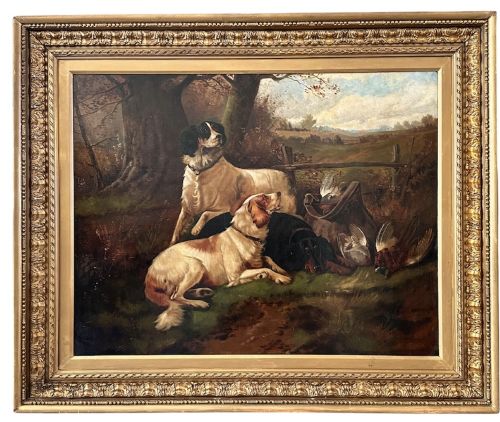
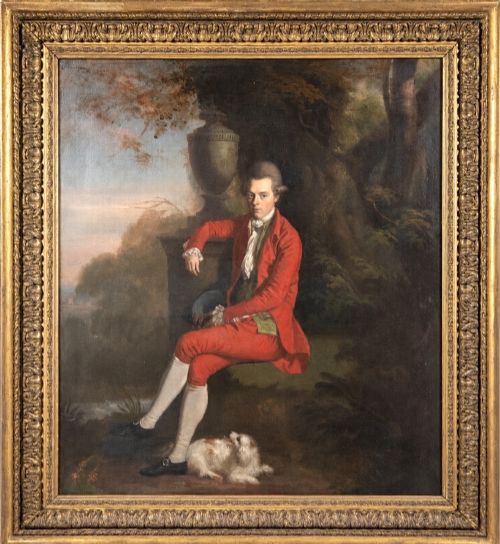
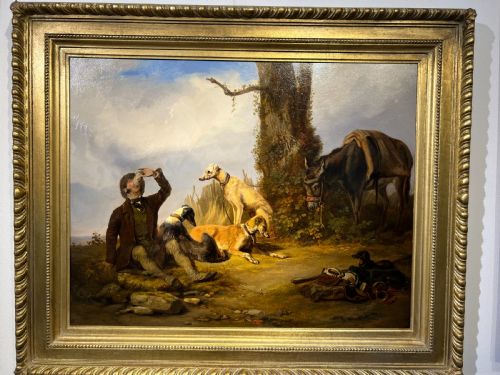
Gilt Framed Dog Art
Gilt framed dog art brings together canine portraiture and ornate golden surrounds from the Victorian era and beyond.
Gilt Framed Dog Art
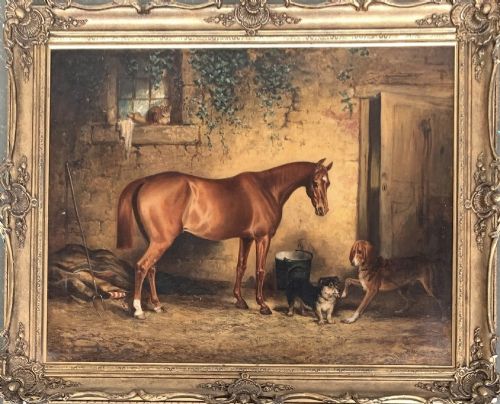
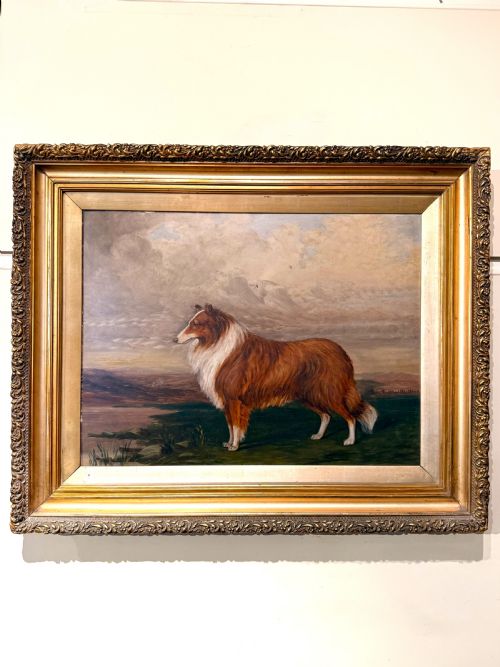
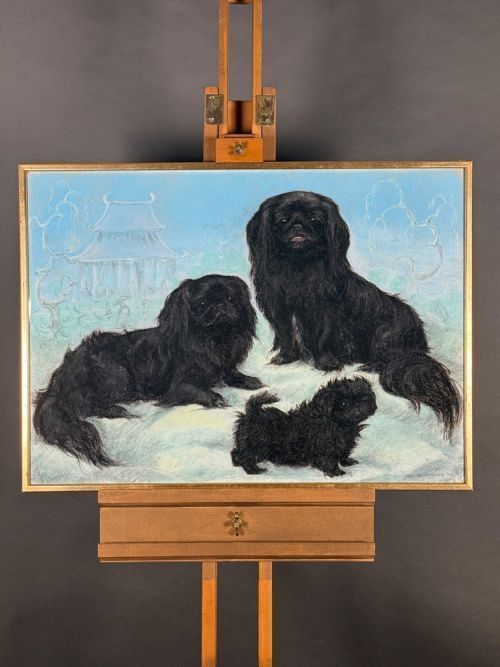
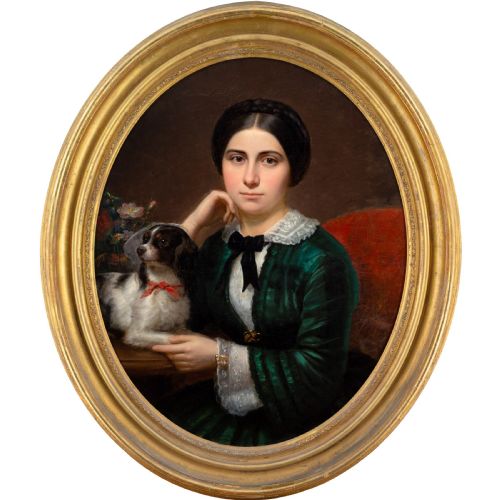
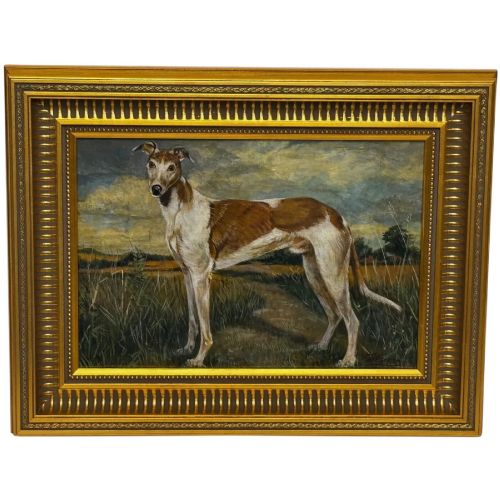
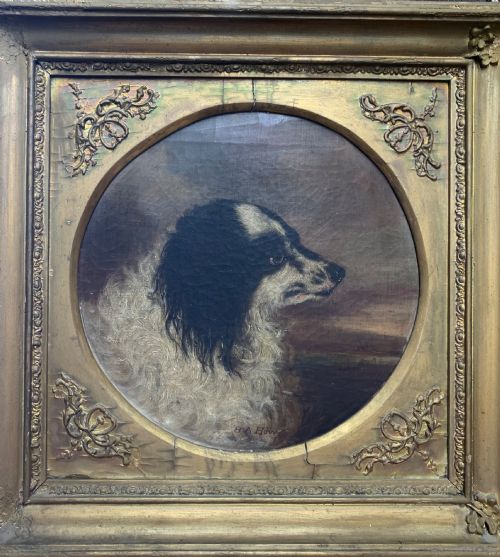
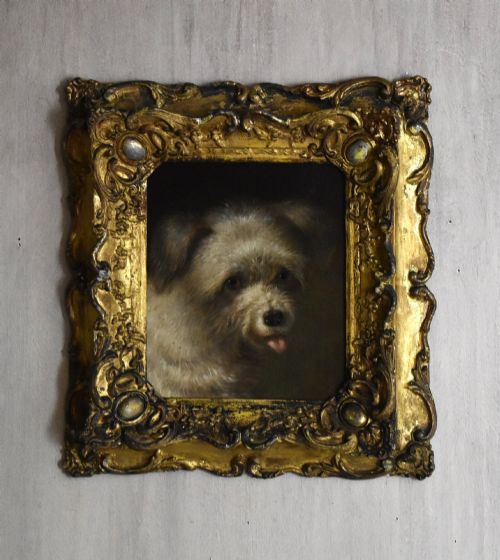
Gilt framed dog art encompasses paintings, waterworks, pastels, and needlework focused on canines, housed in decorative metallic frames. Collectors seek these pieces for their historical charm and the detailed depiction of various breeds.
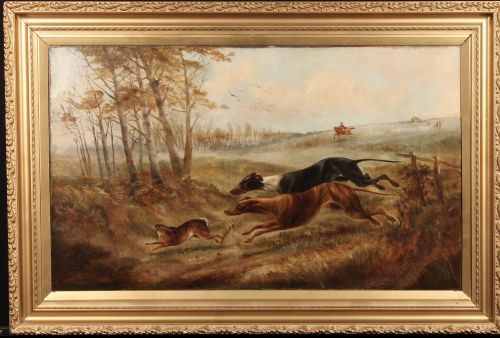
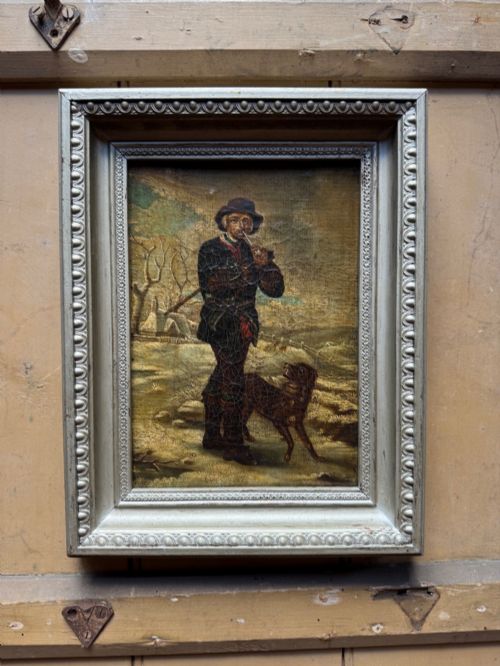
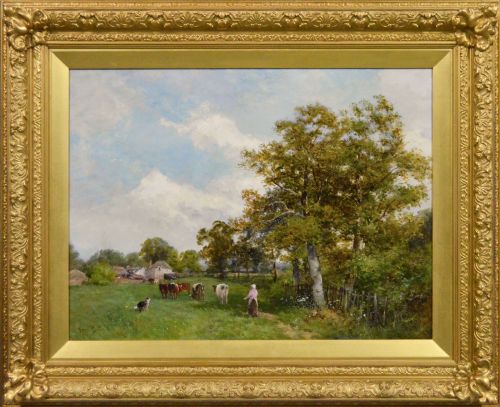
The most common pieces on this page originate from the nineteenth century, including Victorian sporting art and realist studies of spaniels, terriers, and hounds. These works range from naive folk art portraits to accomplished canvases by named painters.
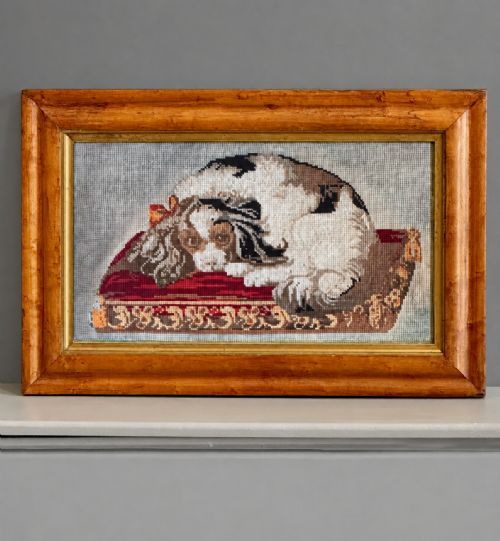
Beyond standalone canine portraits, the selection includes depictions of dogs alongside figures in landscapes, rural sporting scenes involving hare coursing, and textile depictions such as Berlin wool work.
Materials and construction
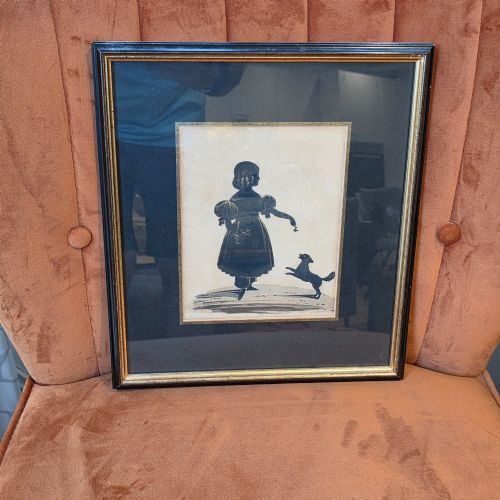
Artworks in this category rely primarily on oil paint applied to canvas or wood board, alongside watercolours, pastels, lithographs, and cut paper silhouettes. Artists utilised traditional brushes and pigments to capture the texture of fur and the natural expressions of animals.
The surrounds employ wood bases finished with gold leaf, gilt, or giltwood, often complementing the period of the artwork. Burr maple and other timber frames also appear, housing works behind protective glass where appropriate.
Distinctions in quality
Quality rests upon the anatomical accuracy and expressive depth of the animal representation, distinguishing accomplished academic works from simpler folk art or naive pieces. Proportions, brushwork control, and the handling of light on the coat separate the finer examples.
The integrity and craftsmanship of the outer moulding influence overall worth, with carved or heavily gilded wooden frames providing a more substantial presentation than simpler mouldings.
Henry Barraud·George Armfield·William James Hubard·David Bates·Martin Theodore Ward·John Sargent Noble·Sir Edwin Henry Landseer·John Emms·John Frederick Herring Senior·Arthur Wardle·William Barraud·Colin Graeme Roe·John Trivett Nettleship
The Gilt Framed Dog Art Glossary
- Giltwood
- Wood carved and coated with gold leaf or a metallic substitute. This material forms the ornate borders common in period framing.
- Oil on Canvas
- Pigment mixed with drying oil applied to a stretched woven fabric support. This technique provides rich colour depth and durability.
- Berlin Work
- A type of nineteenth-century needlework stitched on canvas using wool. It often depicts animals or figures in colourful detail.
- Sporting Art
- Depictions of rural pursuits, including hunting, shooting, and hounds in the field. This genre documents traditional British field sports.
Gilt Framed Dog Art: Frequently Asked Questions
What periods do these dog artworks come from?
The pieces span several centuries, with a heavy concentration originating in the nineteenth century and the Victorian era. Examples also stretch from the Georgian period into the mid-twentieth century.
Creators utilised styles ranging from 19th-century realism and sporting art to naive folk depictions, reflecting changing artistic tastes across decades.
How should I display these framed pieces?
Gilt frames require stable indoor environments away from direct sunlight and excessive moisture to protect the metallic leaf and the underlying artwork. Hanging them at eye level allows proper appreciation of the fine brushwork.
They complement both traditional interiors and modern spaces, where a historic canine portrait creates a strong focal point on a wall.
Are all the dogs in these works purebreds?
The selections feature a wide variety of subjects, including named breeds like King Charles spaniels, Pekingese, terriers, collies, and pointers. Other pieces depict working gun dogs, hunt packs, and mixed-breed farm dogs.
Artists recorded both prized companion animals belonging to notable figures and working animals central to rural life.
What mediums besides oil paint are used?
While oil on canvas and board predominates, the selection includes watercolours, pastels, and nineteenth-century lithographs. Textile pieces such as needlework panels also appear within period surrounds.
Each medium offers a distinct texture, from the smooth finish of paper silhouettes to the tactile depth of wool stitching.