
Gilt Framed Botanical Art
Gilt framed botanical art brings together natural subjects and gilded mouldings, offering detailed floral and wildlife studies suited to period and modern walls.
Gilt Framed Botanical Art
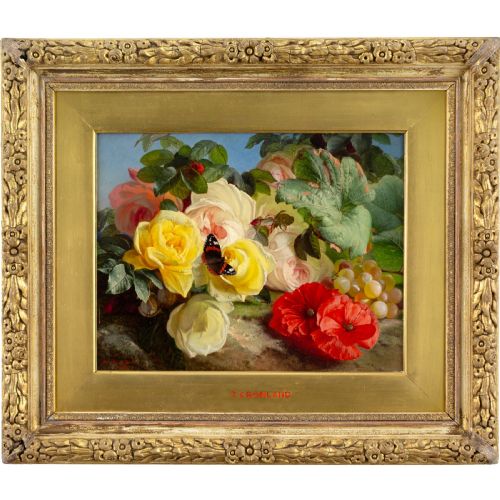
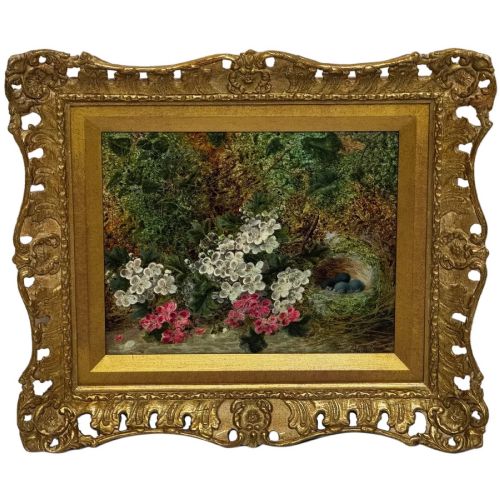
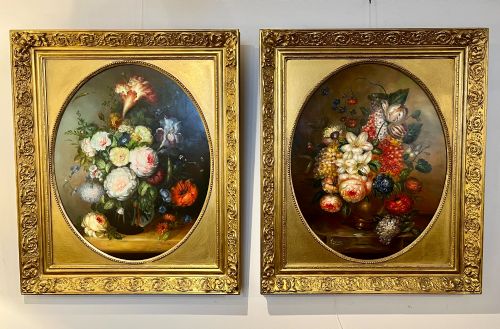
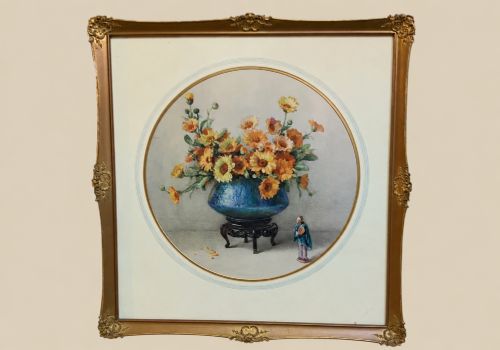
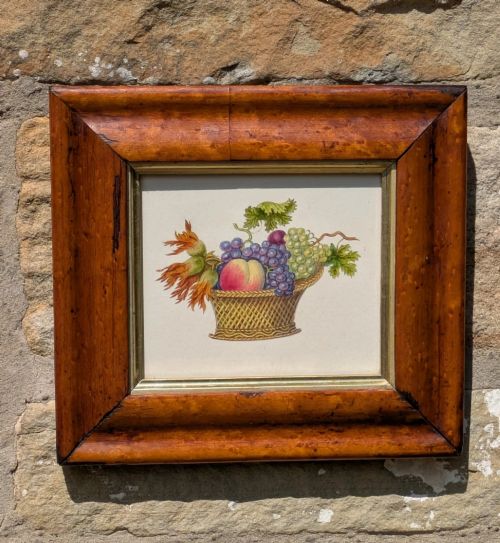
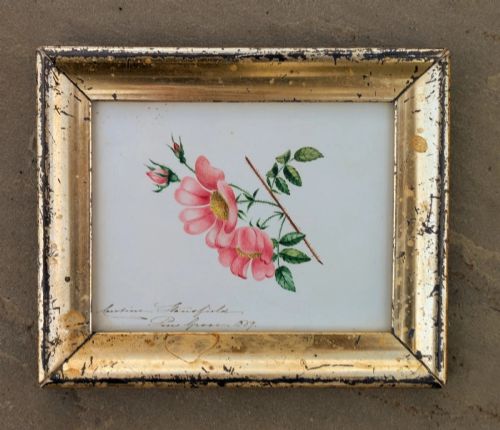
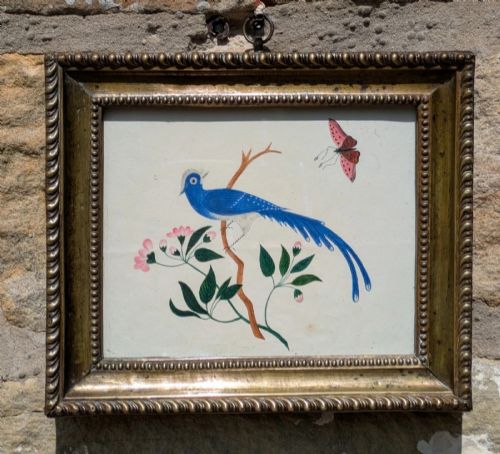
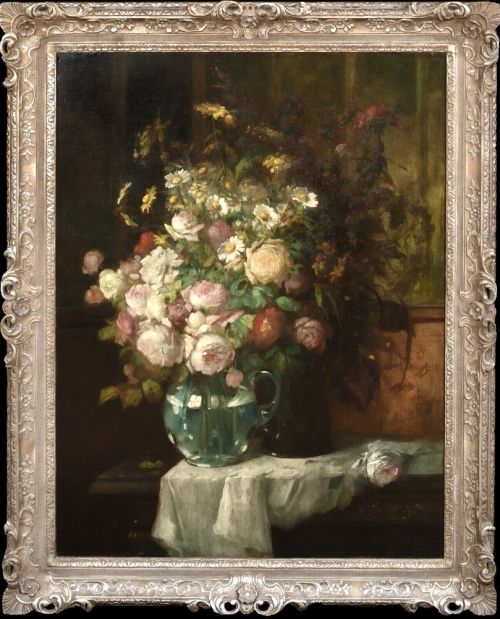
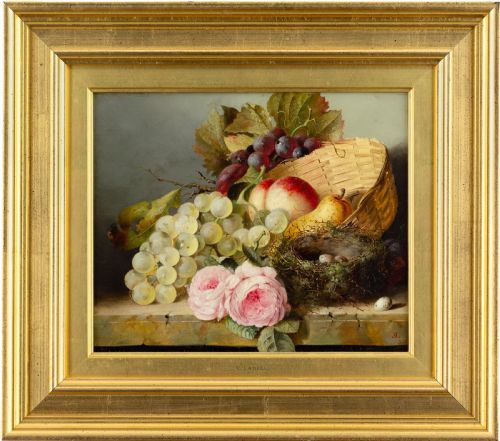
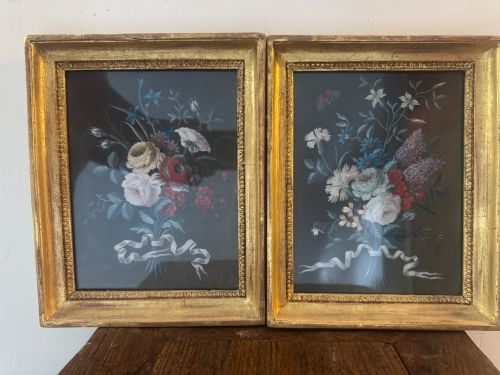
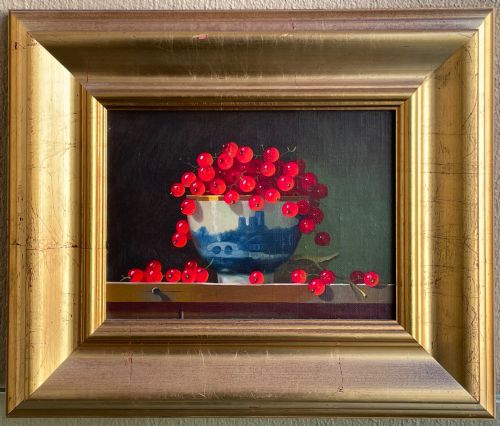
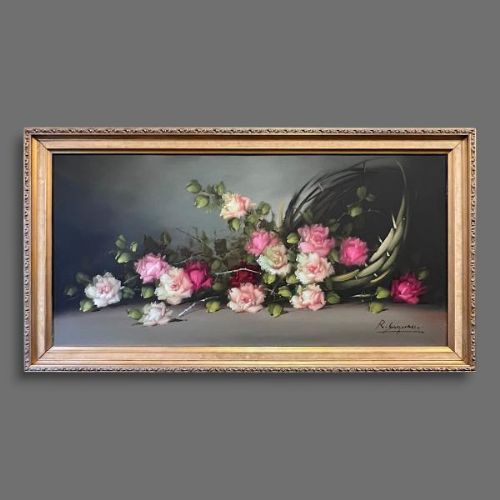
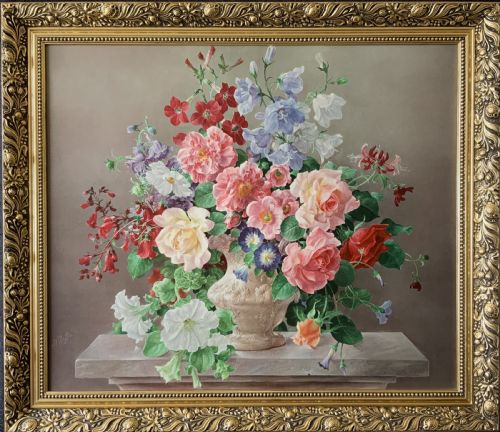
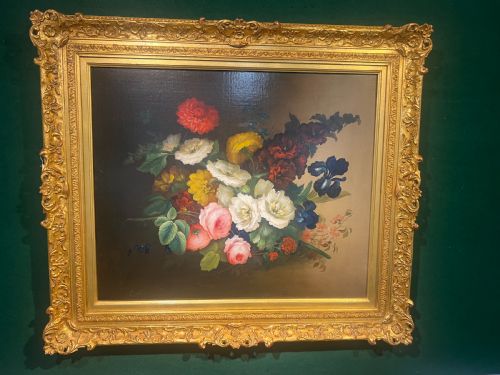
When you search for gilt framed botanical art, you encounter oil paintings, watercolours, gouache works, and vintage prints depicting flowers, fruit, and birds. These pieces span from the Regency and Victorian eras through to mid-century impressionism.
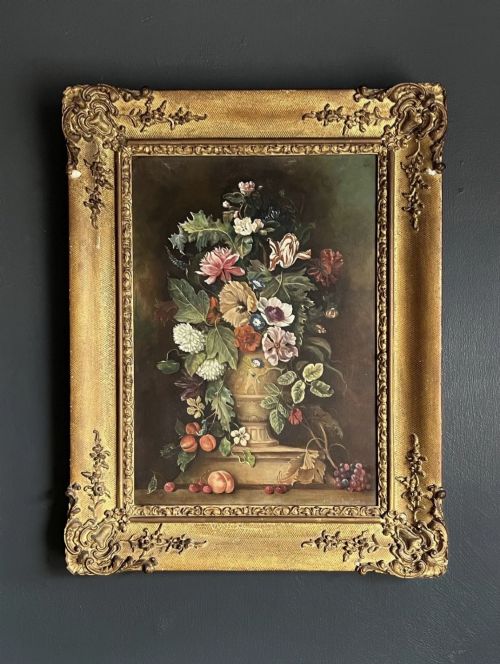
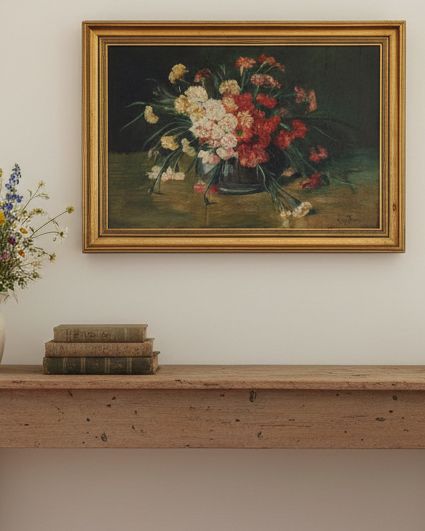
The selections on this page rely heavily on nineteenth-century works and mid-century interpretations, often presenting floral still lifes, natural history illustrations, and garden studies housed within their original or period-appropriate frames.
Mediums range from delicate watercolours on paper to heavier oil on canvas and oil on board, frequently showcasing compositions of roses, wild flowers, and nesting birds.
Materials and Techniques
Artists typically applied oil paint, watercolour, gouache, or pastel onto paper, canvas, or board to capture botanical and avian subjects with careful observation of light and colour.
The surrounding mouldings are predominantly fashioned from wood finished with gold leaf or gesso, creating the characteristic metallic border that defines gilt framed botanical art.
Certain examples incorporate printed techniques such as lithography, oleograph reproduction, or hand-coloured engraving, paired with protective glass and period mounts.
Listings feature paper, canvas, wood, glass, and gold leaf across oil paintings, watercolours, gouache, and lithographs.
Assessing Craftsmanship and Presentation
The distinction between standard decorative pieces and superior examples lies in the precision of the brushwork and the depth achieved in the botanical subject matter, particularly in the rendering of petals, foliage, and plumage.
Frame construction plays a major role in overall quality, where hand-carved or deeply moulded gilt gesso frames that retain their original burnished finish elevate the piece far beyond later replacements.
The harmony between the artwork and its enclosure determines visual success; works that retain their original period mounts and glass demonstrate a greater degree of historical integrity.
Theude Grönland·Oliver Clare·Edward Ladell·Konstantin Stoitzner·John Sherrin·Ian Parker·Amile Coppieters
The Gilt Framed Botanical Art Glossary
- Gesso
- A plaster-like mixture applied to wood frames to create a smooth surface for gilding. It is often moulded into decorative relief patterns.
- Gouache
- An opaque water-based medium that provides rich, flat areas of colour and sharp detail in botanical illustrations.
- Oleograph
- A mechanical colour print textured to imitate an oil painting, popular in the nineteenth and twentieth centuries.
- Lithograph
- A printmaking process based on the repulsion of oil and water, frequently used to produce coloured botanical and ornithological plates.
Gilt Framed Botanical Art: Frequently Asked Questions
What periods do these pieces come from?
The selection includes works originating from the Regency and Victorian periods, stretching forward through the nineteenth century into mid-century modern examples.
Dates span from early nineteenth-century watercolours and engravings up to mid-century impressionist oil paintings from the 1950s and 1960s.
Are the frames original to the art?
Many works retain their period gilt wood or gesso frames, which reflect the framing conventions of their respective eras of production.
Some pieces have been paired with complementary period frames that match the age and aesthetic of the artwork within.
How do I care for watercolour botanical art?
Works on paper, particularly watercolours and gouache, require careful placement away from direct sunlight to prevent fading of delicate pigments.
Maintaining stable indoor humidity levels also protects both the paper substrate and the integrity of the surrounding gilt frame.
What is the difference between an oil painting and a lithograph?
Oil paintings feature hand-applied pigments on canvas or board, showing visible brush texture and depth of colour built up in layers.
Lithographs are printed reproductions on paper using flat printing plates, often hand-coloured to resemble original watercolours.