


Gilt Floral Box
A gilt floral box brings together metalwork, porcelain, and painted decoration to hold small treasures on a dressing table.
Gilt Floral Box
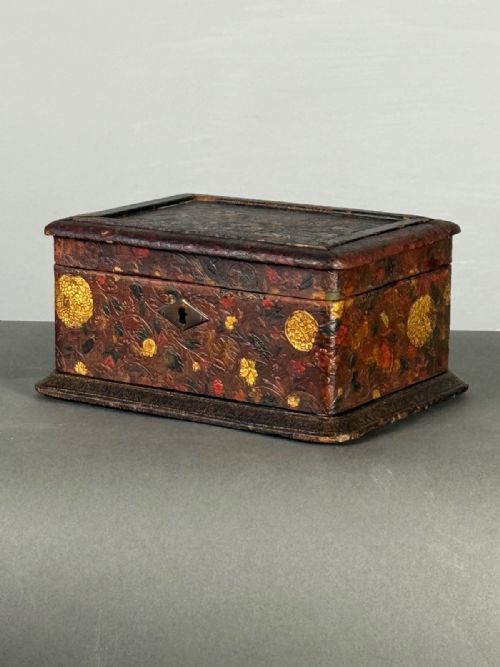
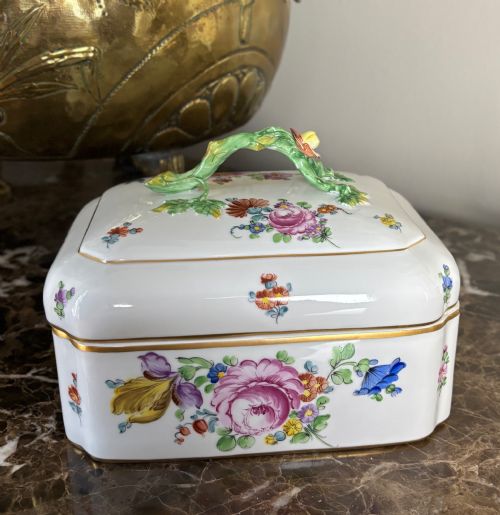
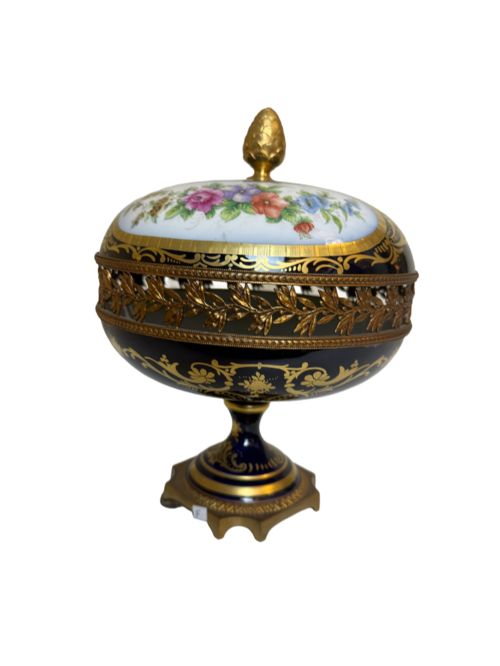
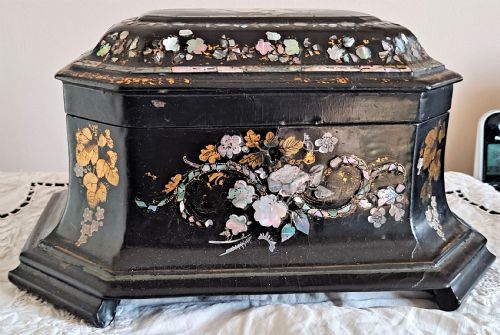
A gilt floral box comprises lidded containers designed for trinkets, tea, or stationery, often carrying painted or gilded floral motifs across the surface. These pieces appear in forms such as tea caddies, jewellery caskets, bonbonnières, and lacquer cases dating from the Regency and Victorian periods.
The version most commonly met on this page is the 19th-century French or English lidded box, utilising materials like porcelain, wood, and metal with gilt decoration. Examples range from papier-mâché and leather-covered pieces to porcelain dishes on stands and lacquered table cabinets.
Makers and origins span English, French, German, and Italian workshops, incorporating styles such as Rococo Revival, Chinoiserie, and Second Empire. Collectors encounter these works as functional desk items or small display containers intended for keepsakes.
How they were made
Craftsmen built the foundations of these boxes using timber, papier-mâché, leather, or porcelain, applying structural reinforcement where necessary for daily use. Wooden frames received marquetry, pokerwork, or lacquer layers, while ceramic bodies were formed and fired in European kilns.
Gilding and surface decoration required gold leaf, ormolu mounts, enamel, and polychrome paint to render the floral scenes and gilt highlights. Metal mounts were cast and chased, then secured to the corners, hinges, and feet of the boxes.
Some boxes spent their early days hiding expensive sweets from children.
What varies in quality
Quality depends on the precision of the surface decoration, the crispness of the gilt work, and the integration of the ormolu mounts with the body of the box. Pieces with hand-painted floral scenes and finely chased metal fittings demonstrate superior workshop execution.
The choice of materials shapes the standard of the object, distinguishing simple painted wooden surfaces from elaborate marquetry, intricate lacquer, or fine porcelain bodies with intact gilt interiors and secure original hinges.
Susse Freres Paris·Thomas Pemberton Robert Mitchell
The Gilt Floral Box Glossary
- Ormolu
- Gilded bronze mounts applied to furniture, porcelain, and boxes. This technique was widely used in 19th-century French workshops to accent corners and borders.
- Papier-mâché
- A composite material made of paper pulp or sheets of paper mixed with glue and resin, pressed and dried into a rigid form. It provided a smooth base for lacquer and gilt decoration in Victorian boxes.
- Bonbonniere
- A small ornamental box intended for sweets or confectionery. These delicate containers often featured porcelain bodies and hinged metal mounts.
- Marquetry
- The art of applying pieces of veneer to a structure to form decorative patterns. Makers utilised varied wood tones to create pictorial designs on box lids.
- Pokerwork
- A method of decorating wood or other materials by burning designs with a heated tool. It appears on Regency boxes alongside painted and gilt details.
Gilt Floral Box: Frequently Asked Questions
What were gilt floral boxes used for?
These boxes served as secure containers for small valuables, letters, tea leaves, or confectionery on dressing tables and desks.
Their decorative surfaces also made them display pieces within domestic interiors during the 19th century.
How do I identify a Victorian box?
Victorian examples frequently utilise papier-mâché, lacquer, or oak, combined with painted floral decoration and gilt highlights.
Construction methods and material choices align with mid-to-late 19th-century manufacturing practices in England and Europe.
Are these boxes made of solid gold?
The gilt elements consist of gold leaf applied to surfaces or ormolu mounts fixed to the exterior of the box.
The underlying body is typically composed of wood, porcelain, metal, or leather rather than solid precious metal.
Where were these decorative boxes produced?
Production centres included France, England, Germany, and Italy, with specific workshops in Paris, Limoges, and Dresden.
Each region applied distinct regional styles, ranging from French Rococo Revival to English papier-mâché work.