

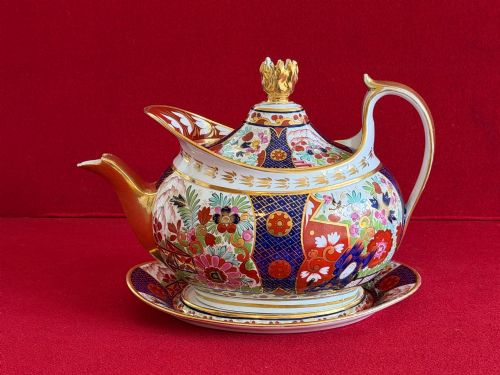
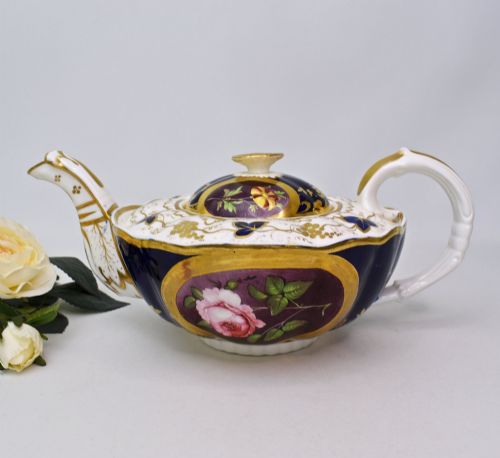
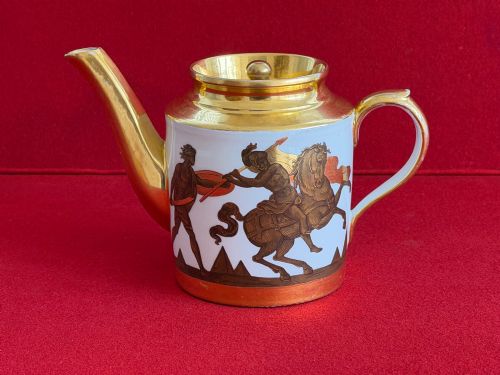
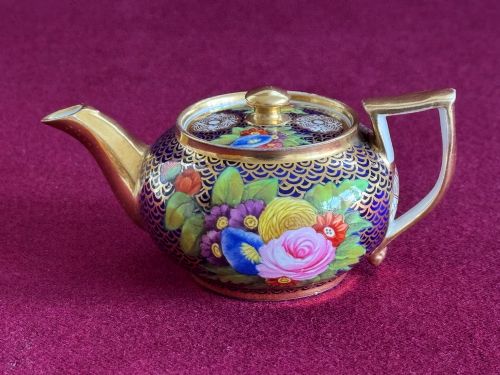



Gilt Ceramic Teapot
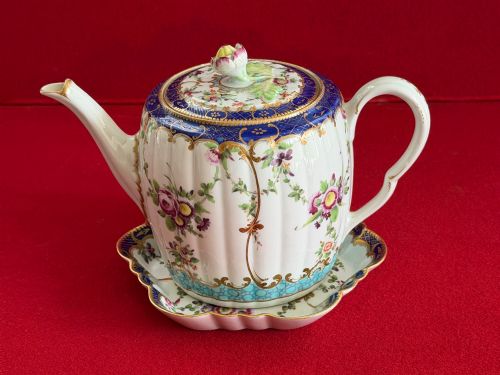
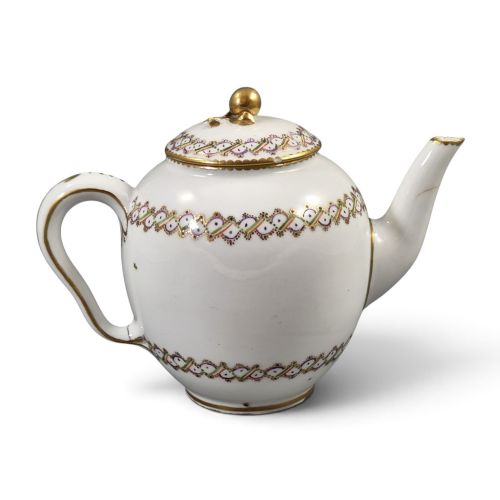
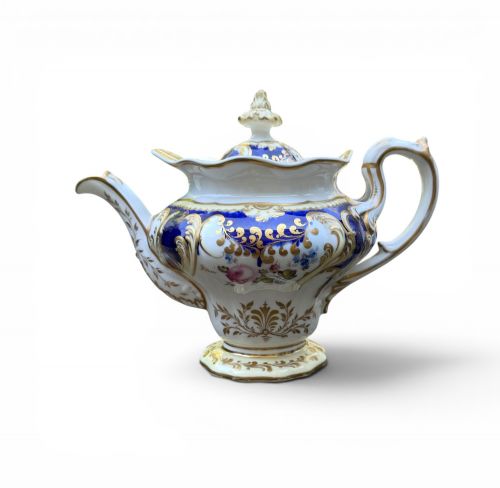
These gilt ceramic teapot examples combine ceramic bodies with gold leaf or gilding, offering a decorative surface that elevates any table setting.
Gilt Ceramic Teapot
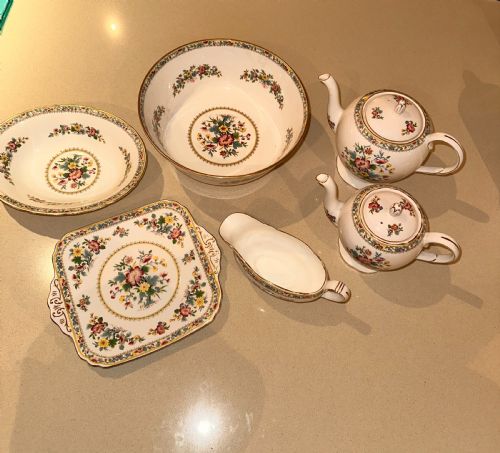
A gilt ceramic teapot represents a vessel designed for brewing tea, finished with gold leaf, gilt, or enamelling across various forms. Buyers searching for a gilt ceramic teapot will find individual teapots alongside larger tea sets, tea services, and breakfast sets.
The selections span multiple periods, ranging from Georgian and 18th century pieces through Victorian and Regency examples up to mid-twentieth century productions. Forms include barrel shapes, oval designs, and octagonal bodies complete with covers and occasional stands.
Origins vary across English factories like Derby, Worcester, and Spode, alongside continental works such as Royal Sèvres and Old Paris. Pieces from the Kangxi period and Japanese Meiji period also appear, demonstrating the global reach of ceramic gilding traditions.
How They Were Made
Makers utilised ceramic bodies including porcelain, bone china, and hard-paste porcelain as the foundation for these vessels. Artisans shaped these materials into specific forms such as barrel shapes and octagonal bodies.
Decoration relied on hand-painting and enamel work combined with gold leaf or surface gilding. Firing fixed the pigments and the metallic applications to the ceramic body.
Gilt Ceramic Teapot Retail Price Guide 2026
Typical asking prices for gilt ceramic teapot among the pieces listed under this phrase on Sellingantiques today, from the lower quarter to the upper quarter. They describe what is for sale here now, not the wider market.
Miniature incense burners slip quietly into tea listings, proving that even kilns needed a sideways hobby.
What Varies in Quality
Quality rests upon the precision of the hand-painted decoration and the refinement of the ceramic body. Early porcelain and hard-paste porcelain bodies display thinner walls and more delicate handles than later wares.
The application of gold leaf or surface gilding dictates visual impact, with some pieces featuring intricate pattern work and others utilising restrained gilt highlights. The integration of matching stands, covers, and associated tea service components distinguishes more comprehensive suites.
Derby Porcelain·Royal Sèvres·Royal Worcester·Royal Davenport·Spode Porcelain·Kotobuki do
The Gilt Ceramic Teapot Glossary
- Hard-paste porcelain
- A dense, durable ceramic material fired at high temperatures using kaolin and petuntse. It provides a bright white body suitable for detailed enamel and gilt decoration.
- Gilding
- The application of gold leaf or gold powder to the surface of the ceramic. This technique accentuates moulded details and painted panels.
- Enamel
- Vitreous coloured glass fused to the ceramic surface during firing. It creates vibrant, durable designs that complement metallic gilding.
- Bone china
- A type of porcelain incorporating animal bone ash, resulting in a strong body with a milky translucency. English factories frequently utilised this material for tea wares.
- Tea service
- A coordinated group of ceramic vessels for serving tea, often comprising a teapot, cream jug, and sugar bowl. Matching cups, saucers, and stands sometimes accompany the main pieces.
Gilt Ceramic Teapot: Frequently Asked Questions
How do I date a gilt ceramic teapot?
Dating relies on identifying factory marks, stylistic indicators such as Rococo Revival curves or Louis XVI forms, and the composition of the ceramic body. Comparing the decorative patterns and gilding techniques to established production periods helps narrow the timeframe.
Examination of the base often reveals manufacturer stamps or pattern numbers. These factory details connect the vessel to specific operational years of the maker.
Are these teapots suitable for daily use?
Most antique gilt ceramic teapots function primarily as decorative display pieces due to the delicate nature of their gold leaf and hand-painted enamels. Frequent use and washing can wear away the surface gilding over time.
Collectors generally reserve these items for special occasions or display them within cabinets. Hand washing with mild soap protects the fragile metallic details if used.
What is the difference between porcelain and bone china?
Porcelain is fired at high temperatures to create a vitrified, non-porous body, whereas bone china incorporates bone ash into the paste for added strength and translucency. Both materials accept gilding and enamel painting readily.
English manufacturers often preferred bone china for its bright white finish, while continental makers utilised hard-paste porcelain. Both varieties support intricate gilt decoration.
Why do some teapots include a stand?
Stands protected tabletops and linen cloths from heat and drips associated with hot tea service. They were potted in matching ceramic bodies and decorated with corresponding gilt patterns.
Surviving stands add completeness to a teapot set. They reflect the formal dining practices of the Georgian and Regency periods.