




Gilt Ceramic Jardiniere
These gilt ceramic jardiniere pieces bring interior greenery to life with golden ornament and enduring craftsmanship.

Gilt Ceramic Jardiniere
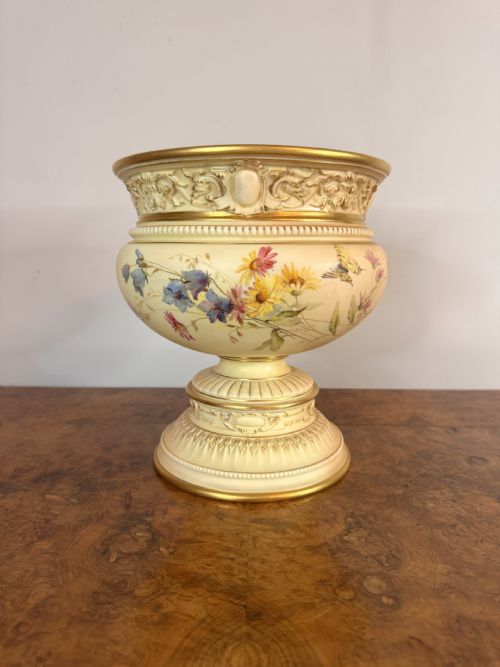
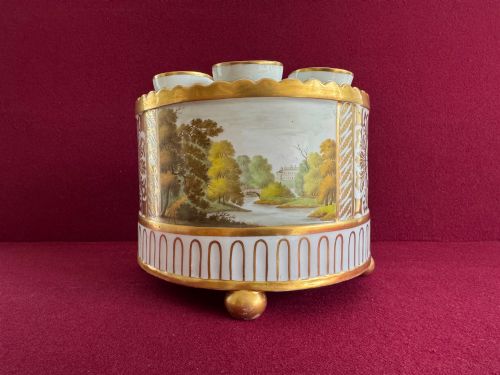
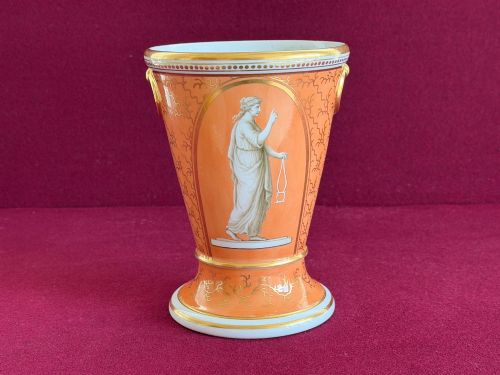
A gilt ceramic jardiniere stands as a decorative vessel designed to hold potted plants or cut flowers within a room. The selections on this page span several eras, including Georgian bough pots, Victorian French Rococo revival planters, and Art Nouveau porcelain cachepots.
Makers shaped these objects into footed bowls, square planters, and lidded bough pots using earthenware and porcelain bodies. Many examples hail from English manufactories such as Royal Worcester, Coalport, and Flight and Barr Worcester, alongside French workshops and Japanese Satsuma production.
The aesthetic merges horticulture with formal interior display, often pairing glazed ceramic bodies with metallic mounts, handles, and hand-painted motifs. Buyers encounter both single vessels and symmetrical pairs intended for mantelpieces and centre tables.
How they were made
Potters shaped clay bodies on the wheel or via moulds before applying glazes, enamels, and hand-painted details. Workshops then fixed gold leaf or applied gilding to rims, handles, and raised surface patterns.
Selected pieces incorporate gilt bronze mounts, which frame the ceramic body and provide structural feet or handles. Firing techniques varied from earthenware lower-temperature kilns to high-fired porcelain and bone china.
Gilt Ceramic Jardiniere Retail Price Guide 2026
Typical asking prices for gilt ceramic jardiniere among the pieces listed under this phrase on Sellingantiques today, from the lower quarter to the upper quarter. They describe what is for sale here now, not the wider market.
Some nineteenth-century makers drilled small drainage holes in the base, proving that even high-drawing room plants occasionally needed a sensible drink.
What varies in quality
The refinement of the hand-painted decoration and the crispness of the gilt application separate standard production from superior examples. Master painters employed detailed brushwork for floral panels and figurative scenes, while lesser pieces relied on simpler stencilled or transfer-printed borders.
The weight and precision of the ceramic moulding also indicate quality, alongside the integration of any metal mounts. High-grade pieces retain intact gilding without rubbing, maintaining the intended contrast between the gold surface and the glazed ceramic base.
Flight and Barr Worcester·Royal Dux·Royal Worcester·Royal Crown Derby·Coalport·Minton·Samson
The Gilt Ceramic Jardiniere Glossary
- Jardiniere
- A decorative pot or stand for holding plants or flowers. These vessels often sit on tables or pedestals within formal reception rooms.
- Cachepot
- An ornamental flowerpot outer casing designed to hide a plain utilitarian plant pot inside. The term translates from French as hiding pot.
- Bough pot
- A traditional vessel used for holding cut branches and flower boughs. Georgian examples frequently feature lids with perforation holes to keep stems upright.
- Gilding
- The application of gold leaf or gold dust to a surface for decoration. This technique highlights rims, handles, and painted borders on ceramic bodies.
- Imari
- A style of Japanese porcelain featuring blue, iron red, and gold decoration. European makers frequently copied these distinctive palettes during the nineteenth century.
Gilt Ceramic Jardiniere: Frequently Asked Questions
What is a gilt ceramic jardiniere used for?
These vessels were created to house potted plants or floral arrangements indoors, protecting furniture from moisture while adding a decorative element to a room.
Today, they function as standalone decorative objects on side tables, mantelpieces, or plant stands without necessarily holding soil and live plants.
How do I care for antique porcelain?
Dust the surface gently with a soft, dry cloth to prevent scratching the glaze or wearing away the delicate gold leaf and painted enamels.
Avoid using chemical cleaners or submerging pieces in water, particularly those with aged metal mounts or hand-painted overglaze decoration.
Can these pots hold water directly?
Many older ceramic and earthenware vessels were not manufactured to be entirely waterproof over long periods, and hairline fractures can develop in the glaze.
It is safest to place a modern plastic liner or a separate small dish inside the vessel if you intend to use fresh flowers with water.
How can I tell the period of a jardiniere?
Examine the base for factory marks, handwritten pattern numbers, or impressed stamps that correspond to known manufacturing dates and potteries.
The artistic style, such as the curved asymmetry of Art Nouveau or the heavy gilt ornament of Victorian revival pieces, also points to a specific era.