


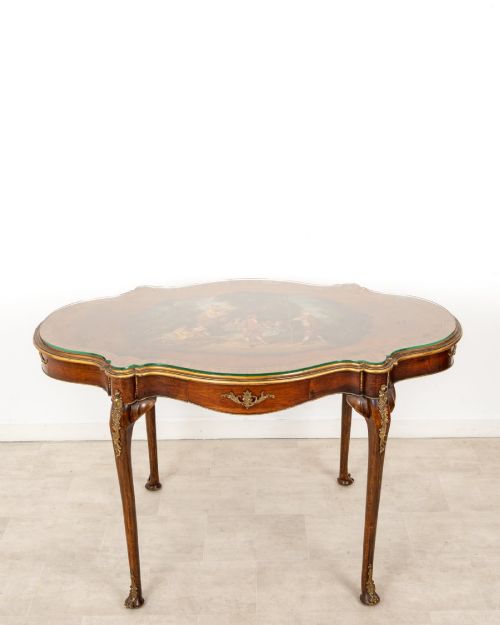
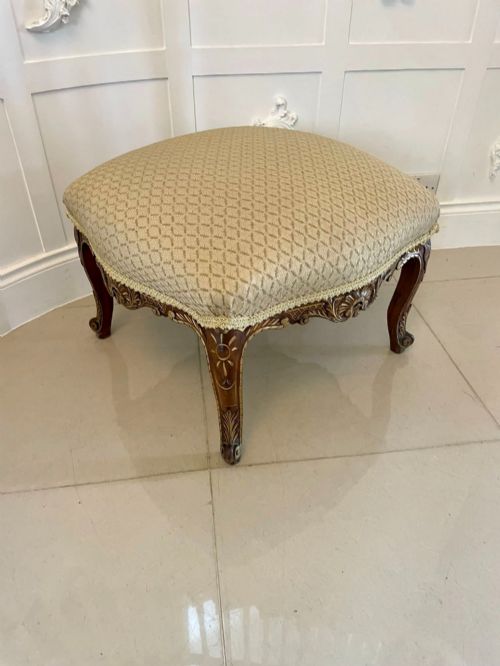
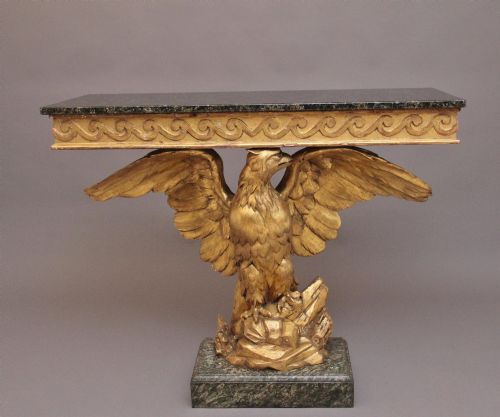
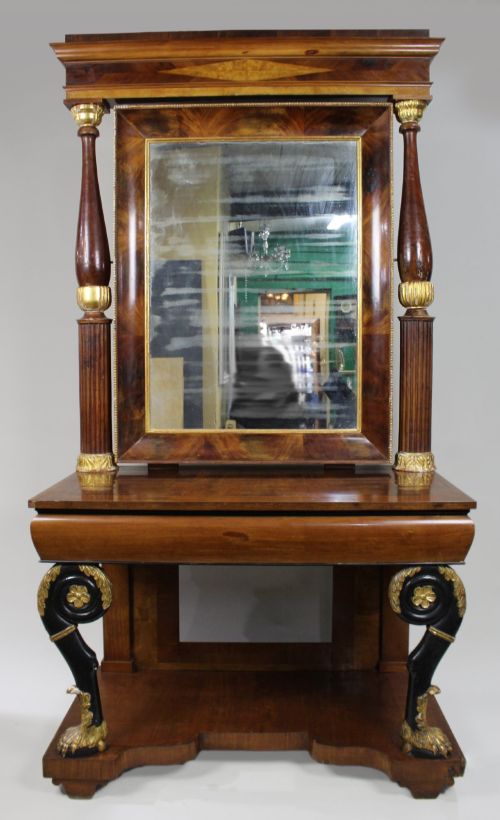
Gilt Carved Table
When you search for a gilt carved table, you find ornate console tables and side pieces that bring classical presence to a room.
Gilt Carved Table
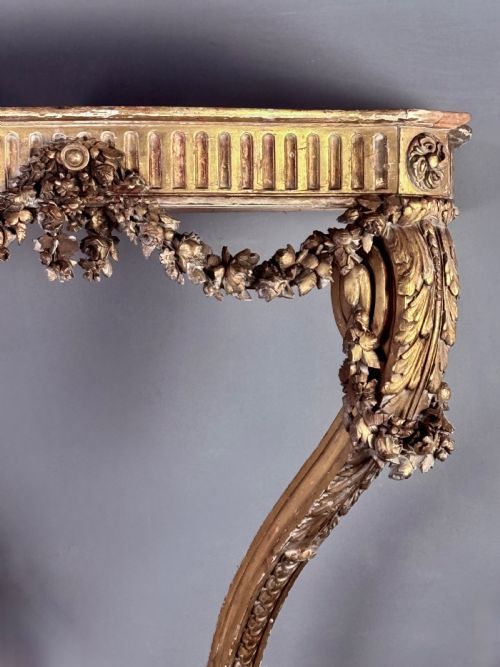
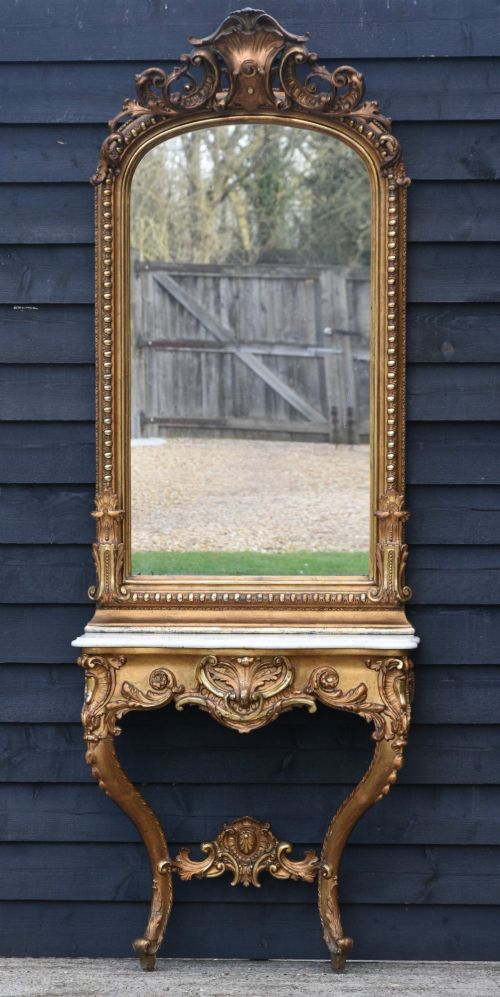
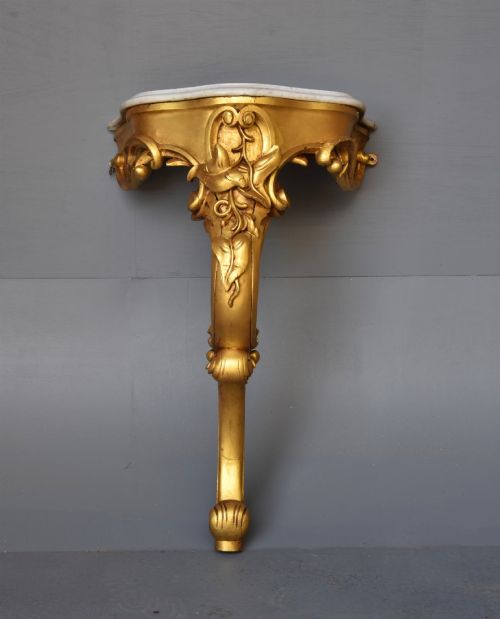
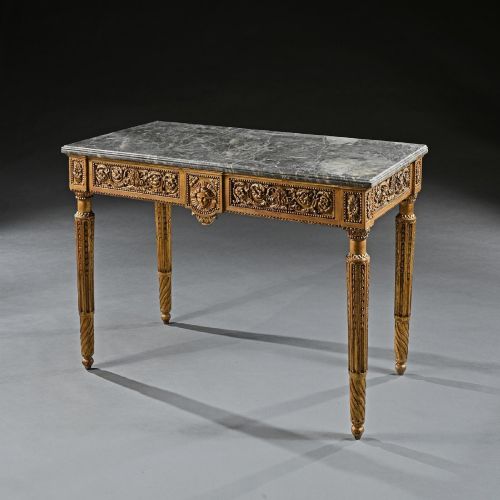
Console tables dominate this selection, frequently paired with fitted marble tops and carved wooden frames originating from French and Italian workshops.
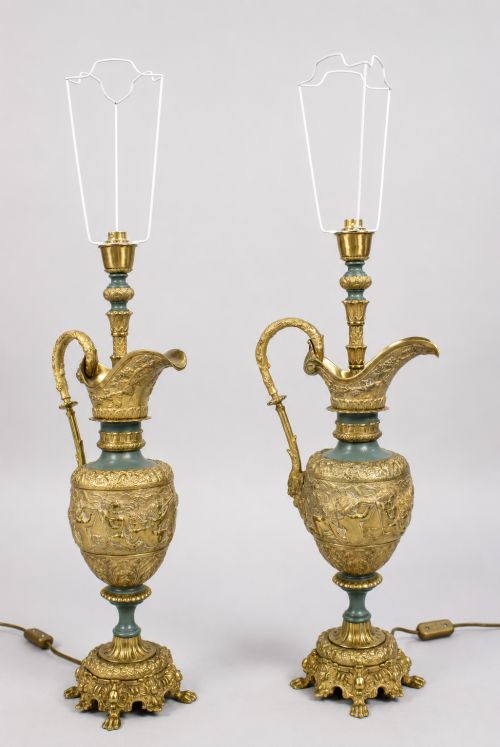
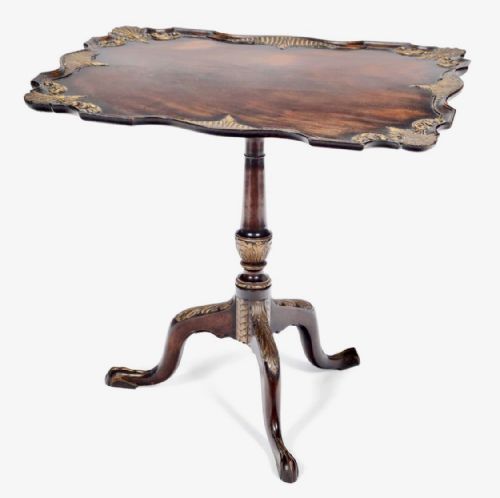
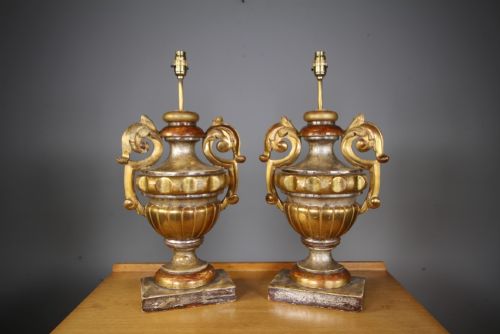
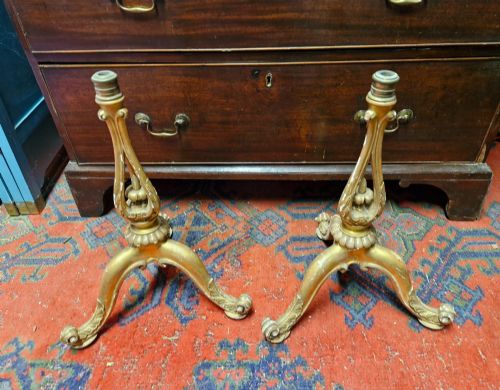
The material record also spans occasional tables, tripod bases, and table lamps from the eighteenth, nineteenth, and early twentieth centuries.
Italian Neoclassical and French Rococo Revival styles recur across the listings, showing how makers adapted historical motifs for domestic interiors.
Materials and Techniques
Carved wooden substrates of pine, walnut, or mahogany provide the structural framework, often prepared with a layer of gesso before gilding.
Makers applied gold leaf or liquid gold paint directly to the prepared surfaces to achieve a reflective metallic finish.
Insets of white or figured marble frequently form the upper surfaces of console and coffee tables, resting upon the gilded wooden bases.
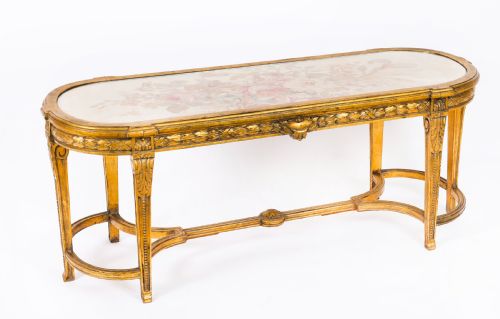
Listings feature eighteenth-century Italian console tables alongside nineteenth-century French Rococo Revival pieces and early twentieth-century coffee tables.
Craftsmanship and Execution
The depth and crispness of the wood carving distinguish finer examples, particularly where floral swags, scrolls, or figural elements show deliberate hand-tooling.
The application of the gesso and gold leaf affects how the surface catches the light, with smoother bole preparation yielding a warmer metallic sheen.
The integration of the marble top with the wooden frieze indicates the original ambition of the piece, as does the weight and stability of the frame.
Felix-Alfred Ternisien·Wylie and Lochead
The Gilt Carved Table Glossary
- Giltwood
- Wood that has been coated with gold leaf. This finish defines the primary visual characteristic of these tables.
- Gesso
- A plaster-like mixture applied to wood to create a smooth surface for gilding. It allows carvers to achieve sharp relief details.
- Console Table
- A table designed to stand against a wall, frequently supported by two front legs. These pieces often feature wall fixings for stability.
- Rococo Revival
- A nineteenth-century design movement imitating the ornate, asymmetrical curves of the eighteenth-century French style. It appears frequently in console frames.
- Tripod Table
- A small table standing on three legs. The evidence shows these paired with carved gilt and mahogany constructions.
Gilt Carved Table: Frequently Asked Questions
Where should I place a console table?
Console tables sit naturally against a flat wall in a hallway, drawing room, or dining space. They provide a surface for lamps, mirrors, or decorative objects without blocking movement.
Because many historical console designs were built to anchor against a wall, pairing them with a matching mirror creates a balanced focal point in a reception room.
How do I care for giltwood surfaces?
Dust giltwood frames gently with a dry, soft cloth to prevent accumulation without disturbing the delicate gold leaf layer. Avoid liquid cleaners and modern polishes, which can strip the historic finish.
Positioning the table away from direct sunlight and damp environments protects both the gesso base and the underlying carved wood over time.
What is the difference between console and centre tables?
Console tables are engineered to stand flat against a wall, frequently featuring decorated fronts and plain backs. Centre tables are finished on all sides for placement in the middle of a room.
The listings show that console tables often accommodate heavy marble tops, whereas centre tables utilise circular or freestanding wooden frames.
How do I identify a Regency period table?
Regency tables draw upon classical Greco-Roman motifs, featuring darker timbers like mahogany, parcel-gilt details, and restrained proportions. Their carving tends to be more architectural than the later exuberant revival styles.
Examining the structural joinery and secondary woods helps confirm the early nineteenth-century manufacturing date.