




Gilt Bronze Vessel
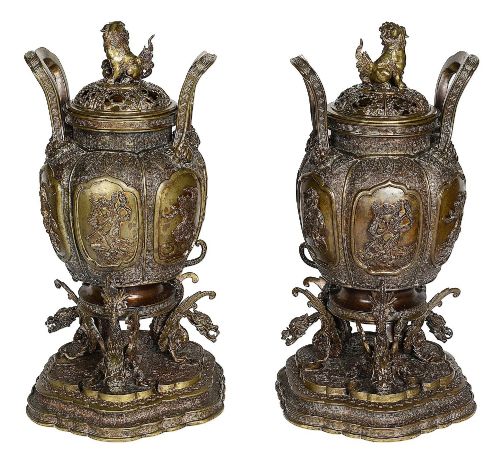
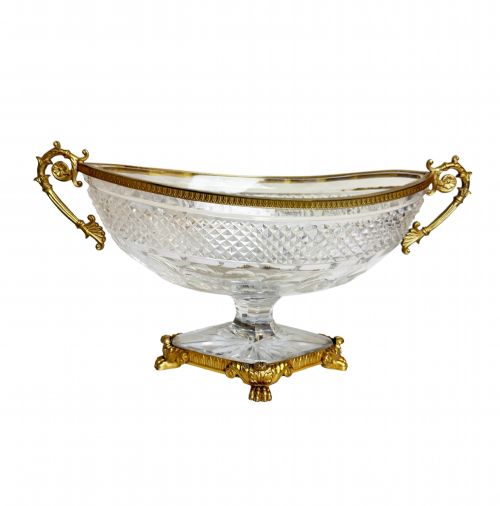
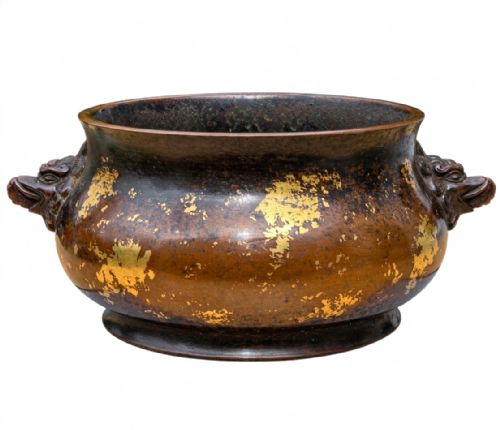
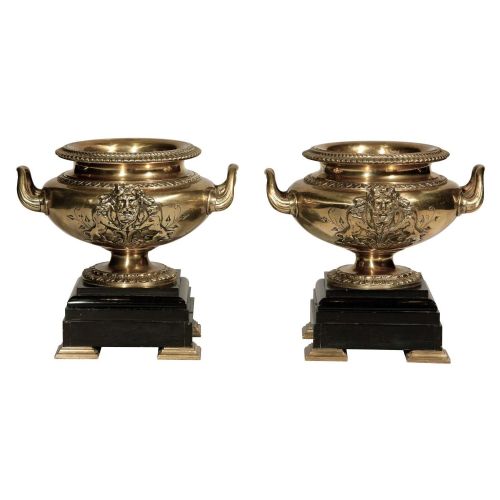
These gilt bronze vessel examples bring together centuries of metalwork, from French neoclassical garnitures to Qing Dynasty incense burners.
Gilt Bronze Vessel
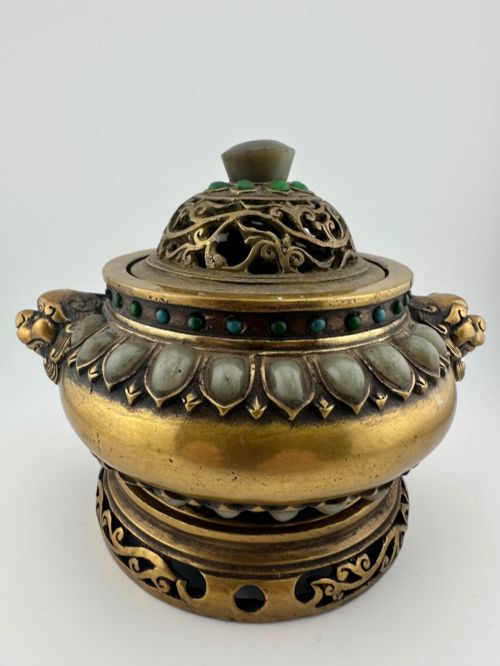
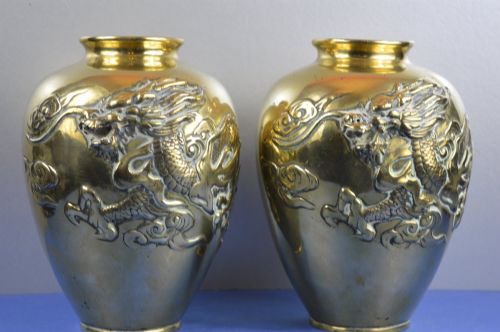
A gilt bronze vessel is a metal container finished in gold, appearing here primarily as jardinieres, incense burners, vases, and decorative urns. The selections span diverse origins, taking in French nineteenth-century works alongside Chinese and Japanese pieces.
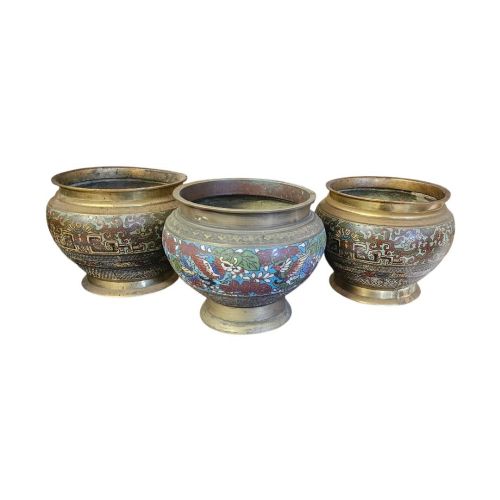
The most common formats on this page are nineteenth-century French garnitures and East Asian decorative metalwork. Buyers encounter everything from massive cast censers to delicate champlevé enamel bowls mounted on marble bases.
How They Were Made
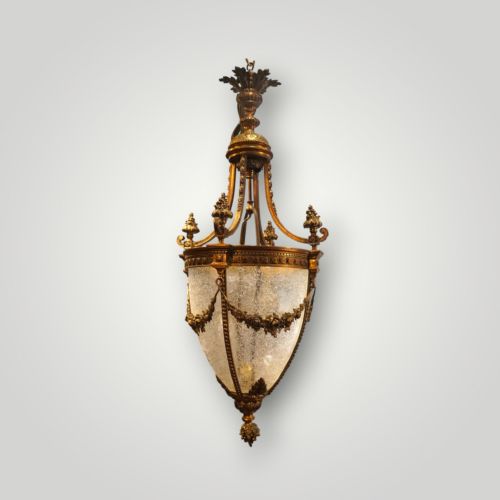
Makers utilised bronze, brass, and copper as the foundational metals for casting and shaping these items. Ormolu and fire gilding techniques applied gold layers directly onto the metal surface to create a lasting lustre.
Many examples incorporate secondary materials such as cloisonné enamel, champlevé enamel, porcelain, hardstones, and crystal glass. Raised details, mixed metal applications, and inlaid stones reflect traditional techniques from European and Asian workshops.
Several items weigh five kilograms or more, proving that historical interior decoration involved some serious heavy lifting.
What Varies in Quality
The crispness of the cast and the depth of the chasing separate standard production from superior artistry. Sharp relief work on mask handles or floral motifs demonstrates greater skill by the metalworker.
The integrity of the gilding and the precision of enamel inlay determine the visual strength of the piece. Integrated stone elements and well-preserved surface finishes indicate higher standards of original manufacture.
Vincenzo Gemito·Barbedienne Paris·Charles Korschann·Henry Dasson·Kizan
The Gilt Bronze Vessel Glossary
- Gilt Bronze
- Metal alloy coated with a thin layer of gold to give a rich metallic finish. This technique protects the underlying bronze while providing a brilliant decorative surface.
- Ormolu
- Finely ground high-carat gold applied to a bronze base using a mercury amalgamation method. The term is commonly associated with French decorative arts of the eighteenth and nineteenth centuries.
- Cloisonne
- Enamel work created by soldering flat metal wires to a metal body to form compartments. These cells are filled with vitreous paste and fired to produce colourful patterns.
- Champleve
- Enamel technique where troughs or cells are hollowed out directly into the metal surface and filled with enamel. The remaining metal walls form the outlines of the design.
- Koro
- Traditional Japanese incense burner often featuring a lidded body and decorative supports. These vessels frequently utilise bronze, mixed metals, and intricate surface detailing.
- Jardiniere
- Large ornamental container designed to hold potted plants or floral arrangements. They appear frequently in porcelain, ceramic, and gilt bronze formats.
Gilt Bronze Vessel: Frequently Asked Questions
What is a gilt bronze vessel used for?
These items served various decorative and practical purposes across different cultures, functioning as incense burners, plant holders, centrepieces, or formal display urns.
In both European salons and Asian interiors, they added status and colour to formal rooms.
How do I care for gilt bronze?
Dust the surface gently with a soft dry cloth to prevent the accumulation of dirt in recessed areas of the chasing and cast relief.
Avoid chemical polishes and liquid cleaners, as abrasive methods can strip away the original gold layer.
How do I identify French nineteenth-century pieces?
French works from this period frequently display Neoclassical, Louis XVI, or Art Nouveau styling, often combining ormolu with green onyx, marble, or porcelain.
Cast quality and stylistic symmetry are typical indicators of work from Parisian foundries.
What is the difference between ormolu and gilt bronze?
Ormolu specifically denotes the historic French process of mercury gilding applied to bronze during the eighteenth and nineteenth centuries.
Gilt bronze is a broader descriptive term covering any bronze object finished with a gold surface regardless of the exact period or method.