




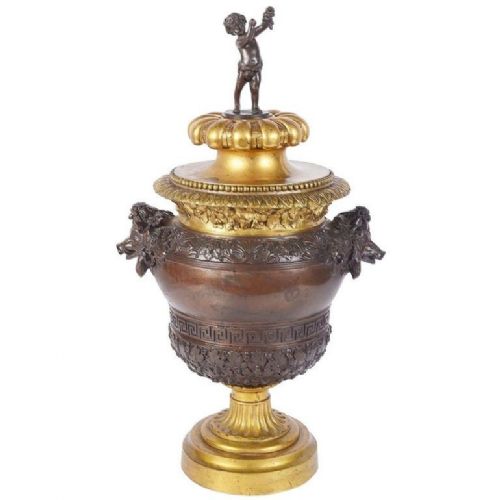


Bronze Urn Finial
A bronze urn finial crowns a lid with classical dignity, adding height and sculptural weight to decorative vessels.
Bronze Urn Finial
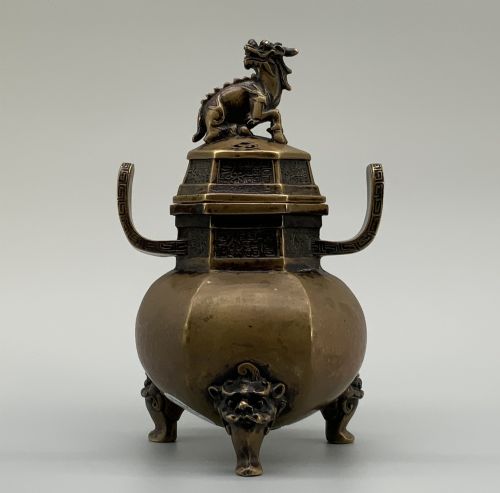
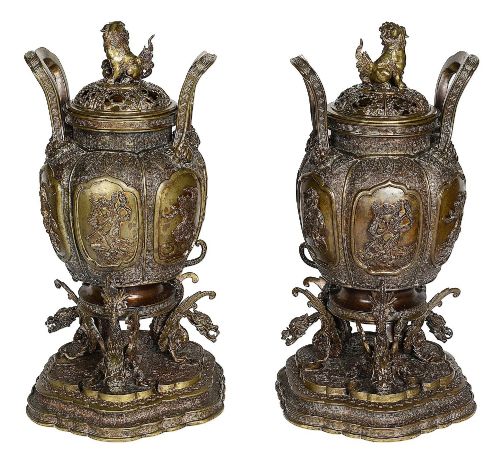
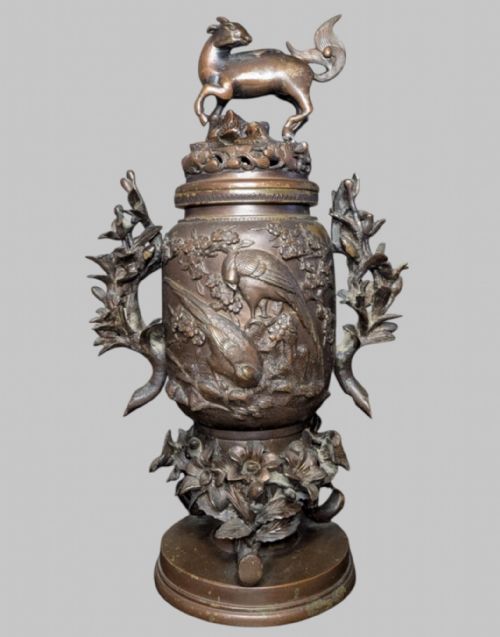
A bronze urn finial appears atop lidded vessels, mantel clocks, and decorative censers across various 19th-century traditions. Buyers seeking a bronze urn finial will encounter French neoclassical designs, Japanese Meiji period bronzes, and Chinese Qing Dynasty censers.
The pieces on this page span the 19th century, incorporating Victorian interpretations alongside Grand Tour objects and Louis XVI revival styles. These decorative elements terminate vessel lids with animal figures, classical motifs, or abstract cast forms.
Most examples originate from European workshops and Asian kilns or foundries, reflecting an international appetite for classical revival and exotic decorative arts. The form serves both a practical function as a handle and a purely aesthetic purpose in balancing the silhouette.
Materials and construction
Foundries utilised bronze, brass, and ormolu, often applying gilding or silvering to enhance the metallic lustre of the cast elements. Surface treatments frequently combined plain metalwork with enamel or porcelain bodies to create contrasting textures and rich visual depth.
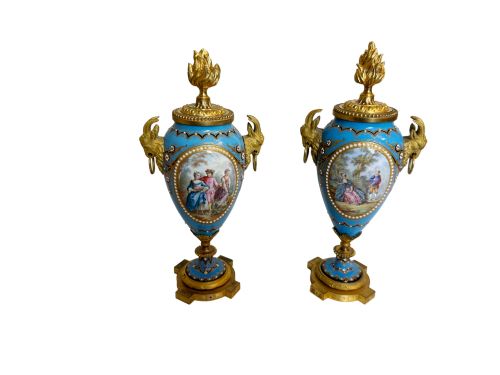
Techniques relied on skilled casting followed by careful chasing and finishing by hand to sharpen the details of figurative or botanical ornaments. Makers integrated diverse materials such as turquoise blue enamel and porcelain into the metallic frameworks of cassolettes and mantel clocks.
Listings feature 19th-century objects spanning French, Italian, Chinese, and Japanese origins, utilising bronze, porcelain, and enamel.
Assessing craftsmanship and execution
Quality separates through the crispness of the chasing and the precision with which decorative elements are integrated into the primary casting. Superior examples demonstrate a fluid handling of form, whether depicting animal figures like goats and Fu lions or classical architectural motifs.
The depth of the gilding and the integrity of supplementary materials such as porcelain or enamel dictate the visual richness of the finished object. Finer pieces maintain balanced proportions between the vessel body and the crowning terminal.
The Bronze Urn Finial Glossary
- Finial
- A relatively small decorative carving or metal casting fixed to the top of a piece of furniture, a clock, or a vessel lid. It provides a visual termination to the vertical line of the object.
- Ormolu
- Finely chopped high-karat gold applied to a mercury-gilded bronze object. This technique imparts a rich yellow metallic finish characteristic of French decorative arts.
- Cassolette
- A vessel designed to function either as a perfume burner or as a covered vase by reversing the lid. These decorative objects frequently incorporate classical metal mounts.
- Grand Tour
- A cultural journey undertaken by wealthy young Europeans to view classical antiquities, inspiring the production of souvenir bronzes and architectural models during the 19th century.
- Censer
- A vessel intended for burning incense, often featuring a perforated cover and supported by feet. Asian and European examples alike utilise intricate metal castings for these ritual and decorative objects.
Bronze Urn Finial: Frequently Asked Questions
What is a bronze urn finial?
A bronze urn finial is a small cast metal ornament that sits atop the lid of a decorative vessel, clock, or censer. It acts as a sculptural terminal that completes the design.
These elements take many forms, including classical figures, animal motifs, and abstract botanical shapes derived from 19th-century revival styles.
How do I identify 19th-century pieces?
Nineteenth-century metalwork often relies on specific stylistic revivals, such as Louis XVI neoclassical designs or Meiji period Japanese bronzes. Examining the casting technique and the nature of the patina helps determine the period.
Makers of this era frequently combined bronze with porcelain, enamel, or ormolu, reflecting the eclectic tastes of Victorian and continental workshops.
Where were these metal objects made?
The pieces originate from diverse cultural centres, including French foundries, Italian workshops, and Asian studios in China and Japan. European makers drew heavily on classical antiquity and Grand Tour aesthetics.
Asian pieces reflect traditional casting methods from the Qing Dynasty and the Meiji period, often featuring regional motifs and marks.
How do I care for bronze?
Bronze requires gentle dusting with a soft, dry cloth to prevent the accumulation of dirt on detailed chasing and gilding. Avoid using abrasive cleaning agents or harsh chemical polishes that can strip historic surface treatments.
Maintaining a stable indoor environment away from excessive moisture protects both the metal substrate and any applied enamel or porcelain elements.