


Gilt Bronze Table Lights
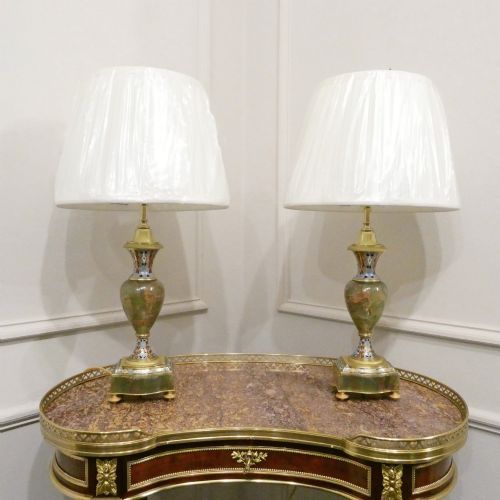
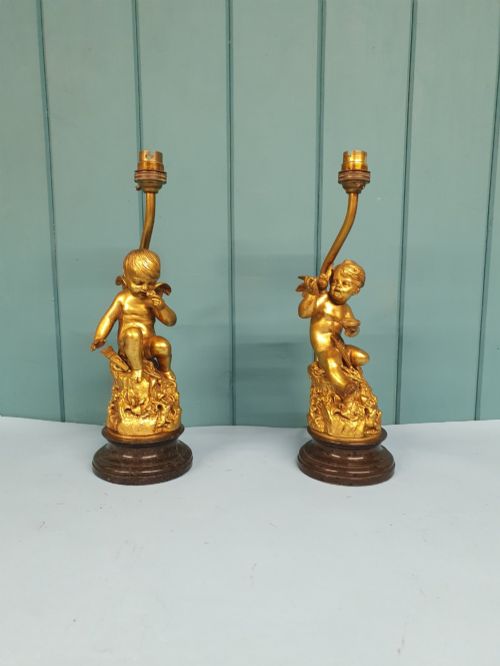
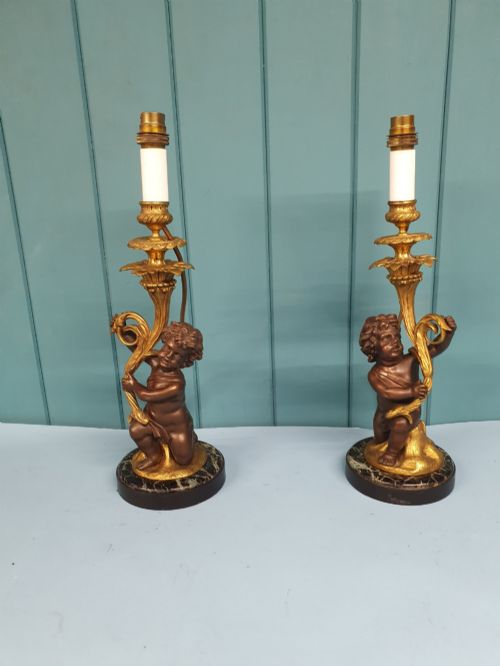
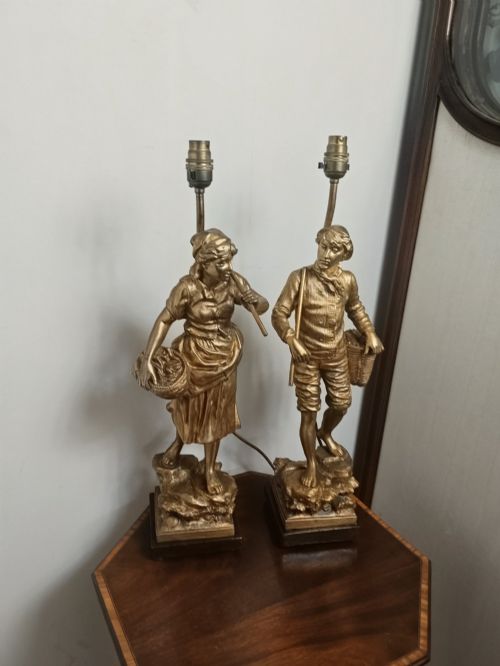
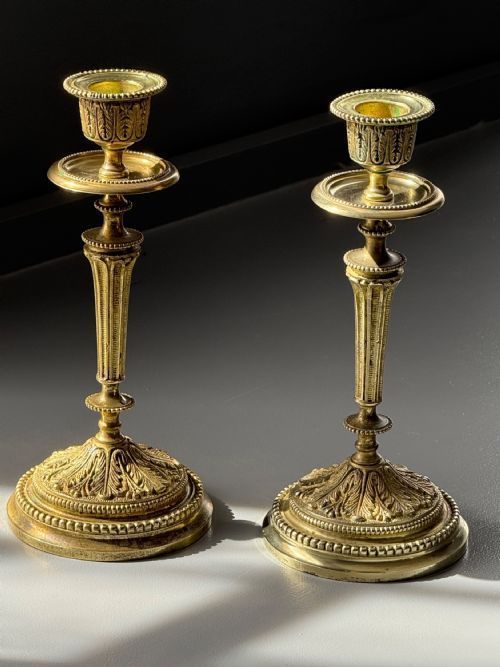
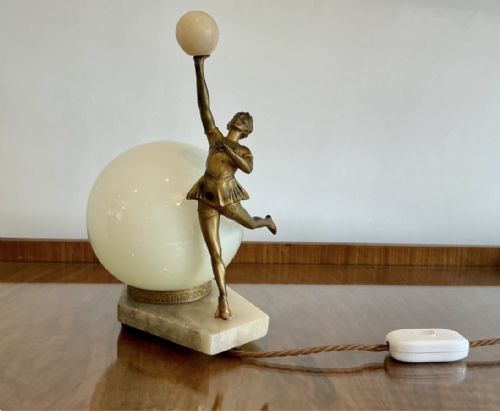
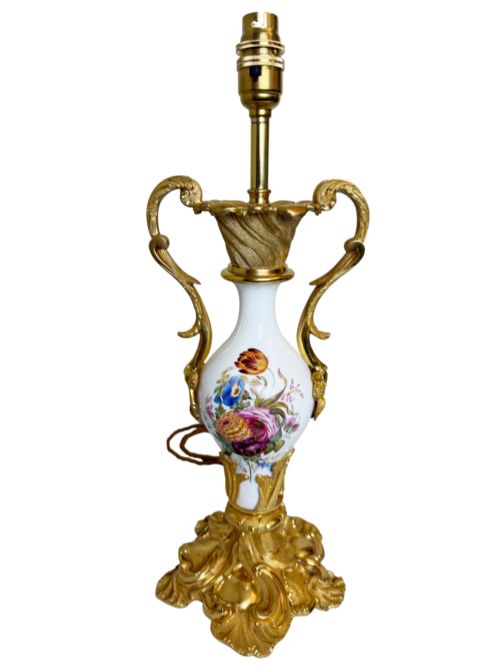
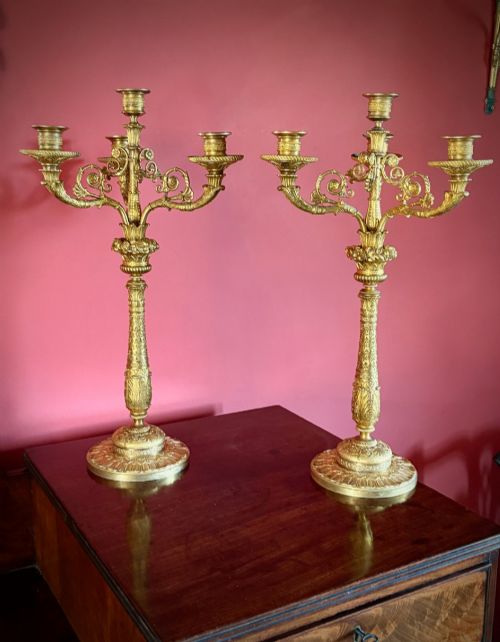
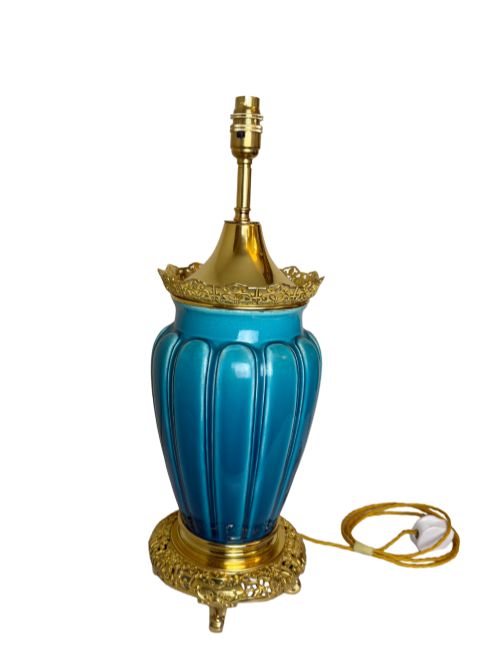
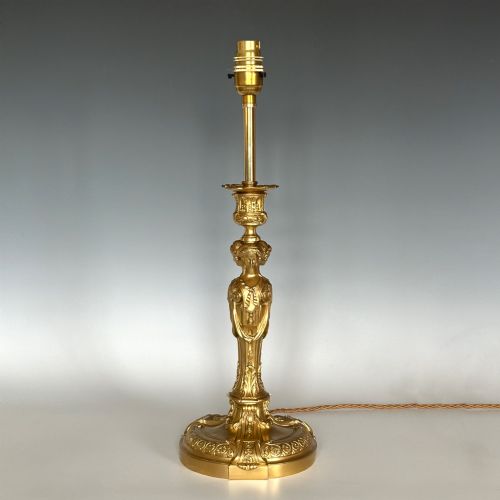
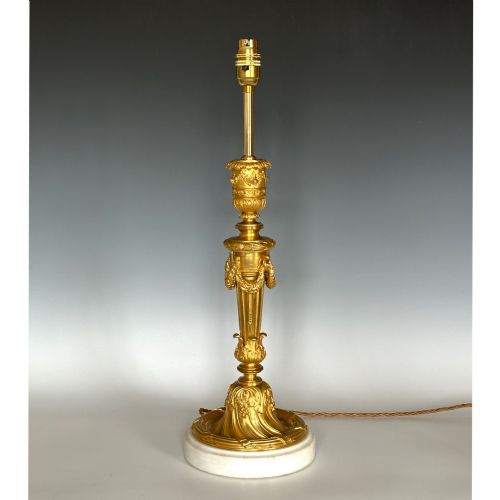
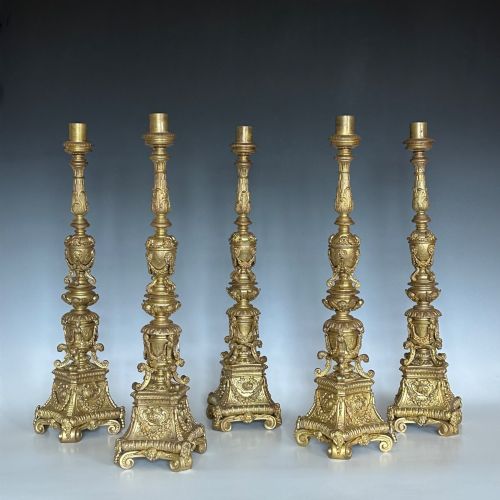
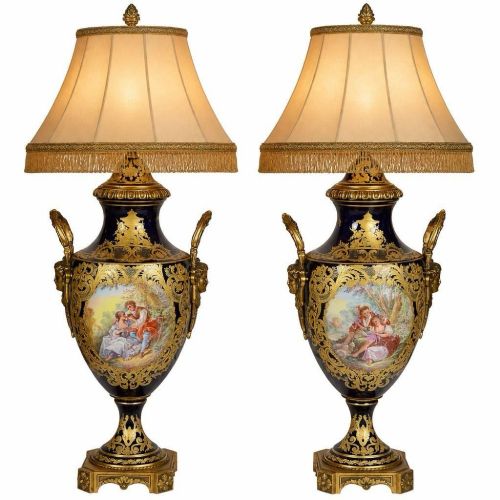
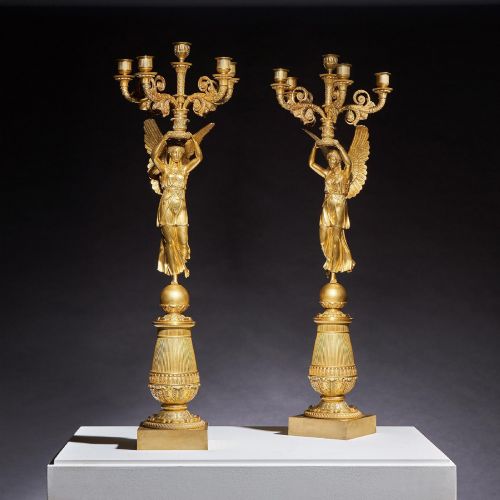
These gilt bronze table lights bring heavy cast metal and rich gilding together to illuminate a room with period character.
Gilt Bronze Table Lights
When buyers search for gilt bronze table lights, they encounter an array of heavy cast metal pieces spanning several centuries, with French designs dominating the selection. The forms range from simple candlesticks and candelabra adapted for electricity to elaborate table lamps incorporating porcelain bodies, onyx, and marble.
The inventory leans heavily towards nineteenth-century production, alongside pieces from the eighteenth and early twentieth centuries. Buyers frequently find pairs, particularly French Empire and Louis XVI style candelabra, alongside converted oil lamps and ewer lamps carrying floral or figural details.
Materials and construction methods
The primary construction relies on bronze or brass cast in detailed moulds, subsequently fire-gilded to achieve the characteristic ormolu finish. Many pieces combine this metalwork with contrasting materials such as marble, onyx, crystal, and Sevres or Satsuma porcelain.
Craftsmen mounted ornamental trims, rams' heads, and cherubs onto the metal bodies, often incorporating champleve enamel or fabric elements. Candlesticks and candelabra frequently show evidence of later conversion to house electrical fittings while retaining their original structural mounts.
Listings feature eighteenth-century pieces alongside items dated to the 1930s, utilising materials like marble, porcelain, and crystal.
Assessing quality in metalwork
Quality rests primarily in the crispness of the original chasing and the depth of the gilding. Finer pieces display sharp relief in motifs like acanthus leaves and figural elements, whereas lesser examples lose definition in softer casting.
The choice of secondary materials also dictates the standing of a piece, with solid marble bases, champleve enamel work, and matched porcelain bodies marking out superior production from simpler brass and gilt metal alternatives.
Pierre Philippe Thomire·E Rousseau·Dugourc
The Gilt Bronze Table Lights Glossary
- Ormolu
- Gilt bronze produced by applying a mercury and gold amalgam to cast bronze and heating it. This technique creates a durable, golden surface common in French decorative arts.
- Candelabra
- Branched lighting fixtures designed to hold multiple candles or light fittings. They often appear in pairs and form a significant portion of period lighting.
- Champleve
- An enamelling technique where troughs are dug into the metal surface and filled with vitreous enamel before firing. It appears on nineteenth-century pieces alongside gilt bronze.
- Cassolette
- A decorative vase or urn with a removable or reversible lid, frequently mounted in ormolu. These often form the body of converted table lamps.
- Retour d'Egypte
- A neoclassical design style influenced by Napoleon's campaign in Egypt. It introduces specific motifs like sphinxes and lions' paw feet to metalwork.
Gilt Bronze Table Lights: Frequently Asked Questions
Are these lights converted from older items?
Many table lamps in this category began life as oil lamps, candlesticks, or candelabra before receiving electrical wiring. The conversion process often preserves the original metal body and mounts intact.
Buyers should examine the base and stem to see how the wiring passes through the antique structure without altering the primary exterior decoration.
How do I identify French Empire style?
French Empire pieces typically display strong neoclassical symmetry, military motifs, and classical architectural details. You will often see lions' paw feet and rich ormolu mounts.
This style draws heavily on ancient Roman and Greek forms, translated into heavy cast bronze and gilt finishes during the nineteenth century.
What is the difference between ormolu and gilt bronze?
Ormolu and gilt bronze refer to the same material process involving the application of gold to a bronze base. Historically, the term ormolu specifically denotes the mercury gilding technique common in France.
In general descriptions, the terms are often used interchangeably to describe nineteenth-century and eighteenth-century gilded metalwork.
How should I clean gilt bronze?
Gilt bronze requires gentle dusting with a soft brush or dry cloth to protect the delicate golden surface. Moisture and chemical cleaners can strip or damage the historic gilding.
Keeping these lights away from direct heat sources helps preserve any associated porcelain, marble, or fabric elements paired with the metal.