







Gilt Bronze Plant Stand
A gilt bronze plant stand brings nineteenth-century French elegance to an interior, combining rich timber and stone with detailed metalwork.
Gilt Bronze Plant Stand
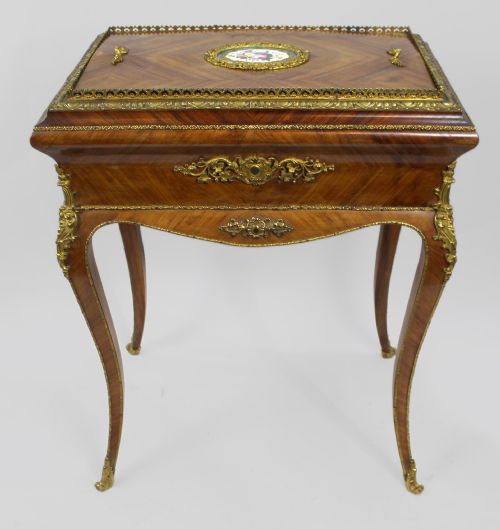
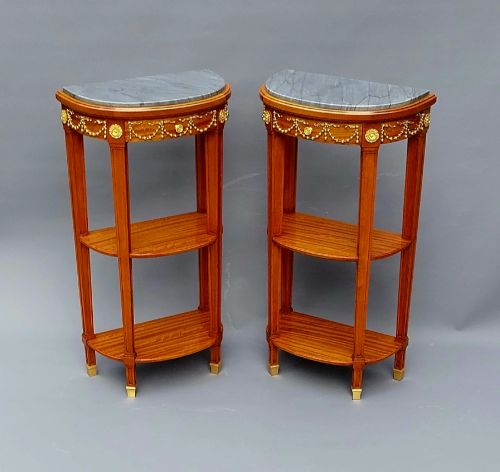
A gilt bronze plant stand unites decorative plant holders and display columns, drawing heavily on nineteenth-century French cabinet-making traditions. Buyers encounter tall pedestals, gueridon side tables, and fitted jardiniere stands designed to elevate plants or decorative objects within a room.
The objects span the Victorian and Edwardian eras, with many pieces reflecting Neoclassical, Louis XV, and Louis XVI revivals. Workshops in France produced the majority of these designs, utilising exotic timbers and stone tops to create a distinct architectural presence.
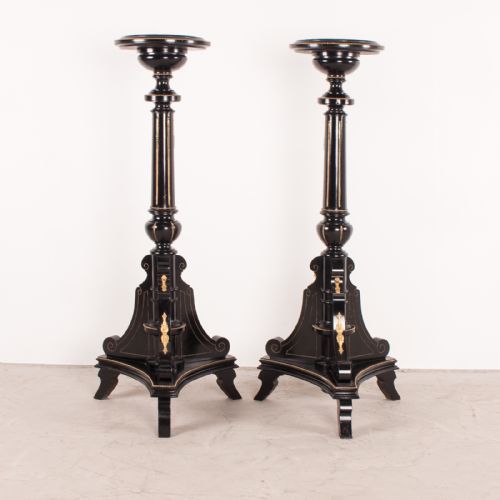
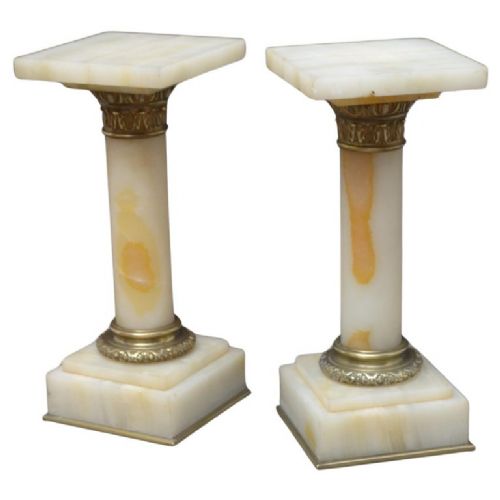
Pedestals and columns frequently feature marble or onyx tops paired with ormolu collars, while planter tables incorporate metal liners for botanical use. The selection ranges from slender torcheres to substantial walnut and mahogany display pieces.
Materials and construction methods
Maker workshops built carcasses in mahogany, kingwood, burr walnut, and ebonised timber, often applying intricate marquetry, parquetry, or Vernis Martin finishes. Selected pieces incorporate porcelain plaques and Sevres-type panels directly into the wooden framework.
Casting and chasing created the ormolu and gilt bronze mounts, which are secured to corners, legs, and aprons to accent the structural lines. Marble and onyx slabs form heavy, polished surfaces designed to support heavy planters and urns.
Brass and gilt metal mounts provide structural reinforcement and decorative contrast against darker woods. Joinery relies on traditional nineteenth-century French cabinet techniques suited to supporting heavy stone and metal components.
Gilt Bronze Plant Stand Retail Price Guide 2026
Typical asking prices for gilt bronze plant stand among the pieces listed under this phrase on Sellingantiques today, from the lower quarter to the upper quarter. They describe what is for sale here now, not the wider market.
Recorded forms span gueridon tables, columnar pedestals, kidney-shaped occasional tables, and porcelain-mounted jardiniere stands.
Distinctions in craftsmanship and design
Quality rests upon the crispness of the gilt bronze chasing and the weight of the cast ormolu mounts. Superior examples display sharply defined foliage and scrollwork fixed securely to the timber carcass.
The choice of secondary materials dictates the tier of the piece, distinguishing solid marble and onyx tops from simpler wooden surfaces. Dense hardwoods like kingwood and finely figured mahogany elevate the overall execution.
Proportion and stability define the architecture, where slender columns maintain balance despite heavy stone tops. Integrated porcelain plaques and complex parquetry indicate higher workshop standards.
François Linke·Weisweiler
The Gilt Bronze Plant Stand Glossary
- Ormolu
- Gilt bronze mounted onto furniture and decorative objects. The technique involves applying a finely ground gold-mercury amalgam to a bronze base before heating.
- Jardiniere
- A decorative stand or container designed to hold plants and flowers. These pieces often feature waterproof metal liners to protect the surrounding timber.
- Gueridon
- A small round table supported by a central pillar or multiple legs. Originating in seventeenth-century France, nineteenth-century revivals frequently topped them with marble.
- Torchere
- A tall decorative stand originally intended to carry a torch or candle. In later periods, they functioned as display columns for sculptures and urns.
- Athenienne
- A tripod-based decorative stand modelled on antique tripods discovered in archaeological excavations. They served various domestic purposes including plant display.
Gilt Bronze Plant Stand: Frequently Asked Questions
How were these plant stands originally used in homes?
Nineteenth-century interiors utilised these stands to display exotic potted plants, ferns, and floral arrangements in principal reception rooms. The integration of waterproof liners protected fine wooden furniture from moisture.
Beyond botany, households employed tall pedestals and columns to elevate bronze sculptures, porcelain urns, and decorative lamps. This arrangement created varied heights across a room's floor plan.
How do I distinguish between Louis XV and Louis XVI styles?
Louis XV pieces favour asymmetrical curves, cabriole legs, and elaborate rococo floral mounts in gilt bronze. The overall aesthetic emphasises flowing, organic lines.
Louis XVI revival pieces introduce strict symmetry, straight fluted legs, and neoclassical architectural details like columns and parquetry. The transition reflects a shift towards geometric discipline in French design.
How do I care for marble and onyx tops?
Stone surfaces require regular dusting with a soft, dry cloth to prevent micro-abrasions from grit. Acidic liquids like wine, vinegar, and citrus juice etch polished marble and should be wiped away immediately.
Avoid using harsh household cleaners or scouring powders that strip the polish. Professional marble sealers offer added protection against moisture rings and staining.
Are these pieces structurally suited for heavy plants?
Original pedestals and columns feature heavy stone tops designed to support substantial weight without tipping. The dense timber construction provides natural stability.
When positioning large plants, ensure the weight remains centred on the marble or onyx surface. Freestanding columns distribute gravity evenly through their central vertical axis.