




Gilt Bronze Pedestal Bowl
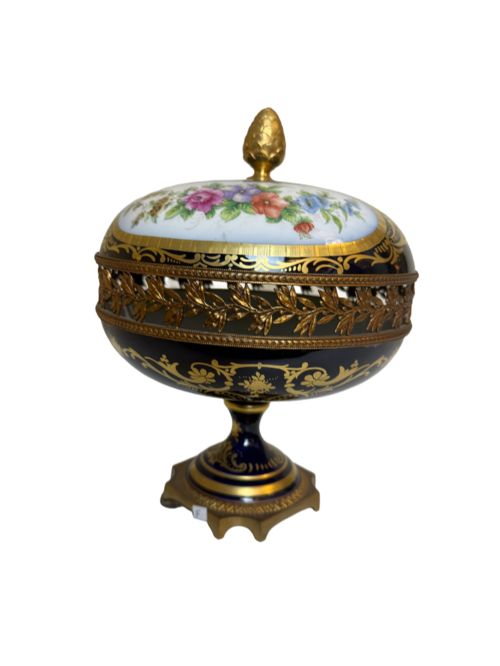
These gilt bronze pedestal bowl pieces combine cast metalwork with glass, marble, or porcelain in grand decorative forms.
Gilt Bronze Pedestal Bowl
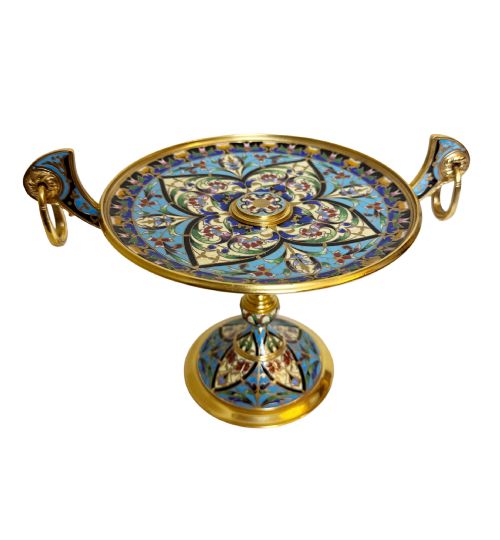
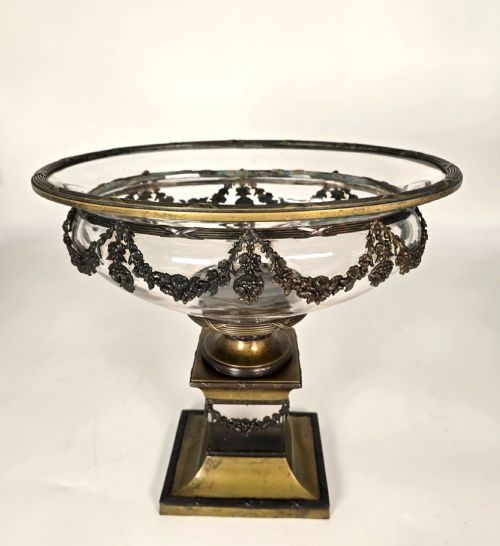
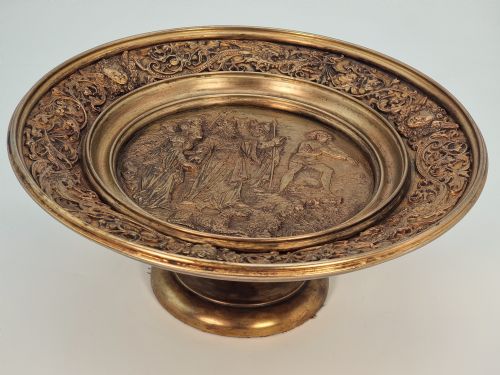
A gilt bronze pedestal bowl, often styled as a tazza or centrepiece, sits on a raised foot and serves as an ornamental display object. These works frequently incorporate materials like marble, porcelain, cut crystal, and enamel alongside the gilt bronze mountings. French Empire, Rococo Revival, and Victorian designs dominate the forms seen here.
Buyers encounter pairs and single items spanning the nineteenth century, alongside Regency and Art Deco examples. Many pieces integrate hardstones such as agate, malachite, or Blue John into the metal framework. The elevated bowls function primarily as decorative table centrepieces rather than utilitarian vessels.
Materials and construction
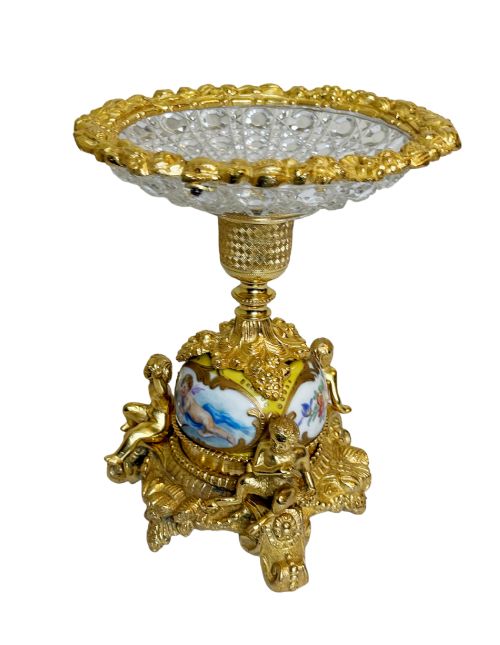
Manufacturers utilised bronze, ormolu, and gilt metal as the primary structural foundations for these pedestal bowls and tazzas. Artisans mounted these metal frames with cut crystal, Limoges porcelain, and glass vessels. Decorative detailing often involved champleve and cloisonne enamel techniques.
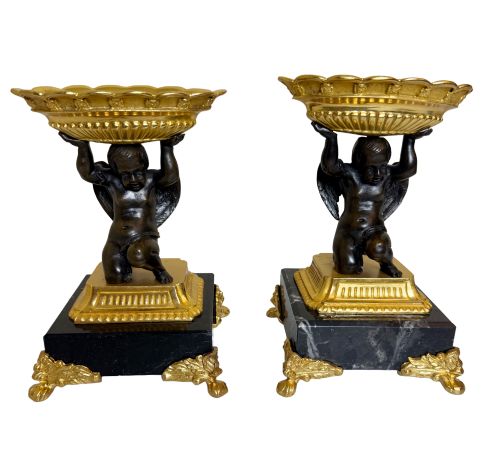
Casting and fire-gilding created the rich golden surfaces characteristic of ormolu, while patinated bronze provided tonal contrast. Stonework components like black marble, banded agate, and malachite were shaped and fitted directly into the metal mounts.
Materials across these listings include ormolu, malachite, Limoges porcelain, cut crystal, and black marble.
Evaluating craftsmanship
The refinement of the cast bronze ornament and the crispness of the chasing separate standard items from superior examples. Quality rests in the integration of mixed materials, such as precisely fitted porcelain plaques, hardstone cabochons, and hand-cut crystal.
Compositions featuring figural elements like cherubs or intricate champleve enamel demand higher levels of artisan skill. The weight of the bronze and the depth of the gilding further distinguish the upper tier of these works.
Ferdinand Preiss
The Gilt Bronze Pedestal Bowl Glossary
- Gilt bronze
- Metal cast and coated in a layer of gold, providing a bright golden finish. This material forms the primary structure of many nineteenth-century centrepieces.
- Tazza
- A shallow bowl on a pedestal foot, used for display. These items frequently incorporate marble and enamel mounts.
- Ormolu
- Finely chopped gold amalgamated with mercury and applied to bronze through heat gilding. The technique creates a durable and luminous golden surface.
- Champleve
- An enamelling technique where troughs are dug into metal and filled with vitreous enamel. This decoration often appears on nineteenth-century tazzas.
Gilt Bronze Pedestal Bowl: Frequently Asked Questions
What is a tazza?
A tazza is an elevated dish or bowl supported by a central stem and foot. Makers designed these vessels for ornamental display on dining tables and sideboards.
In nineteenth-century interiors, they functioned as centrepieces to catch the eye rather than to hold food.
How do you style a pedestal bowl?
These decorative objects work well placed centrally on dining tables, mantels, or large consoles. Their mixed materials, such as marble bases and crystal bowls, reflect natural light.
Allowing the piece to stand alone highlights the intricate bronze mounts and coloured hardstones.
What is the difference between ormolu and gilt bronze?
Ormolu specifically refers to a mercury gilding process popular in French furniture and decorative metalwork. Gilt bronze is a broader term encompassing any bronze object coated in gold.
Both materials yield a durable metallic finish that resists tarnishing over centuries.
When were these pedestal bowls made?
The pieces recorded here largely date from the nineteenth century, spanning periods from Regency and French Empire to the Aesthetic Movement. Manufacturing styles shifted from classical revivalism towards Art Deco forms by the early twentieth century.
Each era brought distinct decorative motifs, from cherubs to geometric hardstone panels.